
What to Include in a Personal Statement for a Job

Trust Score: 4.8
388 reviews
Table of Contents
Introduction
Most job seekers underestimate the power of a personal statement and that’s exactly why so many applications get ignored. A weak, generic statement filled with clichés like “hardworking” and “team player” fails to capture attention or communicate real value. In a competitive job market, where recruiters spend just a few seconds scanning each resume, a poorly written personal statement can cost you the opportunity before you even get noticed.
A strong personal statement, on the other hand, acts as your professional pitch. It quickly tells employers who you are, what you bring to the table, and why you’re the right fit for the role. Whether you’re a fresher or an experienced professional, this short section can significantly strengthen your job application by aligning your skills and achievements with the employer’s expectations.
Beyond first impressions, your personal statement also plays a crucial role in passing Applicant Tracking Systems (ATS). By incorporating relevant keywords and clearly highlighting your expertise, it increases your chances of getting shortlisted. In short, a well-crafted personal statement doesn’t just introduce you—it positions you strategically for success.
What Is a Personal Statement?
A personal statement is a short, targeted paragraph at the top of your resume or job application that summarizes your professional identity, key skills, and career goals. Think of it as your elevator pitch—it quickly tells employers who you are and why you’re a strong fit for the role.
Unlike a generic introduction, a well-written personal statement is tailored to the job you’re applying for. It highlights your most relevant experience, showcases your strengths, and positions you as a valuable candidate right from the start.
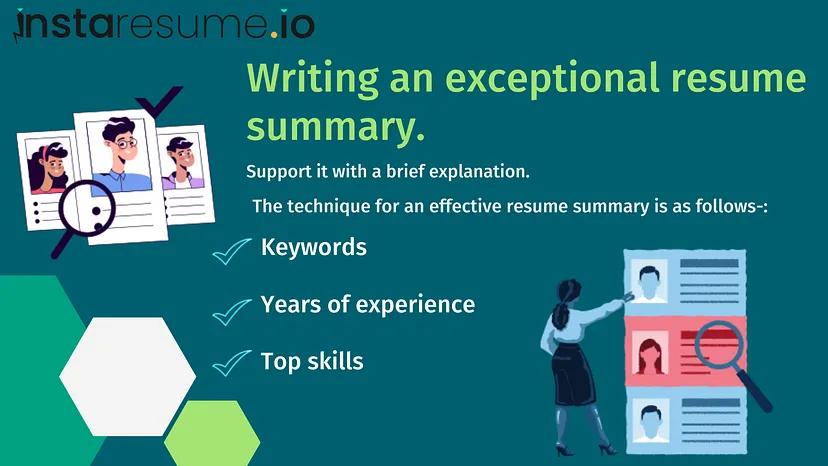
It’s important not to confuse a personal statement with other similar sections:
 Resume Summary: Focuses mainly on experience and achievements
- Career Objective: Emphasizes your career goals (often used by freshers)
- Personal Statement: A balanced mix of skills, achievements, and future goals
You’ll typically find a personal statement at the top of a resume, CV, or within job application forms where employers ask for a brief introduction. Because it’s one of the first things recruiters read, it plays a critical role in shaping their initial impression of your profile.
What to Include in a Personal Statement for a Job
A strong personal statement isn’t just about introducing yourself—it’s about strategically presenting your value in a few impactful lines. To make it effective, you need to include the right elements in a clear and concise way.
1. Your Professional Identity
Start by clearly stating who you are professionally. This includes your job title, experience level, or area of expertise. It immediately tells the recruiter where you fit.
2. Key Skills & Core Strengths
Highlight your most relevant skills that match the job description. Focus on both technical (hard) skills and interpersonal (soft) skills that make you effective in your role.
3. Achievements & Results
Don’t just list responsibilities—show what you’ve accomplished. Use measurable results whenever possible to add credibility and impact.
4. Career Goals
Briefly mention your career direction and how it aligns with the company’s goals. This shows intent and long-term value.
5. Unique Selling Proposition (USP)
End with what makes you stand out from other candidates. This could be a unique skill, perspective, or combination of experiences.
When these elements are combined effectively, your personal statement becomes a powerful summary that captures attention, builds credibility, and encourages recruiters to keep reading.
Personal Statement Format & Structure
Even the strongest content can fall flat if it isn’t structured properly. A well-formatted personal statement ensures clarity, readability, and maximum impact—especially when recruiters are scanning quickly.
Ideal Length
Your personal statement should be 3–5 lines (50–150 words). It needs to be concise while still delivering meaningful information. Avoid long paragraphs that may overwhelm or lose attention.
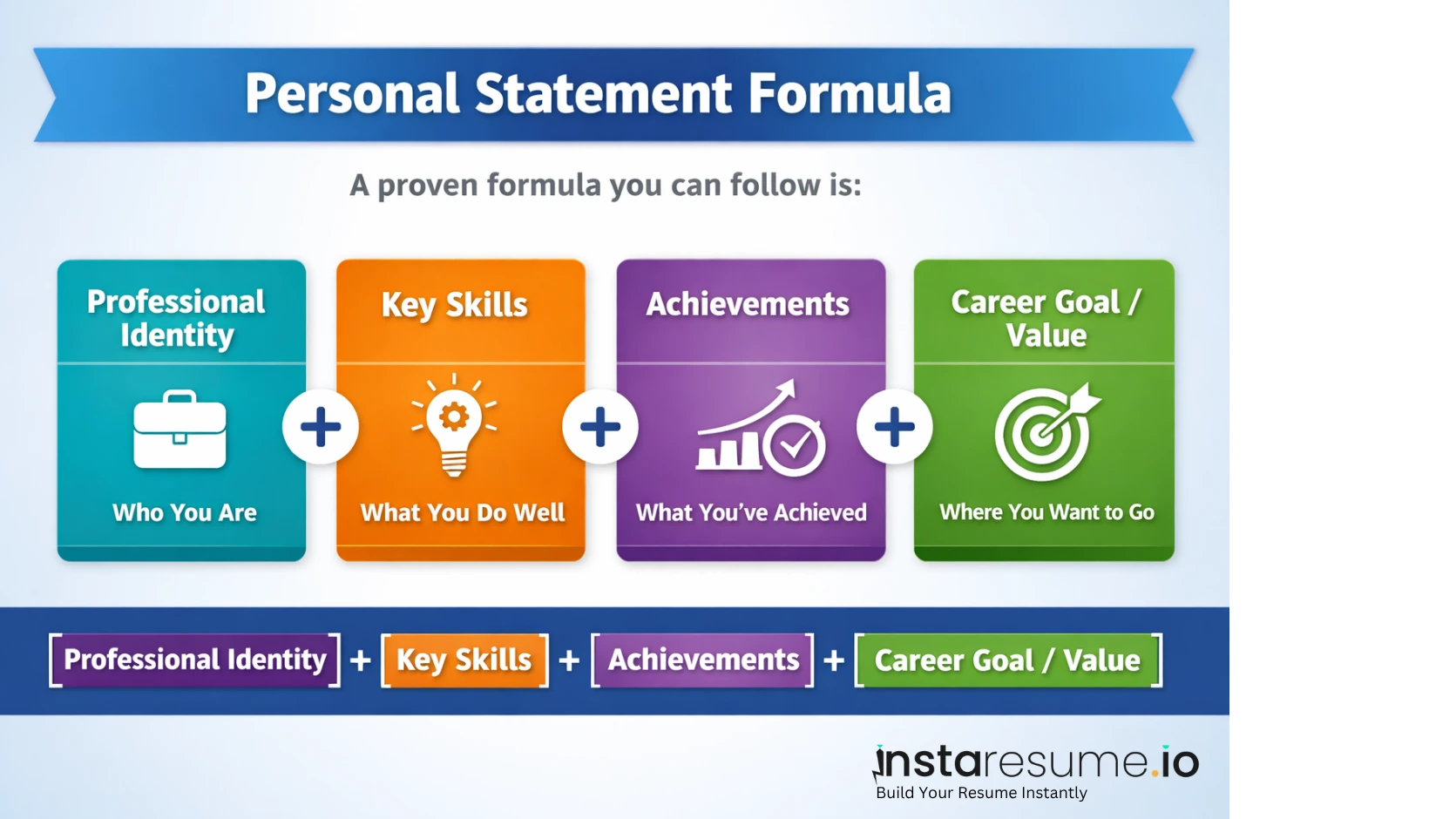
Simple Structure Formula
Example:
Here are some examples of Professional Summary
Digital Marketer Profile Summary
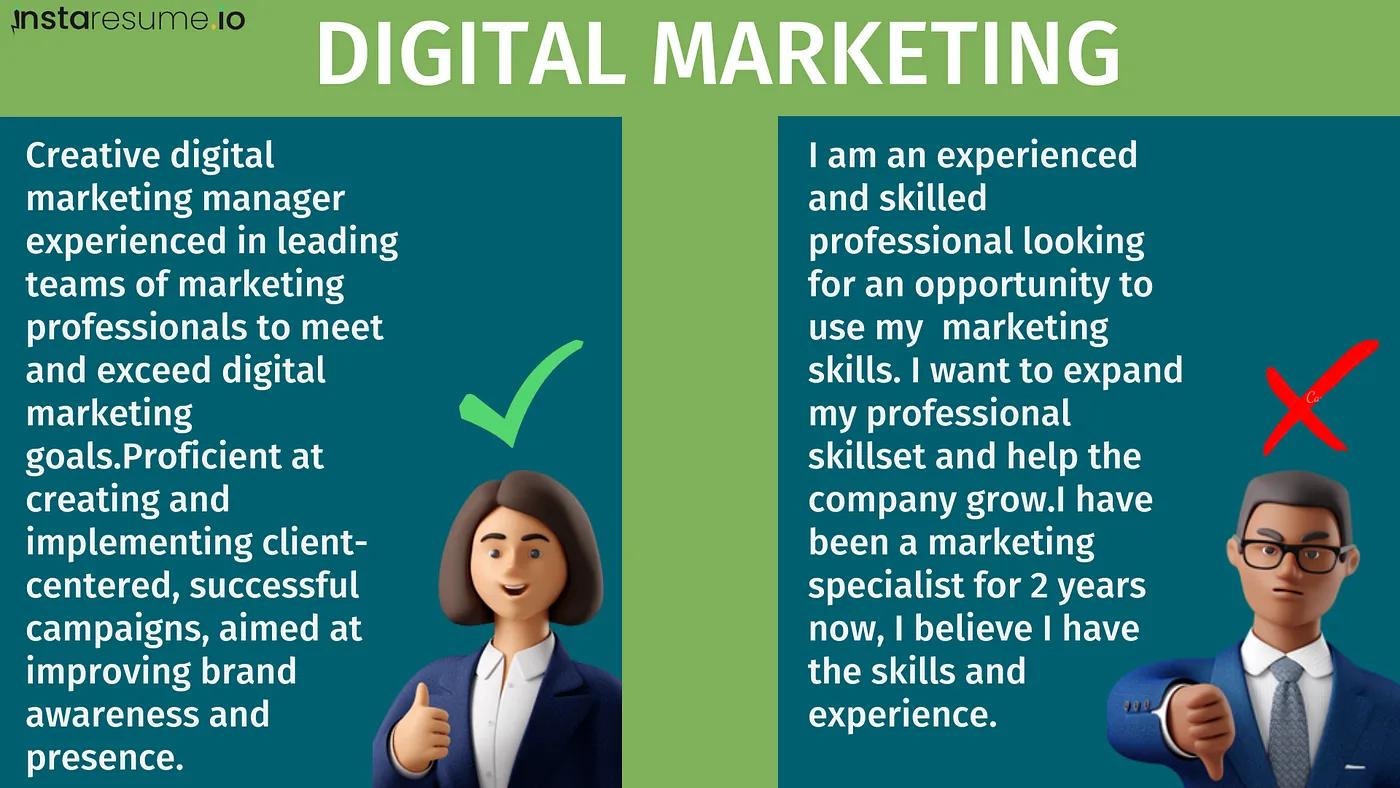
In the above sample, the right things are -
- Use of third person pronouns rather than using first person pronouns in the wrong one.
- 2–5 sentences long.
- To the point and contains relevant keywords.
- ATS proof (Application Tracking system)
- Summary tailored to job description highlighting the skills which are time-saving.
Example 1:
Example 2:
Software Engineer Professional Summary
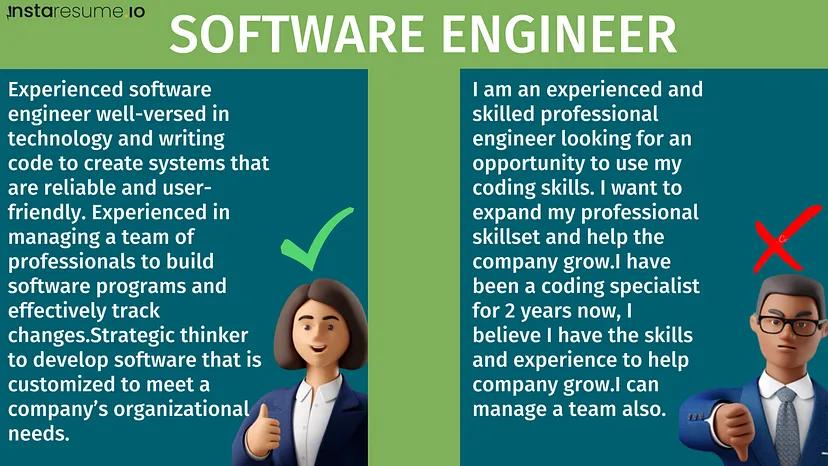
In the above sample, the right things are -
- Use of third person pronouns rather than using first person pronouns in the wrong one.
- 2–5 sentences long.
- To the point and contains relevant keywords.
- ATS proof (Application Tracking system)
- Summary tailored to job description highlighting the skills which are time-saving.
Example 1:
Example 2:
Quality Analyst Resume Professional Summary
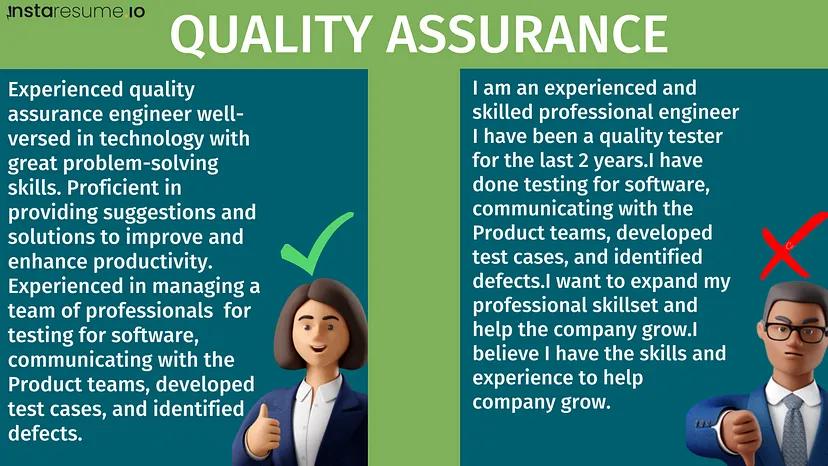
In the above sample, the right things are -
- Use of third person pronouns rather than using first person pronouns in the wrong one.
- 2–5 sentences long.
- To the point and contains relevant keywords.
- ATS proof (Application Tracking system)
- Summary tailored to job description highlighting the skills which are time saving.
Sample 1:
Sample 2:
Insatresume offers pre-written phrases for your resume summary. Click on add pre-written phrases and you can find the best-fitted resume summary for yourself. Below given are some pre-written phrases from instaresume.
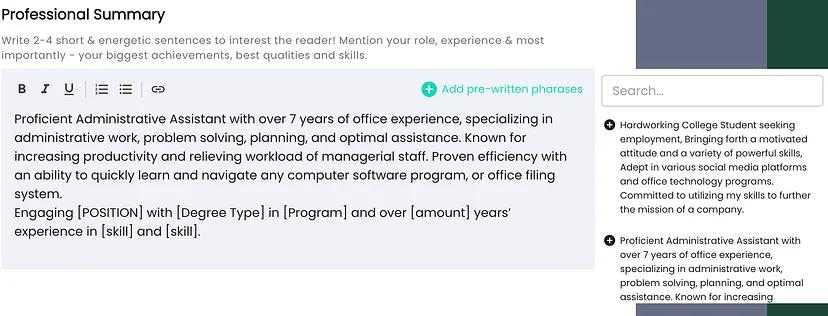
Sentence Flow & Clarity
- Start strong with your role and experience
- Follow with your most relevant skills
- Add 1–2 measurable achievements
- End with your career goal or value proposition
ATS-Friendly Tips
- Use keywords from the job description
- Avoid complex formatting, graphics, or symbols
- Keep language simple and professional
- Use standard job titles and industry terms
A clean and structured personal statement not only improves readability but also increases your chances of passing ATS filters and making a strong first impression on recruiters.
How to Write a Personal Statement (Step-by-Step Guide)
Now that you know what to include and how to structure it, let’s break down the exact process of writing a compelling personal statement for a job.
Step 1: Analyze the Job Description
Start by carefully reading the job posting. Identify key skills, qualifications, and keywords the employer is looking for. Your personal statement should directly reflect these requirements.
Step 2: Identify Your Relevant Skills & Experience
Pick 3–5 of your strongest skills and experiences that match the role. Focus on what’s most relevant rather than listing everything.
Step 3: Highlight Achievements
Think about your measurable accomplishments. Did you increase sales, improve efficiency, or lead a project? Adding numbers and results makes your statement more impactful.
Step 4: Write Your First Draft
Use the proven formula:
Keep it concise and focused this is not the place for long explanations.
Step 5: Optimize for ATS
Incorporate keywords from the job description naturally into your statement. This improves your chances of passing automated resume screening systems.
Step 6: Edit and Refine
- Remove unnecessary words
- Avoid clichés like “hardworking” or “team player”
- Ensure clarity and professionalism
- Keep it within 3–5 lines
By following these steps, you can create a personal statement that is not only clear and concise but also strategically aligned with what recruiters and hiring systems are looking for.
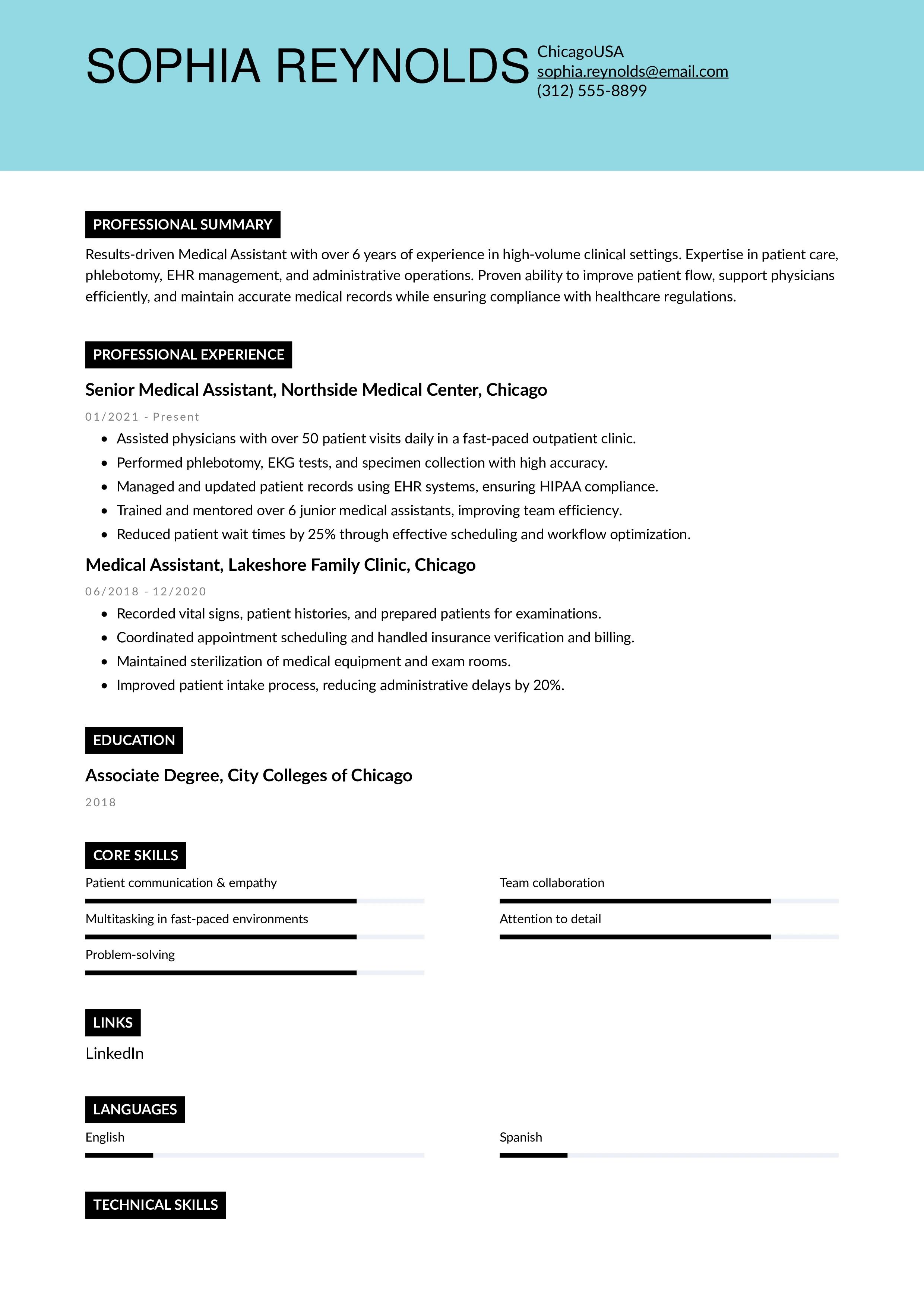
Resume examples based on the Personal Statement Formula
Marketing Executive Resume
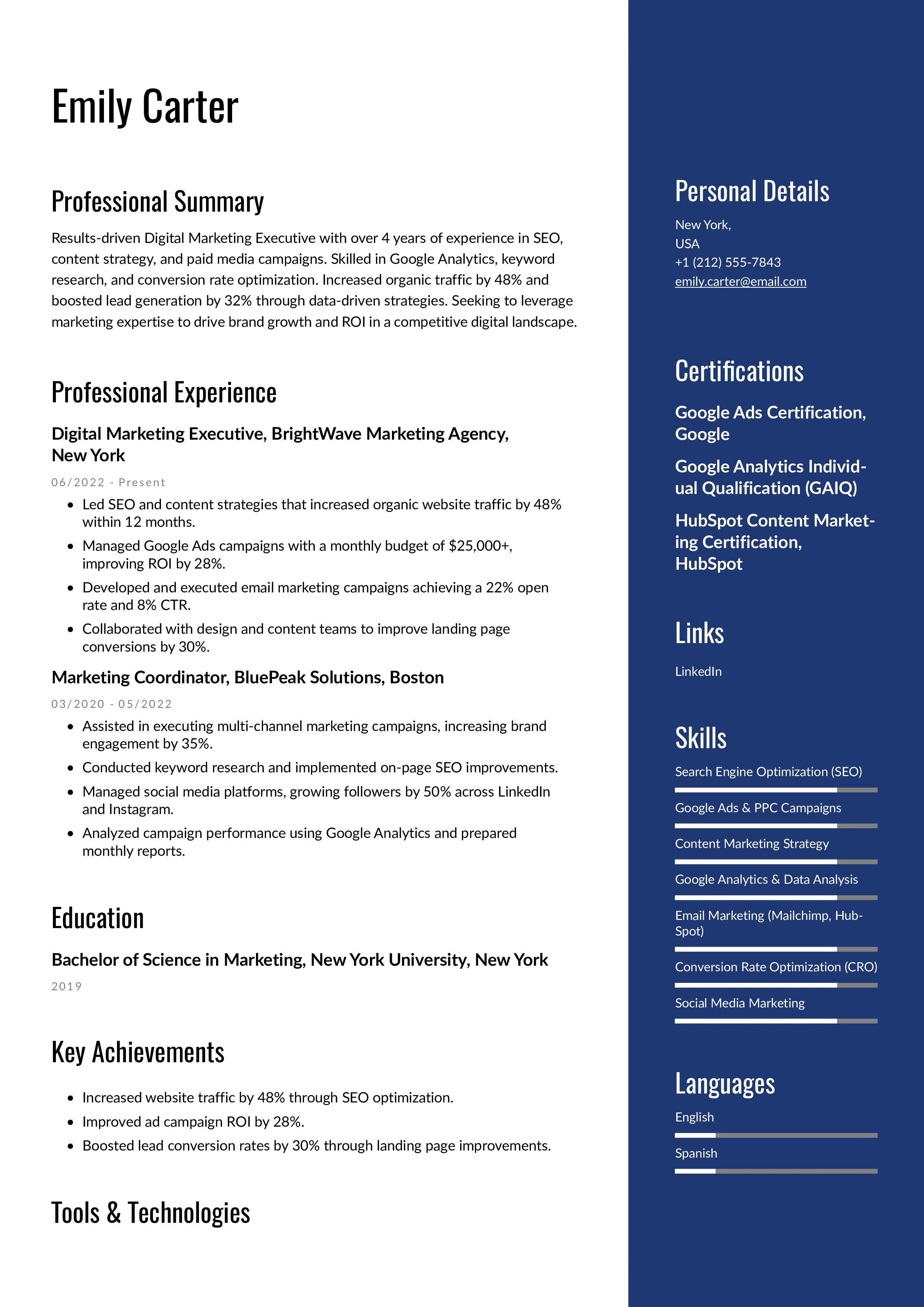
Why This Marketing Executive Resume Works
This resume is effective because it follows a strategic, recruiter-friendly structure while aligning perfectly with what hiring managers look for in a Marketing Executive.
✅ Strong Personal Statement (Immediate Impact)
The resume opens with a clear and compelling personal statement that highlights:
- Professional identity (Digital Marketing Executive)
- Core skills (SEO, PPC, analytics)
- Measurable achievements (48% traffic growth, 32% leads)
This instantly communicates value within seconds.
✅ Quantified Achievements
Instead of vague responsibilities, the resume uses data-backed results like:
- “Increased organic traffic by 48%”
- “Improved ROI by 28%”
- This builds credibility and proves real impact.
The resume includes relevant keywords such as:
- SEO, Google Ads, PPC, Content Marketing, CRO
These keywords help it pass Applicant Tracking Systems (ATS) and reach recruiters.
✅ Clear Career Progression
The transition from Marketing Coordinator → Marketing Executive shows:
- Growth in responsibility
- Skill development
- Career consistency
Law School Resume with focus on Personal Statement
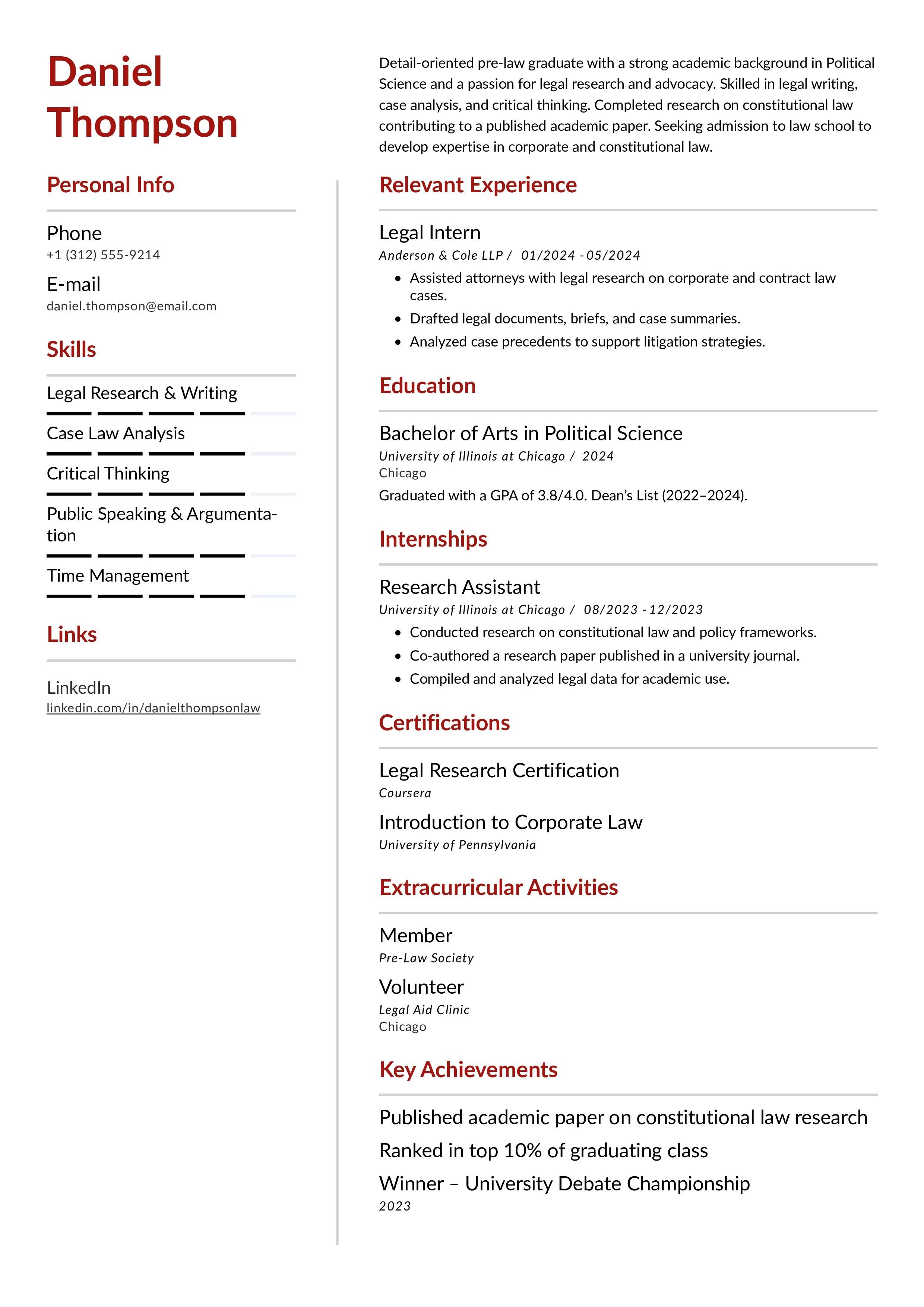
Why This Resume Works
✅ Strong Law-Focused Personal Statement
Clearly aligns with law school personal statement keywords and highlights legal interest, academic strength, and career direction.
✅ Academic Excellence Highlighted
Includes GPA, Dean’s List, and research work—critical for law school applications.
✅ Relevant Legal Exposure
Internship + research experience shows practical understanding of law, even at an early stage.
✅ Keyword Optimization
Uses industry-specific terms like:
- legal research
- case analysis
- constitutional law
Helps with both SEO and ATS relevance.
✅ Well-Rounded Profile
Combines academics, internships, achievements, and extracurriculars—exactly what law schools look for.
Medical School Resume (Medical School Personal Statement Focus)
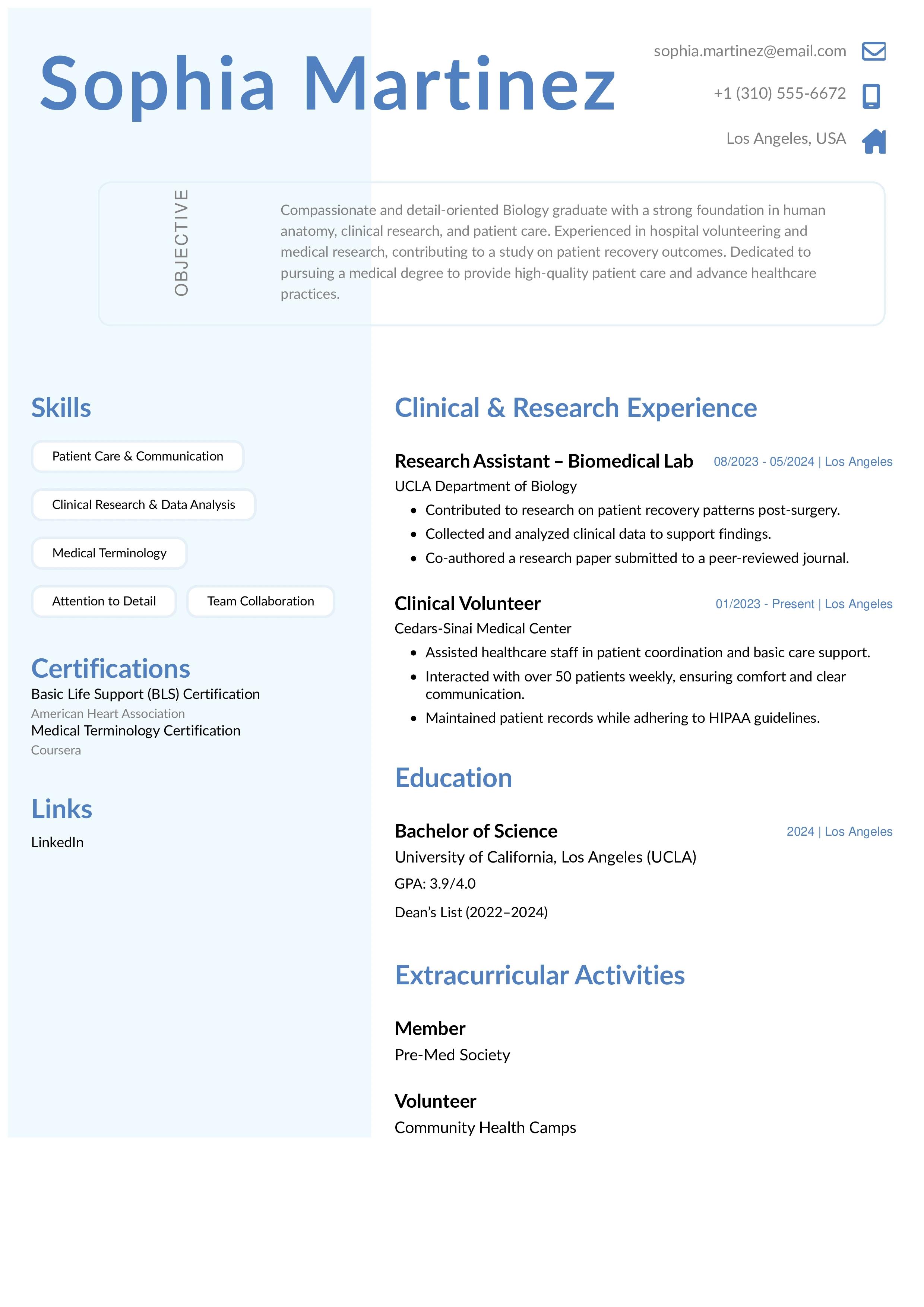
Why This Resume Works
✅ Strong Medical-Focused Personal Statement
Aligns with medical school personal statement keywords and highlights compassion, research, and patient care.
✅ High Academic Performance
A strong GPA and Dean’s List are crucial for medical school applications.
✅ Relevant Clinical Exposure
Hands-on experience through volunteering and research builds credibility.
✅ Quantifiable Impact
Includes measurable contributions like:
- 300+ volunteering hours
- Patient interaction volume
Cover Letter Example That Complements Your Personal Statement
After crafting a strong personal statement, the next step is to reinforce it with a compelling cover letter. While your personal statement gives a quick snapshot of your skills and value, your cover letter expands on that story adding personality, context, and a deeper connection to the role.
A personal statement answers: “Who are you professionally?”
A cover letter answers: “Why you, and why this company?”
When both are aligned, they create a powerful and cohesive job application that increases your chances of getting shortlisted.
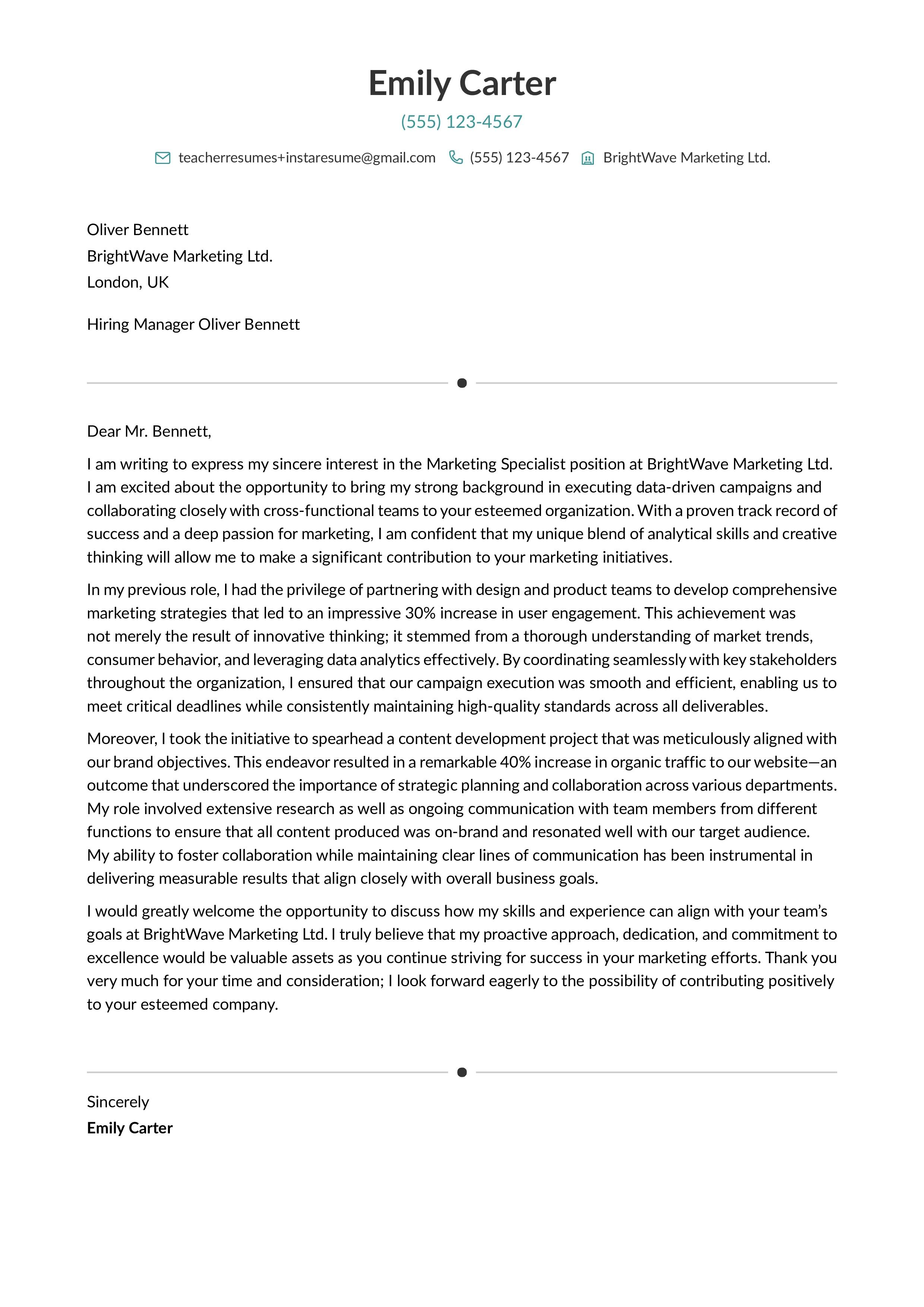
Why This Cover Letter Works
✅ Strong Connection with Personal Statement
- Reinforces the same achievements (traffic growth, conversions)
- Maintains consistency in skills and positioning
✅ Storytelling Approach
- Starts with a hook instead of a generic introduction
- Builds a narrative around impact and value
✅ Personalization
- Tailored to the company’s goals (data-driven growth)
- Shows genuine interest in the role
✅ Clear Value Proposition
- Focuses on results, not just responsibilities
- Demonstrates both technical and strategic strengths
Pro Tip
If you want to create high-converting, ATS-friendly cover letters like this in minutes, you can use an AI-powered cover letter generator on your platform like Instaresume.io. It helps you align your personal statement and cover letter seamlessly, saving time while maximizing impact.
Frequently Asked Questions
1. What should a personal statement include for a job?
A personal statement should include your professional identity, key skills, achievements, and career goals. It should clearly communicate your value to the employer in a concise format.
2. How do I write a strong personal statement?
To write a strong personal statement, analyze the job description, include relevant keywords, highlight measurable achievements, and keep it clear and concise (3–5 lines).
3. How long should a personal statement be?
A personal statement should typically be between 50–150 words or 3–5 lines, ensuring it is impactful without being too lengthy.
4. Is a personal statement the same as a resume summary?
No, a personal statement is broader and includes career goals, while a resume summary focuses mainly on experience and achievements.
5. Can I use the same personal statement for every job?
No, you should tailor your personal statement for each job by including relevant skills and keywords from the job description.
6. What are some examples of personal statements?
Personal statement examples vary by experience level but generally highlight skills, achievements, and goals. For example, a marketing professional may mention increasing traffic or improving conversions.
7. What is the best format for a personal statement?
The best format is: Professional Identity + Key Skills + Achievements + Career Goal, written in a clear and concise paragraph.
8. How can I make my personal statement ATS-friendly?
Use job-specific keywords, standard job titles, and simple formatting. Avoid graphics or complex designs to ensure it passes ATS screening.
9. Should freshers include a personal statement?
Yes, freshers should include a personal statement focusing on skills, academic projects, and career goals instead of work experience.
10. What mistakes should I avoid in a personal statement?
Avoid being too generic, using clichés, writing long paragraphs, ignoring keywords, and not tailoring it to the job role.