
12 Ways to Improve your Presentation Skills [for Work & Life]

Trust Score: 4.8
387 reviews
Table of Contents
For many people, the thought of standing in front of an audience and presenting their ideas is more stressful than the idea itself. Fear of forgetting words, being judged, or not sounding confident often holds people back from speaking up even when they have valuable insights to share. As a result, strong ideas remain unheard, and opportunities are missed, not because of a lack of knowledge, but because of weak presentation skills.
Strong presentation skills play a crucial role in achieving academic and professional success. Whether you’re a student, a working professional, or a leader, the ability to communicate your ideas clearly and confidently can directly impact your career growth, credibility, and influence. A well-delivered presentation can persuade, inspire, and leave a lasting impression, while a poorly delivered one can dilute even the best ideas.
The good news is that presentation skills are not a talent you’re born with they are skills you can learn and improve with the right approach and consistent practice. By the end of this article, you’ll discover 10 practical and effective ways to improve your presentation skills, overcome presentation anxiety, and deliver your message with confidence and clarity. Whether you’re preparing for a classroom presentation, a client meeting, or a workplace pitch, these tips will help you present with impact.
What are Presentation skills
Presentation skills refer to the ability to communicate ideas, information, or messages clearly and confidently to an audience. These skills combine how you say something and how you present it, including your verbal communication, body language, voice modulation, visual aids, and overall confidence.
Presentation skills are primarily considered soft skills because they focus on communication, emotional intelligence, and interpersonal effectiveness. However, they also include elements of hard skills, such as creating structured slides, using presentation tools like PowerPoint or Google Slides, and organizing content logically. In reality, strong presentation skills are a blend of both soft skills that drive connection and hard skills that support clarity.
What many people overlook is that presentation skills are not limited to formal workplace presentations or boardroom meetings. They are used everywhere in daily life. From answering questions in a classroom, participating in group discussions, attending interviews, pitching ideas, leading meetings, explaining concepts to clients, or even expressing opinions in social settings presentation skills shape how confidently and effectively you are perceived.
In essence, anytime you explain an idea to others, you are presenting. Developing strong presentation skills helps you communicate with clarity, build trust, and make a stronger impact regardless of whether you’re in a professional, academic, or personal setting.
Why are Presentation Skills important
Career Opportunities and Job Readiness
 Presentation skills are valued across industries and roles
- They function as transferable skills that increase hiring potential
- Help candidates stand out during interviews and career advancement
Academic Growth and Learning Outcomes
- Essential for seminars, project presentations, and classroom participation
- Help students communicate knowledge more effectively
- Contribute to better academic performance and confidence
Professional Networking and Relationship Building
- Strong presentation skills improve overall communication abilities
- Make it easier to connect, introduce ideas, and build rapport
- Support confident interaction in professional and social settings
Personal Confidence and Self-Expression
- Public speaking strengthens self-belief and reduces fear
- Confidence gained during presentations extends to other life areas
- Encourages clearer expression of thoughts and opinions
Types of Presentations and Common Delivery Methods
Presentations serve different purposes depending on the situation and the audience. Some presentations are designed to inspire and motivate, while others aim to inform, educate, or guide people through specific information or processes. Understanding the different types of presentations helps presenters choose the right content, tone, and delivery style.
Below are some of the most common types of presentations you’ll encounter in professional, academic, and everyday settings.
Persuasive Presentations
Persuasive presentations are designed to influence the audience’s thoughts, opinions, or decisions. The goal is to convince listeners to support an idea, agree with an argument, or take a specific action. A sales pitch, marketing proposal, or campaign presentation are common examples of persuasive presentations.
Informative Presentations
Informative presentations focus on sharing information or increasing awareness about a topic, product, process, or concept. The primary objective is clarity rather than persuasion. Examples include news briefings, weather reports, or presentations explaining company updates or services.
Inspirational Presentations
Inspirational presentations aim to uplift, motivate, and encourage the audience. In professional environments, they are often used to boost morale, inspire teamwork, or help employees navigate challenging periods. In everyday life, inspirational presentations may involve motivating a friend, team, or group to achieve their goals.
Educational Presentations
Educational presentations are intended to teach and expand knowledge. They are commonly used in academic and learning environments. Lectures by professors, workshops, training sessions, or guided tours are all examples of educational presentations where learning is the primary focus.
Instructional Presentations
Instructional presentations provide clear guidance or instructions on rules, procedures, policies, or safety measures. The emphasis is on accuracy and understanding. Examples include onboarding sessions, safety briefings, or demonstrations explaining what actions to take in specific situations.
Common presentation delivery methods
In addition to understanding presentation types, it’s equally important to know how presentations are delivered. The delivery method affects audience engagement and the overall effectiveness of the presentation.
Extemporaneous delivery
Extemporaneous presentations are well-planned and structured, but delivered in a natural and conversational manner without reading from a script. This method allows flexibility and audience interaction, making it one of the most commonly used delivery styles in professional settings.
Manuscript delivery
Manuscript presentations involve delivering content directly from a written script or detailed notes. This method is often used when accuracy is critical, such as official announcements, legal statements, or formal speeches.
Impromptu delivery
Impromptu presentations are delivered without prior planning or preparation. They typically occur during meetings, discussions, or unexpected speaking opportunities. Clear thinking, confidence, and a simple structure are key to effective impromptu delivery.
Memorized delivery
Memorized presentations are learned word for word and delivered entirely from memory. While this method allows strong eye contact and smooth flow, it requires extensive practice and can feel rigid if not delivered naturally.
10 Practical Tips to Give Better Presentations (With Real-Life Examples)
Strong presentation skills help you communicate ideas clearly, influence decisions, and build confidence. Whether you’re presenting at work, college, or an event, these tips will help you deliver more effective presentations.
1. Prepare your Presentation in advance
Preparation is the foundation of a successful presentation. Planning your content, structure, timing, and visuals in advance helps you stay confident and focused.
Example:
A manager pitching a new strategy prepares an outline, key talking points, and a strong closing instead of relying on last-minute ideas—resulting in a smoother delivery and better buy-in.
2. Know your audience
Understanding your audience allows you to adjust your language, examples, and tone. A presentation that resonates with the audience is always more impactful.
Example:
A college student uses simple explanations and visuals for classmates, while the same topic would require data and insights when presented to senior professionals.
3. Practice consistently
Practicing out loud improves flow, clarity, and confidence. The more you rehearse, the more natural your presentation feels.
Example:
A job candidate practices their presentation in front of a mirror and records themselves to refine tone and eliminate filler words before an interview.
4. Use visual aids strategically
Slides and visuals should support your message, not overwhelm it. Clear charts, images, and short bullet points improve understanding.
Example:
Instead of listing sales numbers on a slide, a team lead uses a simple graph to show quarterly growth during a business review.
5. Structure your content clearly
A clear structure helps your audience follow your message effortlessly. Use a strong introduction, logical main points, and a clear conclusion.
Example:
A trainer begins with the problem, explains the solution step by step, and ends with actionable takeaways keeping participants engaged throughout.
6. Tell stories to build connection
Storytelling makes presentations more relatable and memorable. When used appropriately, stories help humanize information.
Example:
A speaker explaining leadership skills shares a short personal experience about a workplace challenge instead of only listing theories.
7. Manage nervousness effectively
Presentation anxiety is normal. Simple techniques like deep breathing and mental preparation can help calm nerves.
Example:
Before presenting to clients, a professional takes a few slow breaths and reminds themselves that they know the subject well.
8. Arrive early and get comfortable
Arriving early helps you test equipment, settle in, and mentally prepare for your presentation environment.
Example:
A speaker reaches the conference room early to check the microphone and slides, avoiding last-minute technical stress.
9. Use confident body language and voice
Posture, eye contact, and voice modulation significantly affect how confident and credible you appear.
Example:
A presenter who stands upright, maintains eye contact, and varies their tone appears more confident than one who reads directly from slides.
10. Engage your audience
Audience engagement makes presentations interactive and memorable. Asking questions or inviting participation keeps listeners attentive.
Example:
A workshop facilitator asks participants to raise their hands or share experiences, turning a one-sided talk into an interactive session.
How to add Presentation Skills to your Resume
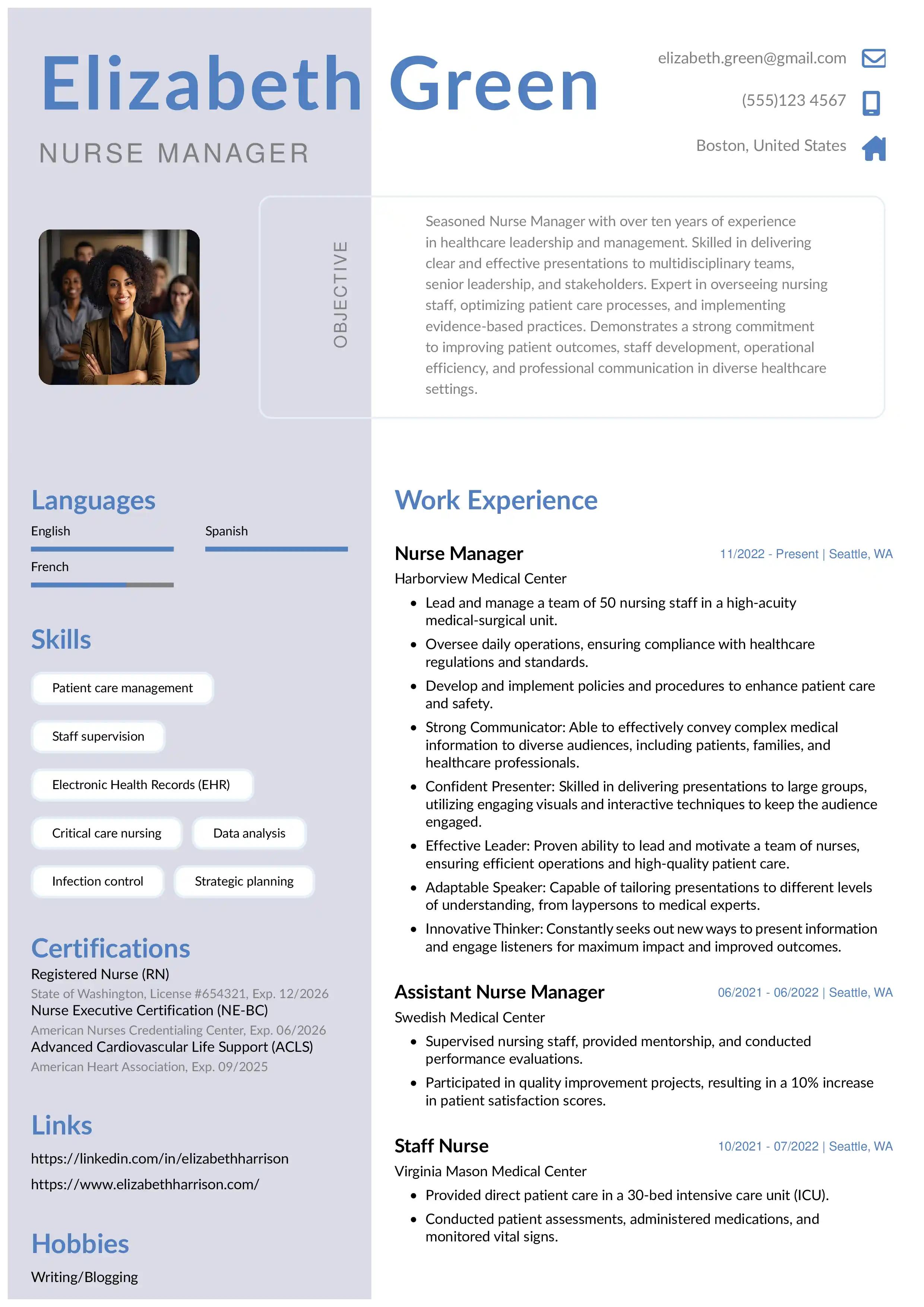
Presentation skills are highly valued by recruiters, but simply claiming “good presentation skills” isn’t enough. You need to place them strategically and prove them with context and results. Here’s how to do it effectively.
1. List Presentation skills under your soft skills section
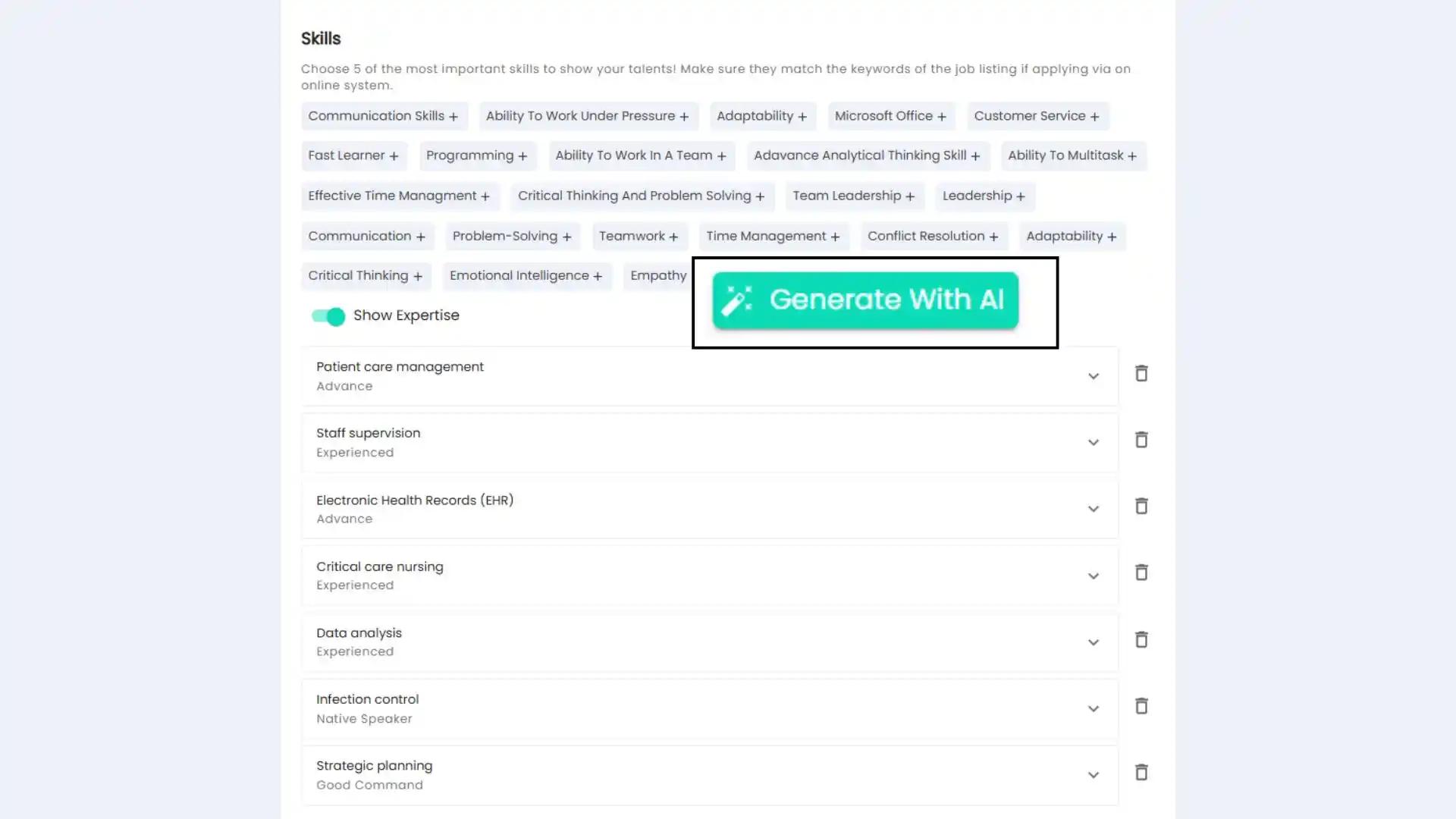
Our Free resume builder provides AI credits for generating skills as per your requirement, so you can just go to skills section and press on "Generate with AI" and you will be able to customize your presentation skills there.
Example:
- Presentation Skills
- Public Speaking
- Verbal Communication
- Stakeholder Communication
- Client Presentations
Tip:
Avoid vague terms like “good speaker.” Use clear, professional skill labels that ATS systems can recognize.
2. Mention Presentation skills in your resume summary
Your resume summary is one of the first sections recruiters read. Highlighting your presentation skills here immediately positions you as a confident communicator.
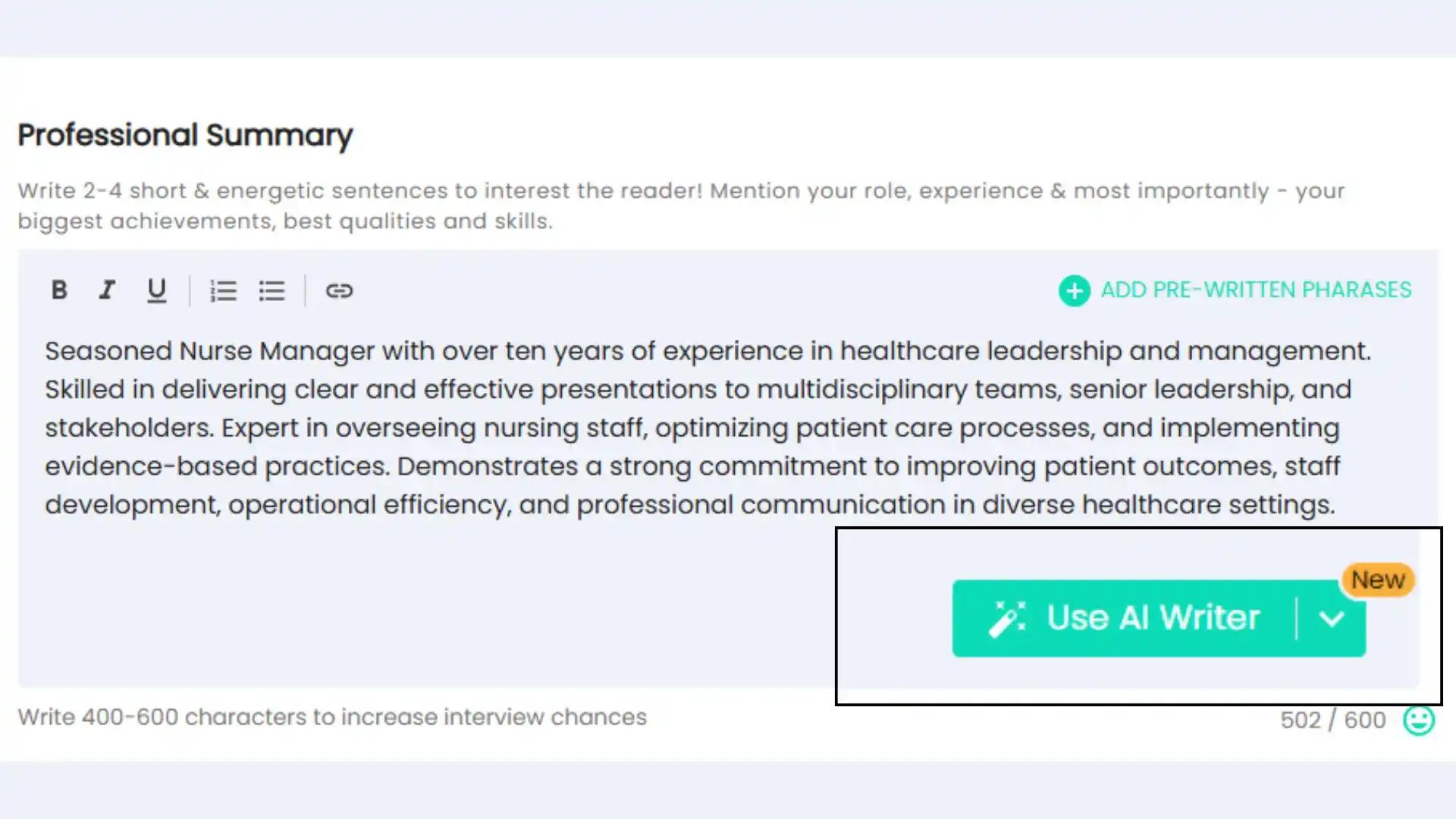
Our Free resume builder provides AI credits for generating, updating and rewriting Professional summary as per your requirement, so you can just go to Professional summary section and press on "Generate with AI" and you will be able to customize your presentation skills there.
Example:
Results-driven marketing professional with strong presentation and communication skills, experienced in delivering client pitches, campaign reports, and stakeholder presentations.
Why this works:
It connects presentation skills with your role and shows relevance rather than listing it as a standalone trait.
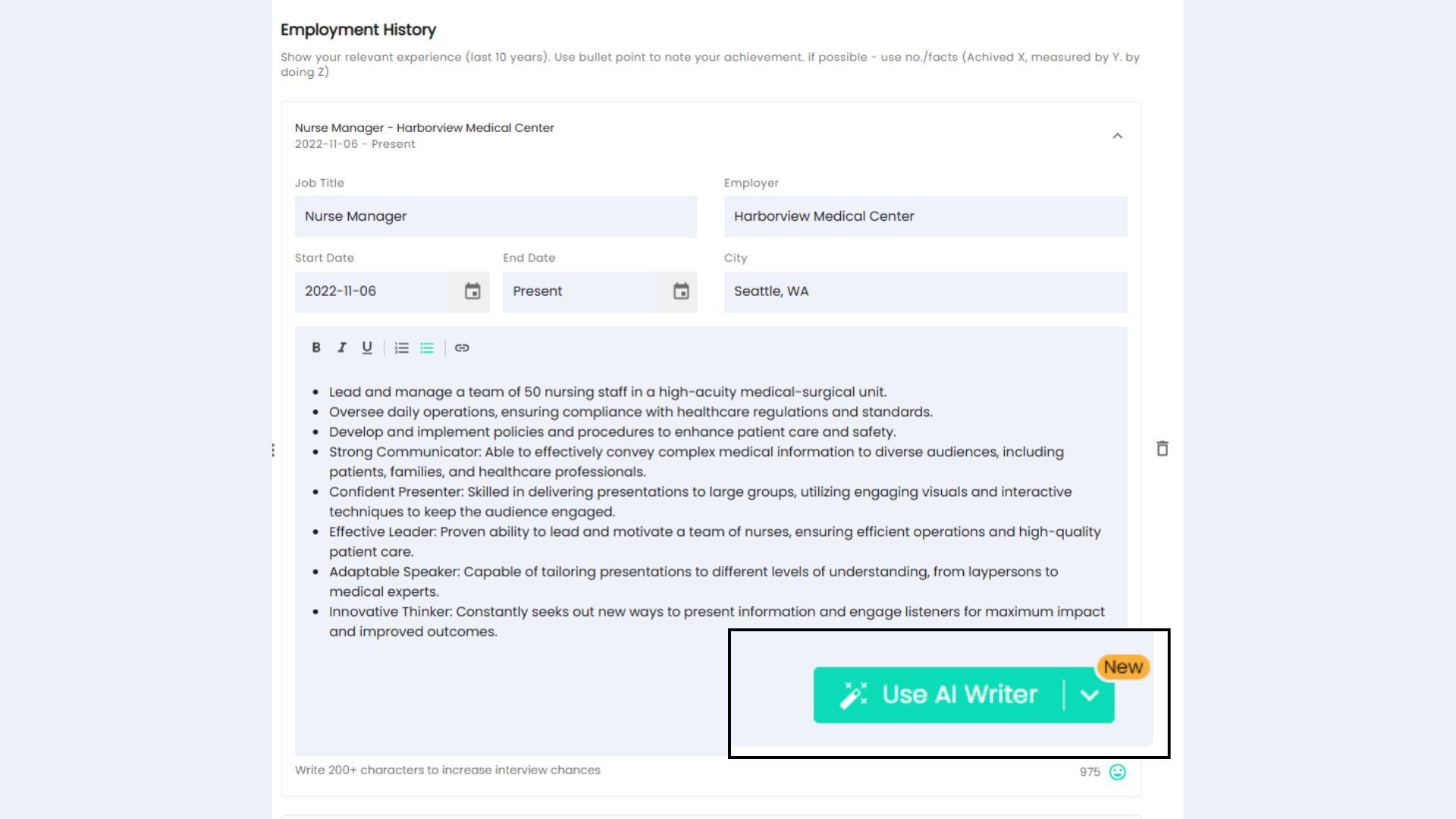
3. Prove Presentation skills through work experience
The strongest way to showcase presentation skills is by demonstrating how you used them in real situations. This turns a soft skill into measurable value.
Our Free resume builder provides AI credits for generating, updating and rewriting Work experience as per your requirement, so you can just go to Employment history section and press on "Generate with AI" and you will be able to customize your presentation skills there.
Example bullets for work experience:
- Delivered presentations to senior management to report project progress and performance metrics
- Presented campaign insights to clients, contributing to a 20% increase in client retention
- Conducted training presentations for new hires and cross-functional teams
- Led weekly team presentations to align stakeholders on goals and deadlines
Tip:
Whenever possible, include outcomes, numbers, or impact to make your presentation skills more credible.
Key takeaways
That brings us to the end of this guide on presentation skills. Let’s quickly revisit the most important ideas discussed throughout the article:
- Presentation skills are core communication abilities that help you express ideas clearly, confidently, and with impact.
- These skills go beyond public speaking and include clarity of thought, persuasion, creativity, emotional awareness, and audience connection.
- Strong presentation skills can positively influence your career prospects, academic success, professional visibility, and networking opportunities.
- Delivering better presentations requires thoughtful preparation, regular practice, audience-focused content, effective visuals, and confident delivery.
- Feeling nervous before presenting is completely normal, and learning how to manage that nervousness can actually improve performance.
- Continuous improvement comes from observing skilled speakers, learning through courses or talks, practicing often, and building confidence over time.
- To showcase presentation skills professionally, they should be strategically placed on your resume listed under soft skills, highlighted in the summary, and demonstrated through real achievements in your work experience.