
How to Talk About Your Skills in an Interview: Tips, Examples, and Best Answers

Trust Score: 4.7
369 reviews
Table of Contents
Effectively describing your skills in an interview is essential for impressing potential employers and standing out from the competition in today’s job market. Recruiters often assess not just what skills you have, but how clearly you can communicate them and connect them to real workplace outcomes.
If you’re unsure how to structure your responses, reviewing common Interview Questions and Answers can help you understand what employers expect. It’s also helpful to prepare strong responses for foundational prompts like Tell Me About Yourself Interview Question, where candidates often introduce their core skills.
In this blog, we’ll explain how to talk about your skills in an interview, with practical strategies and real examples that help you present your experience confidently. These examples will also show how to connect your abilities to measurable results something hiring managers value when evaluating candidates for a role.
Create your resume with Instaresume
Want to make the process faster? Use an AI-powered resume builder that helps you create a modern, ATS-friendly resume in minutes — complete with professionally written content suggestions and customizable templates.
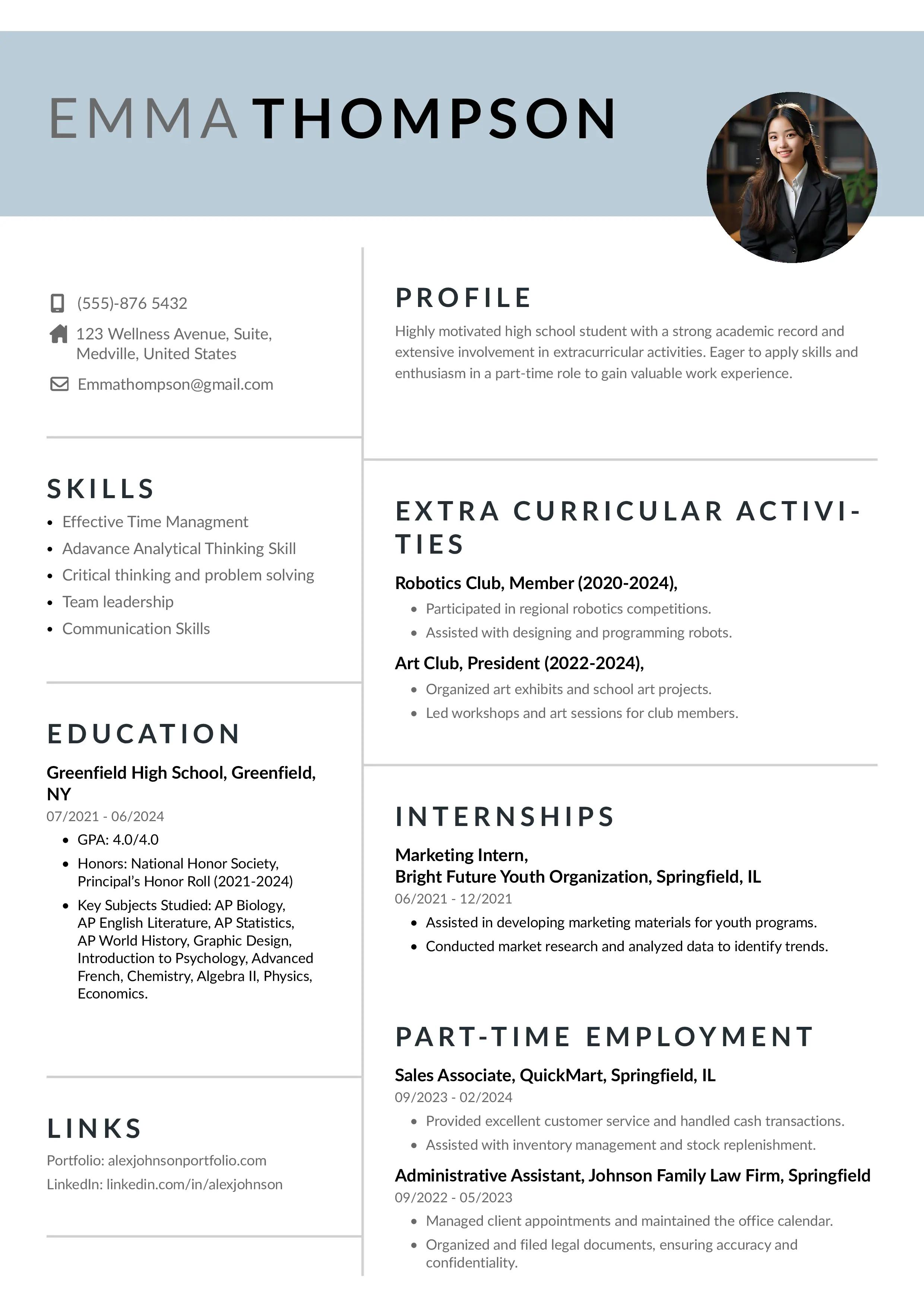
Edit and download this example of a High school student resume created using the Instaresume's Ice · Classic resume template (Free)
Why Employers Ask “Tell Me About Your Skills?”
During a Job Interview, one of the most common questions candidates hear is “Tell me about your skills.” While the question sounds simple, many candidates struggle to answer it effectively. Some list skills without explaining them, while others fail to show how their abilities contribute to real workplace results.
Employers already review your abilities when they read your resume. However, interviews allow them to understand how well you communicate your strengths and how those skills translate into performance. If you’ve already highlighted your abilities while creating a professional resume or exploring Resume Writing strategies, the interview is your chance to expand on those strengths with real examples.
In this guide, we’ll explain why employers ask this question, how to answer it effectively, practical tips, and sample answers to help you present your skills confidently.
When employers ask about your skills, they are trying to gain a deeper understanding of your professional capabilities. A resume may list your strengths, but interviewers want to hear how you personally describe your skills and how they apply to real work situations.
Evaluate Your Fit for the Role
Employers want to ensure that your skills align with the requirements of the position. Every role requires a unique combination of abilities, including technical knowledge, soft skills, and problem-solving capabilities.
For example, leadership roles may require strong management and communication abilities, while technical roles often emphasize analytical thinking and specialized expertise. Preparing for questions like these becomes easier when you practice answering common Interview Questions ahead of time.
Understand How You Apply Your Skills
Listing skills on a resume is only the first step. Employers want to know how you have applied those abilities in real situations.
For example, if you claim to have strong teamwork skills, interviewers may ask you to explain how you collaborated with colleagues to achieve a successful outcome. This helps employers evaluate how effectively you use your skills in a professional environment.
Evaluate Self-Awareness
Candidates who understand their strengths tend to perform better in interviews and workplace environments. Self-awareness allows you to clearly explain what you are good at and how your skills benefit the organization.
Candidates who prepare strong answers to questions like Tell Me About Yourself Interview Question often find it easier to describe their abilities because they already understand how their experiences connect to their skills.
Assess Communication Skills
Communication is essential in almost every profession. Employers use interview questions to assess how clearly you present your ideas and whether you can explain complex information effectively.
Your ability to describe your strengths confidently often reflects how well you will communicate with colleagues, managers, and clients.
How To Answer “Tell Me About Your Skills?”
Answering this question effectively requires preparation and structure. Instead of listing every ability you have, focus on presenting a few relevant skills supported by real examples.
Identify the Most Relevant Skills
Start by reviewing the job description and identifying the most important skills required for the role. These could include technical abilities, leadership skills, or problem-solving capabilities.
If you previously highlighted these strengths while building your resume or exploring Resume Skills Section strategies, those same abilities can form the foundation of your interview answer.
Explain Each Skill Clearly
Once you identify your main strengths, explain how they contribute to your work. For example, instead of saying you are a strong communicator, explain how communication helps you coordinate projects, collaborate with teams, or resolve misunderstandings.
Providing context helps interviewers understand how your skills translate into real workplace contributions.
Provide Real Examples
Employers value candidates who can support their claims with examples. Describing situations where your skills helped solve problems or improve outcomes makes your answer more credible.
For instance, if you previously described project achievements in your resume or a Cover Letter, you can expand on those experiences during the interview.
Highlight Results
Whenever possible, explain the positive outcomes of your actions. Employers are interested not only in what you did but also what results you achieved.
For example, your organizational skills might have helped complete a project ahead of schedule, or your analytical abilities might have helped identify a more efficient workflow.
Keep Your Answer Focused
A strong answer usually highlights two or three important skills rather than listing many abilities. A focused response helps interviewers remember your strengths more easily.
Tips For Answering “Tell Me About Your Skills”
Even if you have strong abilities, presenting them effectively during an interview requires preparation. The following tips can help you deliver a confident and compelling answer.
Focus on Job-Relevant Skills
Always prioritize skills that are directly related to the position you are applying for. If the role requires problem-solving, leadership, or analytical thinking, focus your answer on those strengths.
Combine Soft Skills and Technical Skills
Employers usually look for a balance of abilities. Technical skills show that you can perform tasks effectively, while soft skills demonstrate how well you collaborate with others.
Many candidates improve their chances of success by preparing for a variety of Behavioral Interview Questions that test both types of abilities.
Use Real Experiences
Examples make your answer stronger and more believable. Instead of simply stating that you are organized or adaptable, describe situations where those qualities helped you achieve positive results.
Stay Honest and Authentic
Authenticity is important during interviews. Employers value candidates who provide genuine answers rather than exaggerated claims.
Discuss skills you truly possess and provide real experiences that demonstrate them.
Practice Before the Interview
Preparing your answers in advance helps reduce nervousness and improves clarity. Practicing responses to questions about your strengths can help you communicate your ideas confidently during the interview.
“Tell Me About Your Skills” – 10 Sample Answers
1. Communication Skills
“One of my strongest skills is communication. In my previous role, I regularly coordinated with team members and clients to ensure that project requirements were clearly understood. I believe clear communication helps avoid misunderstandings and improves collaboration. By maintaining regular updates and encouraging open discussions, I was able to help my team complete projects efficiently and maintain positive relationships with stakeholders.”
2. Problem-Solving Skills
“I consider problem-solving to be one of my key strengths. Whenever challenges arise, I focus on analyzing the situation carefully and identifying practical solutions. For example, in my previous role, we encountered an unexpected delay in a project. I reviewed the workflow, identified the bottleneck, and suggested adjustments that allowed us to complete the project within the revised timeline.”
3. Time Management Skills
“One of my most valuable skills is time management. I am comfortable handling multiple responsibilities at once by organizing tasks based on priority and deadlines. In my previous role, this ability helped me consistently meet deadlines while maintaining the quality of my work. Staying organized and focused allows me to manage my responsibilities efficiently.”
4. Teamwork and Collaboration
“I believe teamwork is one of my strongest professional skills. I enjoy collaborating with colleagues and sharing ideas to achieve common goals. In my previous position, I worked closely with cross-functional teams on several projects. By maintaining clear communication and supporting my teammates whenever necessary, we were able to complete projects successfully and improve overall productivity.”
5. Adaptability
“Adaptability is one of the skills I value most in my professional life. Work environments can change quickly, and I try to remain flexible when new challenges or responsibilities arise. In my previous role, our team adopted a new software system, and I quickly learned how to use it and assisted my colleagues in adapting to it as well. This helped the team maintain productivity during the transition.”
6. Leadership Skills
“One of my key strengths is leadership. Even when I’m not in a formal leadership role, I take initiative to help organize tasks and support team members. For example, during a recent project, I helped coordinate responsibilities among team members and ensured that everyone stayed aligned with deadlines. This collaborative approach helped us complete the project successfully.”
7. Analytical Skills
“I have strong analytical skills, which allow me to evaluate situations carefully and make informed decisions. In my previous role, I often analyzed data to identify trends and improve processes. By using these insights, I was able to suggest changes that helped increase efficiency and improve overall performance.”
8. Organizational Skills
“My organizational skills help me manage tasks efficiently and maintain productivity. I prefer to structure my work with clear plans and timelines so that I can stay focused and meet deadlines consistently. This approach has helped me handle multiple responsibilities while ensuring that each task receives the attention it requires.”
9. Customer Service Skills
“One of my strongest skills is providing excellent customer service. I focus on understanding customer needs and ensuring they receive helpful and timely solutions. In my previous role, I handled customer inquiries and worked to resolve issues quickly, which helped improve customer satisfaction and build long-term relationships.”
10. Learning and Growth Mindset
“I believe my ability to learn quickly is one of my strongest skills. I enjoy gaining new knowledge and improving my abilities whenever possible. In previous roles, I actively sought opportunities to learn new tools and processes, which allowed me to contribute more effectively to my team and adapt to changing work environments.”
FAQs
1. How should I answer “Tell me about your skills” in an interview?
When answering this question, focus on two or three key skills that are relevant to the job. Briefly explain what each skill is and support it with a real example from your experience. Employers appreciate answers that clearly show how your abilities helped solve problems or achieve results during a Job Interview.
2. What skills should I mention when asked about my skills?
You should highlight skills that are most relevant to the position you are applying for. These can include a mix of technical skills, soft skills, leadership abilities, and problem-solving capabilities. Reviewing your resume and identifying the strengths you highlighted in your Resume Skills Section can help you prepare a focused answer.
3. How many skills should I mention in my answer?
It is best to mention two to three strong skills instead of listing many abilities. This allows you to explain each skill properly and provide examples that demonstrate how you applied them in your work experience.
4. Can I mention soft skills in my answer?
Yes, soft skills are extremely important in interviews. Skills such as communication, teamwork, adaptability, and leadership help employers understand how well you work with others. Many Behavioral Interview Questions are designed specifically to evaluate these abilities.
5. Should I provide examples when talking about my skills?
Yes. Providing examples makes your answer more convincing. Employers want to see how you used your skills in real situations. Briefly describing a challenge, the action you took, and the result achieved helps interviewers understand your abilities more clearly.
6. What if I don’t have much work experience?
If you are a fresher or have limited professional experience, you can mention skills developed through academic projects, internships, volunteer work, or extracurricular activities. What matters most is showing how you applied those skills in real situations.
7. How long should my answer be?
Your response should typically last 30–60 seconds. It should be clear, focused, and supported with examples without becoming too lengthy or overly detailed.
8. How can I prepare for this question before an interview?
You can prepare by reviewing the job description, identifying relevant skills, and practicing your responses. It also helps to review common Interview Questions and Answers so you feel more confident when discussing your strengths during the interview.
9. Should I mention both technical and soft skills?
Yes. A balanced answer that includes both technical expertise and interpersonal skills shows that you are capable of performing tasks while also working effectively with colleagues and teams.
10. What mistakes should I avoid when answering this question?
Some common mistakes include:
 Listing too many skills without explanation
- Giving vague answers without examples
- Mentioning skills that are not relevant to the job
- Appearing unsure or unprepared
Preparing your answer in advance and connecting your skills with real experiences can help you avoid these mistakes.
Conclusion
The interview question “Tell me about your skills” gives you an opportunity to clearly demonstrate your strengths and show employers how your abilities can contribute to their organization. Instead of simply listing skills, the key is to explain them with confidence, support them with examples, and connect them to real achievements.
However, it’s important to remember that interviewers usually discover your skills before the interview even begins through your resume and application documents. If your resume clearly highlights your abilities, achievements, and experience, it significantly increases your chances of getting shortlisted for a Job Interview.
That’s why creating a strong and well-structured resume is essential. A professional resume should showcase your skills in a way that is easy for recruiters and hiring systems to understand. Using tools like a Resume Builder can help you organize your skills, experience, and accomplishments effectively.
In addition, a compelling Cover Letter Builder allows you to expand on your strengths and explain how your abilities align with the job you are applying for. Before submitting your application, you can also improve your chances of passing automated screening systems by using an ATS Resume Checker, which helps ensure your resume is optimized for modern hiring processes.
Once your resume clearly highlights your skills and passes ATS screening, you are far more likely to secure interview opportunities. From there, you can confidently explain those same skills during the interview and demonstrate why you are the right candidate for the role.
Preparing both your resume and your interview answers is the best way to stand out in today’s competitive job market and move one step closer to landing your desired job.