
10 Effective Goal-Setting Strategies for Achieving Your Goals in 2026

Trust Score: 4.8
387 reviews

Table of Contents
Effective goal-setting strategies can be the difference between wishful thinking and real achievement. Clear, well-defined goals provide direction, boost motivation, and help you measure progress in both your personal and professional life.
However, setting goals alone isn’t enough. Achieving them requires a thoughtful approach, realistic planning, and consistent action. Success depends not just on what goals you set, but how you set them. By using the right goal-setting techniques, you can stay focused, overcome obstacles, and build sustainable habits that lead to long-term success.
Below are proven goal-setting strategies designed to help you turn your goals into achievable outcomes.
Simple Ways to Set Goals and Achieve Them
Clarity and intention are the foundation of effective goal setting. When your goals are clearly defined, you know exactly what you’re working toward and why it matters. Intentional goals help you prioritize actions, stay focused, and make consistent progress instead of feeling overwhelmed or directionless.
There is also a clear difference between wishful thinking and actionable goals. Wishful thinking relies on hope without a plan, while actionable goals are specific, measurable, and supported by clear steps. Turning ideas into actionable goals shifts you from simply wanting results to actively working toward achieving them.
Write Down Your Goals
Writing down your goals transforms abstract ideas into clear commitments. When goals are written, they feel more real and easier to focus on, increasing both accountability and motivation. Seeing your goals on paper or digitally also helps you track progress and take purposeful action, turning intentions into achievable outcomes.
Why Written Goals Increase Commitment and Clarity
Writing down your goals brings clarity by defining exactly what you want to achieve, removing confusion and guesswork. A written goal creates a sense of commitment, making it feel more real and harder to ignore. It also helps you stay focused, track progress, and revisit your objectives regularly, reinforcing motivation and keeping your efforts aligned with clear outcomes.
Choose Goals That Inspire, Motivate, and Challenge You
The most effective goals are those that align with your passions and support personal growth. When a goal truly matters to you, staying motivated becomes easier, even during challenging moments. Meaningful goals create a sense of purpose that pushes you to keep moving forward.
At the same time, it’s important to balance ambition with realism. Goals should stretch your abilities without becoming overwhelming. Setting challenging yet achievable goals helps you grow steadily while avoiding burnout and maintaining long-term consistency.
Setting career goals is important, but many candidates struggle to reflect those goals on their resume. Using a well-designed resume builder helps translate skills, milestones, and achievements into a format recruiters actually notice.
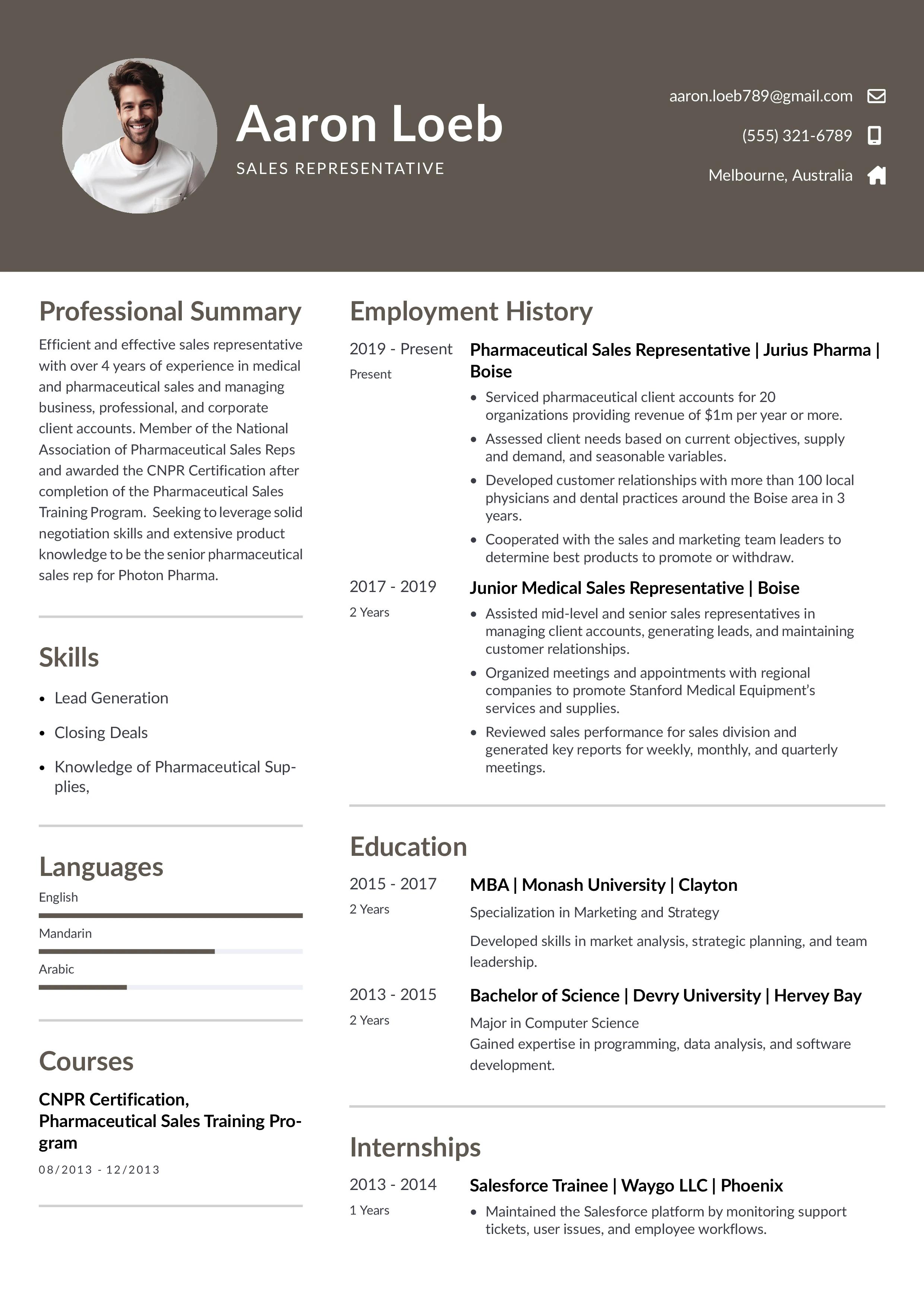
Here's an example for sales representative resume with the help of which we will try to understand how to write all the sections of the resume:
Answer the Six W’s of Goal Setting
Identify who will take part in achieving this goal. This could include you, a team, a mentor, or anyone whose support or contribution is required.
Clearly define the goal itself. Be specific about the outcome you want so there is no confusion about what success looks like.
Set a realistic timeframe or deadline. A clear timeline creates urgency and helps you stay focused and accountable.
Determine the environment or context where the goal will be worked on or achieved, such as at work, at home, or in a specific setting.
Understanding why the goal is important gives it meaning. A strong reason keeps you motivated when challenges arise.
List the tools, skills, time, or steps required to move forward. Knowing what you need helps you plan effectively and take consistent action.
Example 1: Software Developer – Learn React.js and Build a Portfolio Project
1. Who is involved?
 Myself (developer), online course instructors, GitHub community for feedback, a mentor for code review.
2. What do you want to achieve?
- Learn React.js and build a portfolio project (a personal task management app) to showcase on GitHub.
3. When will you achieve it?
- Complete learning and project development within 3 months (by March 31, 2026).
4. Where will the goal take place?
5. Why does this goal matter?
- Strengthen front-end development skills, make a strong portfolio to apply for software developer jobs.
6. Which resources or actions are needed?
- Resources: Laptop, internet, VS Code, React documentation, GitHub account
- Actions: Follow React tutorials weekly, build app features incrementally, commit code to GitHub, seek mentor review.
Example 2: Data Analyst – Master SQL and Tableau
1. Who is involved?
- Myself, online course instructors, data analysis community for discussion, mentor for guidance.
2. What do you want to achieve?
- Become proficient in SQL and Tableau, and create a dashboard analyzing a public dataset.
3. When will you achieve it?
- Within 2 months (by February 28, 2026).
4. Where will the goal take place?
- At home using MySQL Workbench and Tableau Public.
5. Why does this goal matter?
- Build hands-on experience, improve employability as a data analyst, and prepare for data-focused interviews.
6. Which resources or actions are needed?
- Resources: Laptop, SQL software, Tableau software, public datasets
- Actions: Complete SQL exercises daily, create a Tableau dashboard, get feedback from online community.
Create a Clear Plan
1. Breaking Goals into Actionable Steps
Large goals can feel overwhelming. Breaking them into smaller, manageable tasks makes them achievable and provides a roadmap.
Steps:
- Identify the main goal.
- Divide it into smaller sub-goals or tasks.
- Prioritize tasks based on importance and sequence.
Example (Technical Job – Build a Portfolio Website):
- Goal: Launch a portfolio website in 2 months.
- Actionable Steps:
- Choose a website platform (WordPress, React, or HTML/CSS).
- Design the layout and user interface.
- Write content for portfolio sections (About, Projects, Contact).
- Develop and code the website.
- Test functionality and fix bugs.
- Publish and share the website online.
2. Setting Milestones and Timelines
Milestones mark key points of progress and timelines keep you accountable. They help track whether you’re on schedule.
Steps:
- Decide the major milestones for your goal.
- Assign deadlines for each milestone.
- Monitor progress regularly.
Example (Portfolio Website):
- Week 1: Choose platform and design layout
- Week 2–3: Write content and finalize structure
- Week 4–5: Code and develop website
- Week 6: Test and fix bugs
- Week 7: Publish and launch
Want to turn your strengthened critical thinking skills into tangible career progress? Learn how to showcase these skills effectively on your resume with our expert tips.
3. Preparing for Obstacles
Anticipating challenges reduces the risk of delays and helps you stay motivated.
Steps:
- Identify potential obstacles (technical, time-related, resource-based).
- Brainstorm solutions in advance.
- Keep contingency plans ready.
Example (Portfolio Website):
- Obstacle: Difficulty in coding certain features.
- Solution: Use online tutorials, forums, or ask a mentor for guidance.
- Obstacle: Limited time due to part-time work.
- Solution: Allocate 1–2 hours daily, focus on small tasks consistently.
- Obstacle: Website bugs before launch.
- Solution: Test each feature thoroughly before final deployment, keep backup copies.
Utilize the PACT Method for Goal Setting
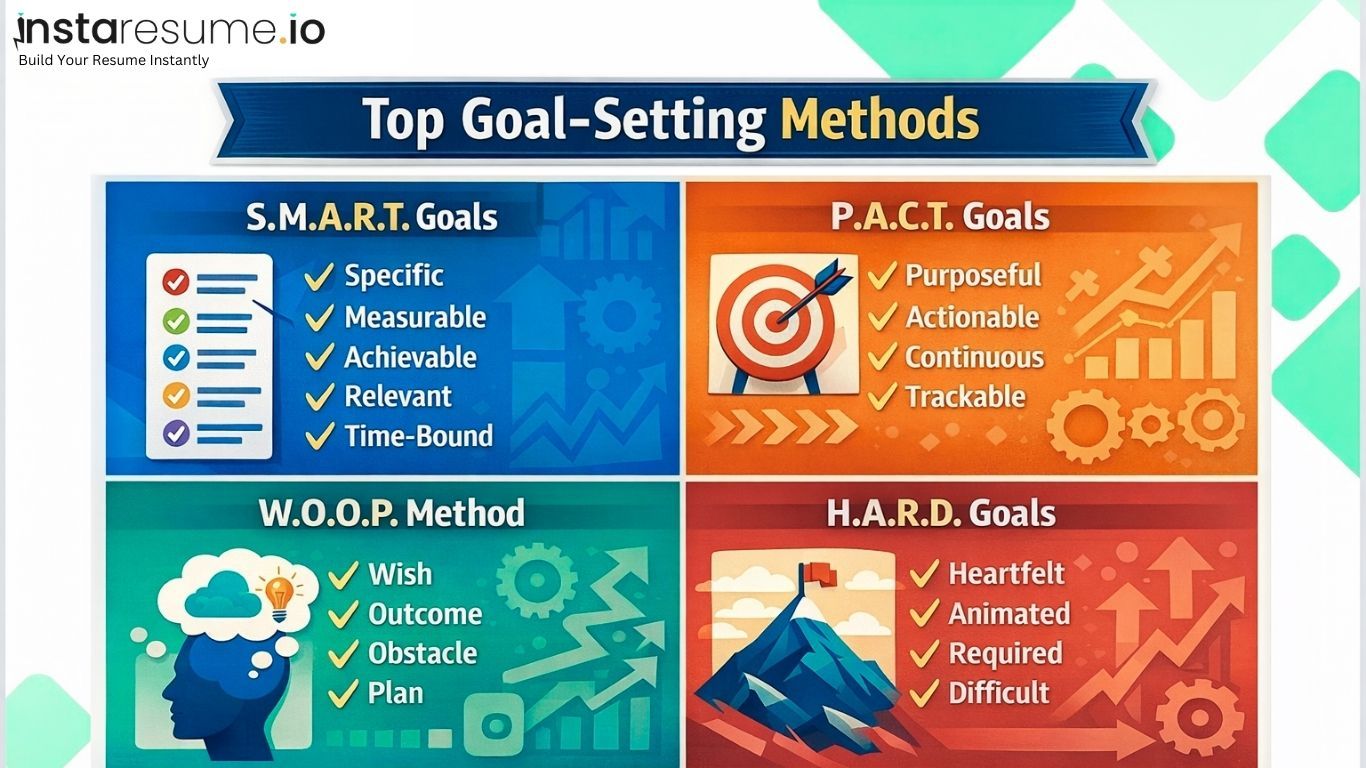
The PACT method is a practical framework for setting and achieving meaningful goals. Unlike traditional goal-setting approaches, PACT focuses on consistent progress, flexibility, and measurable results. It consists of four key components:
1. Purposeful
Goals should be rooted in your personal values and deeper motivations. Reflecting on why a goal matter helps you stay committed during challenges.
Example: If your goal is to become a soccer team captain, ask yourself what drives this ambition—is it leadership, personal growth, or the responsibility of guiding a team? Connecting your goal to a deeper purpose gives it lasting meaning.
2. Actionable
PACT emphasizes daily, consistent actions rather than overplanning or worrying about distant outcomes. Small, repeated steps lead to significant long-term results.
Example: Instead of aiming vaguely to “get fit,” create an actionable routine: run 20 minutes every morning, do strength exercises thrice a week, and track your meals.
3. Continuous
A continuous mindset encourages experimentation, learning, and flexibility. Don’t fear mistakes—they are essential for growth. The focus is on forward momentum rather than perfection.
Example: If your first attempt at coding a project fails, analyze what went wrong, adjust your approach, and keep building. Continuous progress compounds over time.
4. Trackable
Tracking progress allows you to measure improvement, stay motivated, and identify strategies that work. Simple check-ins, whether daily, weekly, or monthly, keep your goal visible and achievable.
Example: Maintain a habit tracker, a progress journal, or a project management tool to monitor completed tasks, milestones, and lessons learned.
Summary:
The PACT method transforms goal setting from a one-time decision into a sustainable, actionable, and measurable journey. By ensuring your goals are purposeful, actionable, continuous, and trackable, you increase your chances of long-term success and personal growth.
Review, Adjust, and Improve Your Goals
Review, Adjust, and Improve Your Goals
Achieving goals isn’t always a straight path. Regularly reviewing and refining your goals ensures they remain relevant, realistic, and aligned with your priorities. This process helps you turn setbacks into learning opportunities and keeps you moving forward.
1. When and How to Revise Goals
Goals should be reviewed periodically weekly, monthly, or at major milestones. Consider revising goals when:
- You’ve achieved part of the goal and want to set a new challenge.
- External circumstances change (new responsibilities, resources, or deadlines).
- Your original plan isn’t delivering the expected results.
How to revise:
- Break larger goals into smaller, achievable sub-goals.
- Adjust timelines if needed.
- Refocus priorities to match current needs.
Example:
Prepare for job interviews strategically
2. Learning from Setbacks
Setbacks are natural and valuable opportunities for growth. Instead of viewing them as failures, analyze what went wrong and why. Use these insights to improve future planning and decision-making.
Steps to learn from setbacks:
- Identify the cause of the obstacle (time, resources, skills, or unforeseen circumstances).
- Adjust your strategy to avoid repeating the same issue.
- Maintain a growth mindset—see setbacks as feedback rather than failure.
Example:
Summary:
Regularly reviewing and adjusting your goals ensures they remain achievable and aligned with your growth. By learning from setbacks, you strengthen your resilience and improve your future goal-setting strategies. Continuous reflection and adjustment transform goals into a dynamic, evolving process, leading to long-term success.
The W.O.O.P. Method
Focus: Mental Contrasting & Behavioral Science
The W.O.O.P. Method is a psychology-based strategy designed to help individuals move beyond mere "positive thinking." It encourages you to visualize your dreams while simultaneously identifying the internal hurdles that might stop you.
- Wish: Identify a meaningful, challenging, yet attainable goal you want to achieve.
- Outcome: Imagine the best possible result. How will it feel once you’ve succeeded?
- Obstacle: Identify the internal thoughts, emotions, or habits that might stand in your way.
- Plan: Create an "if-then" plan. If the obstacle arises, then I will take [X] action to overcome it.
Best for: Overcoming procrastination, changing personal habits, and navigating complex projects where internal resistance is likely.
H.A.R.D. Goals
Focus: Emotional Connection & High Achievement
H.A.R.D. Goals emphasize the importance of emotional resonance. This method argues that we are most likely to succeed when we are deeply attached to the outcome and pushed to our limits.
- Heartfelt: You must have a deep, emotional connection to the goal. It should matter to you personally, not just sound good on paper.
- Animated: You should be able to visualize the goal so vividly that it feels real. If you can’t see it, you can’t reach it.
- Required: The goal should feel like a necessity, not an option. It is something you must do for your future or career.
- Difficult: The goal must challenge you. Setting "easy" goals leads to complacency; setting difficult ones sparks growth and innovation.
Best for: Career pivots, major life changes, and high-performance environments where "playing it safe" isn't enough.
FAQs on Goal Setting Strategies
1. What are the most effective goal-setting strategies?
Effective goal-setting strategies include using the SMART framework (Specific, Measurable, Achievable, Relevant, Time-bound), the PACT method (Purposeful, Actionable, Continuous, Trackable), and breaking goals into smaller actionable steps with milestones. Regular reflection and adjustment are also key.
2. How do I stay motivated while working toward long-term goals?
Stay motivated by breaking goals into small milestones, celebrating small wins, tracking progress, and rewarding yourself for achievements. Connecting goals to your personal purpose also helps maintain focus.
3. How often should I review and adjust my goals?
Goals should be reviewed periodically weekly, monthly, or at major milestones. Adjust them when timelines shift, priorities change, or strategies aren’t delivering results. Frequent reviews ensure goals stay realistic and relevant.
4. What should I do if I face setbacks while pursuing a goal?
Setbacks are normal. Analyze what went wrong, adjust your strategy, and continue moving forward. Use reflection to learn from mistakes and view obstacles as opportunities to improve your goal-setting approach.
5. How can I track progress effectively for my goals?
Track progress using checklists, habit trackers, journals, or project management tools. Regular check-ins allow you to measure improvement, stay accountable, and identify strategies that work.
6. Should goals be flexible or fixed?
Goals should be flexible enough to adjust based on experience and changing circumstances, yet specific enough to provide clear direction. Flexibility helps maintain motivation while staying aligned with your priorities.
7. How can small wins help in achieving bigger goals?
Celebrating small milestones reinforces progress, boosts confidence, and makes long-term goals feel achievable. Positive reinforcement encourages consistency and prevents burnout.
8. Can goal-setting strategies be applied to both personal and professional life?
Yes, effective goal-setting strategies like SMART, PACT, and milestone planning can be applied to personal, educational, and professional goals. The key is to customize the approach according to the context and desired outcome.