150+ Hobbies to List on a Resume (Examples & Guide)

Trust Score: 4.8
387 reviews
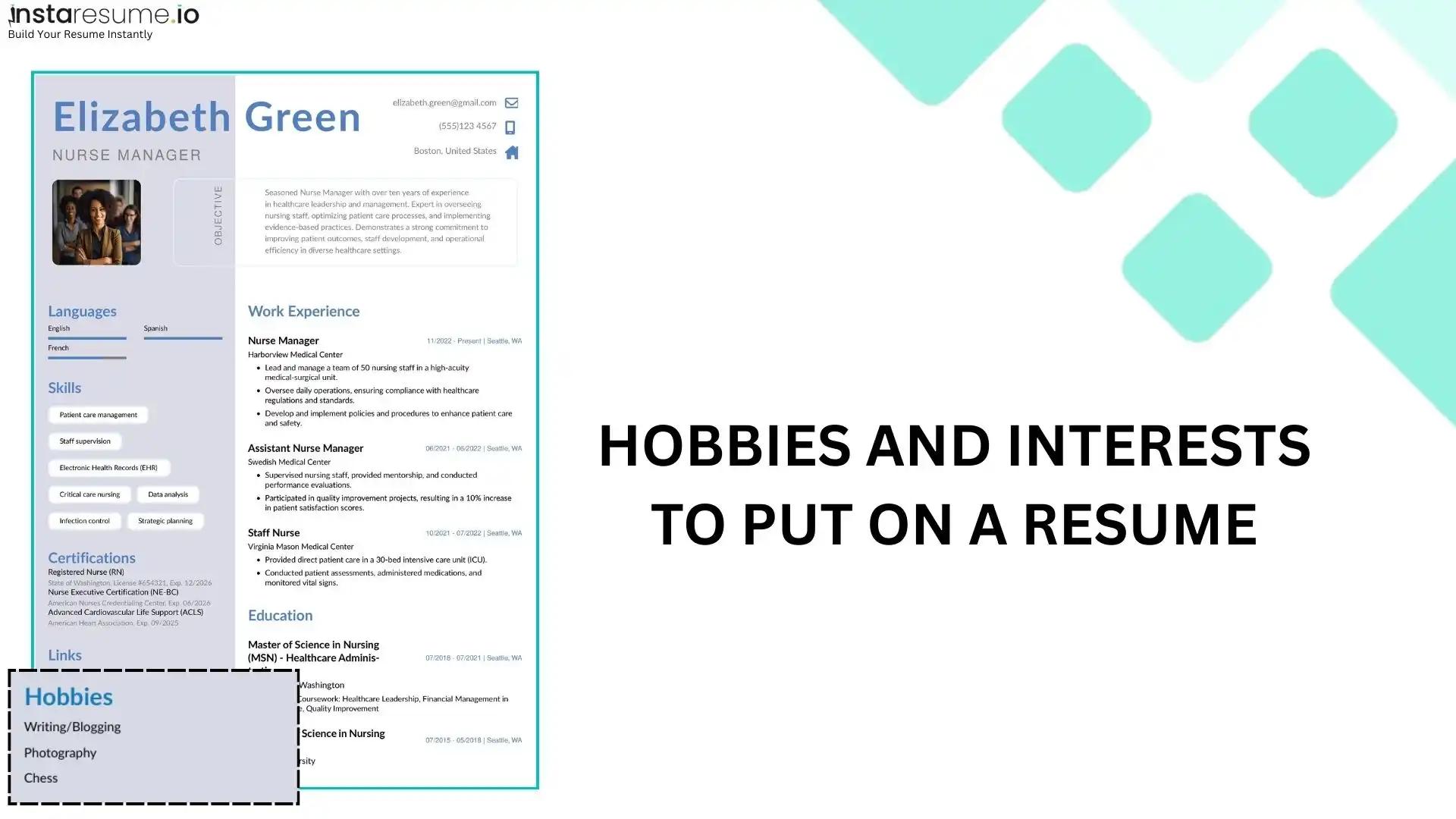
Table of Contents
Your resume is more than a list of jobs and degrees it’s a snapshot of who you are as a professional. While skills and experience take center stage, hobbies and interests can add depth to your profile, especially when they reflect qualities employers value. When listed thoughtfully, hobbies can humanize your resume, show cultural fit, and highlight transferable skills that may not be obvious from work history alone.
This guide covers 150+ hobbies to list on a resume, explains when and why to include them, and shows how to align hobbies with job requirements so they strengthen not distract from your application.
Should you put hobbies on a resume?
Yes, but only when they add value. Hobbies are not mandatory for every resume. Their purpose is to support your candidacy by revealing relevant skills, traits, or interests that complement the role. If you’re unsure how to balance sections effectively, using a structured resume builder can help you decide what to include and what to skip.
When to include hobbies and interests on a resume
Include hobbies if:
 You’re a student, fresher, or career switcher with limited work experience, In such cases, hobbies can strengthen a student resume by showcasing potential and transferable skills.
- The hobbies demonstrate job-relevant skills (leadership, creativity, teamwork, technical ability), You can align them with the role by highlighting the right resume skills.
- You’re applying to a culture-driven company that values personality and interests
- The job description explicitly mentions interests, extracurriculars, or culture fit
Avoid listing hobbies if:
- Your resume is already full with strong, relevant experience and needs tighter focus. In this case, prioritizing core sections using a professional resume format is more effective.
- The hobbies are generic, vague, or unrelated to the role and do not add meaningful context.
- They could raise red flags or appear unprofessional, which may weaken the overall impact of an otherwise strong resume.
What are good hobbies to put on a resume?
Good hobbies on a resume are not random personal interests they are strategic signals. They quietly communicate how you think, learn, collaborate, and grow outside formal job titles. Recruiters often scan this section to understand your personality, motivation, and cultural fit, especially when technical qualifications are similar across candidates. Structuring this section properly within a well-designed resume layout helps ensure your hobbies support not distract from your overall profile.
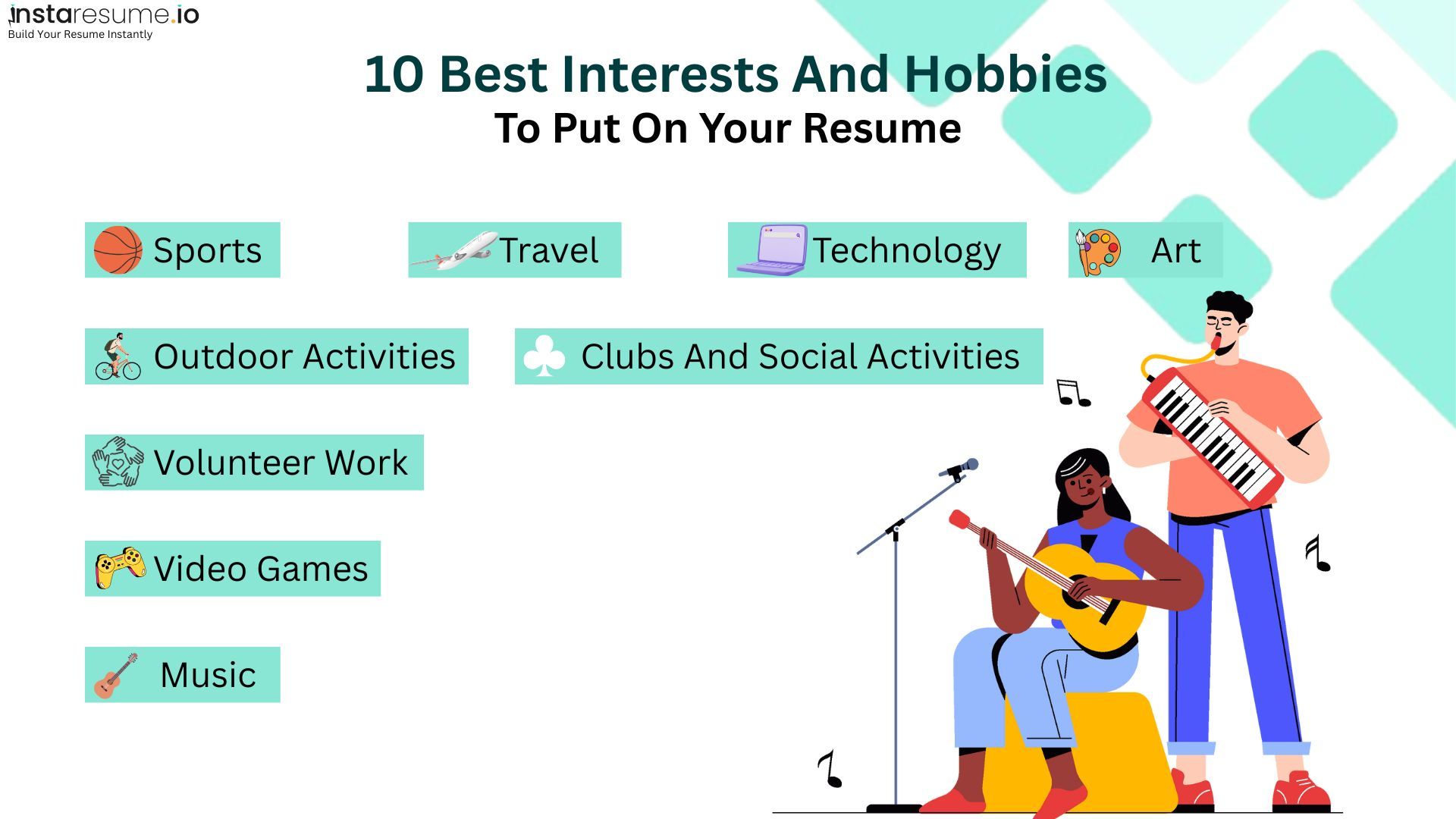
Good hobbies typically:
Reflect transferable skills
Skills like communication, leadership, problem-solving, creativity, or analytical thinking can be demonstrated through hobbies just as effectively as through work experience.
Show initiative, discipline, or continuous growth
Hobbies that require consistency such as long-term learning, training, or building something from scratch signal self-motivation and a strong work ethic. Highlighting these alongside core resume skills helps recruiters quickly connect your interests to job relevance.
Are specific, not vague
Specific hobbies feel credible and intentional, while vague ones feel like filler. Precision improves clarity and builds trust with recruiters, much like using well-defined resume keywords improves visibility during screening.
Support the job description
The best hobbies directly or indirectly reinforce the skills mentioned in the role you’re applying for.
How specificity increases impact
Generic hobbies rarely stand out because they don’t explain how you spend your time or what you gain from it. Compare the difference:
- Reading
- Reading business strategy, leadership, and behavioral psychology books
- Writing
- Writing long-form blogs on career growth and resume optimization
The second version instantly communicates intent, relevance, and skill alignment.
Recruiter perspective
From a hiring standpoint, well-chosen hobbies help answer questions like:
- Are you proactive about self-improvement?
- Do your interests align with the role or industry?
- Will you fit into the team culture?
When hobbies answer these questions naturally, they strengthen your resume without needing extra explanation.
150+ Examples of hobbies to put on a resume
Below is a categorized list of 150+ hobbies, grouped by the skills they demonstrate.
Hobbies that showcase communication skills
Public speaking
Blogging
Podcast hosting
Content writing
Storytelling
Debate clubs
Spoken word poetry
Hosting events
Copywriting
Social media content creation
YouTube video creation
Journalism
Language learning
Toastmasters participation
Voice-over work
Script writing
Email newsletter writing
Interview hosting
Community moderation
Online forum participation
Hobbies that demonstrate leadership skills
Leading community groups
Student council participation
Mentoring juniors
Coaching sports teams
Organizing meetups
Running online communities
Volunteering as a team lead
Managing events
Club presidency
Project leadership (personal projects)
NGO coordination
Training facilitation
Campus ambassador roles
Startup founding (side projects)
Volunteer program management
Hobbies that highlight interpersonal skills
Volunteering
Networking events
Peer mentoring
Community service
Teaching underprivileged children
Counseling activities
Cultural exchange programs
Team sports
Customer support volunteering
Conflict mediation activities
Peer coaching
Group facilitation
Alumni engagement
Social outreach programs
Employee engagement initiatives
Hobbies that require problem-solving skills
Puzzle solving
Chess
Sudoku
Coding challenges
Hackathons
Escape room challenges
Strategy games
Robotics building
DIY projects
Game design
Case study analysis
Logic games
Algorithm practice
Product teardown analysis
Brain-training apps
Hobbies that reflect teamwork skills
Team sports (football, cricket, basketball)
Group volunteering
Band participation
Theatre groups
Group research projects
Startup collaboration
Event planning teams
Sports leagues
Group fitness classes
Open-source collaboration
Choir participation
Dance crews
Film production teams
Hackathon teams
Community building initiatives
Hobbies that indicate research skills
Academic research
Market research
Data collection projects
Survey design
Case study writing
Industry analysis
Trend analysis
Whitepaper reading
Thesis work
UX research
Policy research
Competitive benchmarking
Literature reviews
User behavior analysis
Product research
Hobbies that showcase creative skills
Graphic design
Illustration
Photography
Videography
Creative writing
Painting
Calligraphy
UI/UX design
Animation
Music composition
Songwriting
Crafting
Fashion styling
Interior decor projects
Brand identity design
Hobbies that emphasize technical skills
Coding personal projects
App development
Website building
Game development
Automation scripting
Data visualization
Machine learning experiments
Cloud computing labs
Hardware tinkering
Cybersecurity practice
AI tool experimentation
No-code development
API integration projects
Database management practice
Technical blogging
Hobbies that cultivate analytical skills
Data analysis projects
Financial modeling
Stock market analysis
Business simulations
A/B testing experiments
Competitive analysis
Statistical modeling
Research interpretation
KPI tracking
Operations analysis
Hobbies that showcase organizational skills
Event planning
Travel itinerary planning
Personal budgeting
Productivity systems building
Calendar optimization
Volunteer coordination
Digital organization systems
Documentation management
Knowledge base creation
Process optimization
Hobbies that build presentation skills
Slide design
Pitch deck creation
Workshop facilitation
Demo presentations
Webinar hosting
Teaching workshops
Conference speaking
Hobbies that highlight adaptability
Solo travel
Backpacking
Cultural immersion activities
Learning new tools quickly
Freelance projects
Cross-functional volunteering
Remote collaboration
Hobbies that cultivate a strong work ethic
Marathon training
Fitness challenges
Daily writing practice
Side hustles
Long-term personal projects
Competitive sports training
Self-paced online courses
Certification preparation
Showcase your hobbies with ease
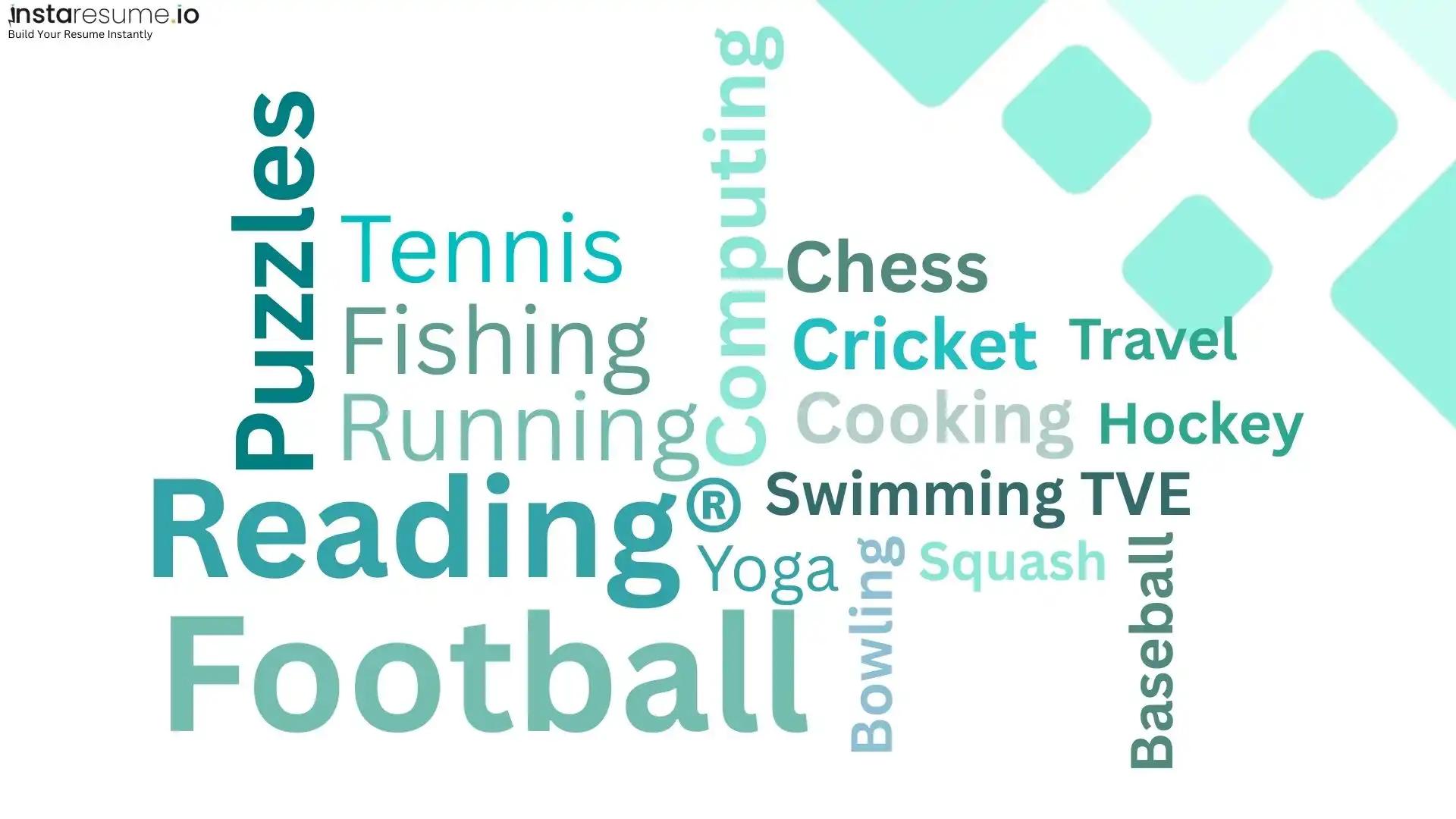
Hobbies are most effective on a resume when they naturally complement your professional narrative. Instead of listing interests at random, choose hobbies that reinforce the strengths already highlighted in your work experience, education, or projects. When aligned well, hobbies serve as proof points for abilities like communication, leadership, creativity, or problem-solving rather than reading as filler. This alignment works best when your resume follows a clear resume format that keeps every section purposeful.
A thoughtfully curated hobbies section helps recruiters quickly see how you apply your skills beyond formal job roles. It adds depth to your profile and shows consistency in your strengths, making your resume feel intentional, authentic, and professionally cohesive. This is particularly impactful for candidates building a strong professional resume or refining a fresher resume where personality and potential matter more.
How to list hobbies on a resume
Listing hobbies on a resume is not about filling empty space it’s about reinforcing your professional value. When done thoughtfully, hobbies can subtly communicate your soft skills, work ethic, interests, and cultural fit qualities recruiters often look for but don’t always spell out in job descriptions.
Recruiter studies consistently show that soft skills and cultural alignment influence shortlisting, especially when candidates have similar qualifications. According to LinkedIn’s Global Talent Trends, over 90% of recruiters believe soft skills are just as important as hard skills. A well-chosen hobbies section becomes a simple yet powerful way to signal those skills without explicitly stating them.
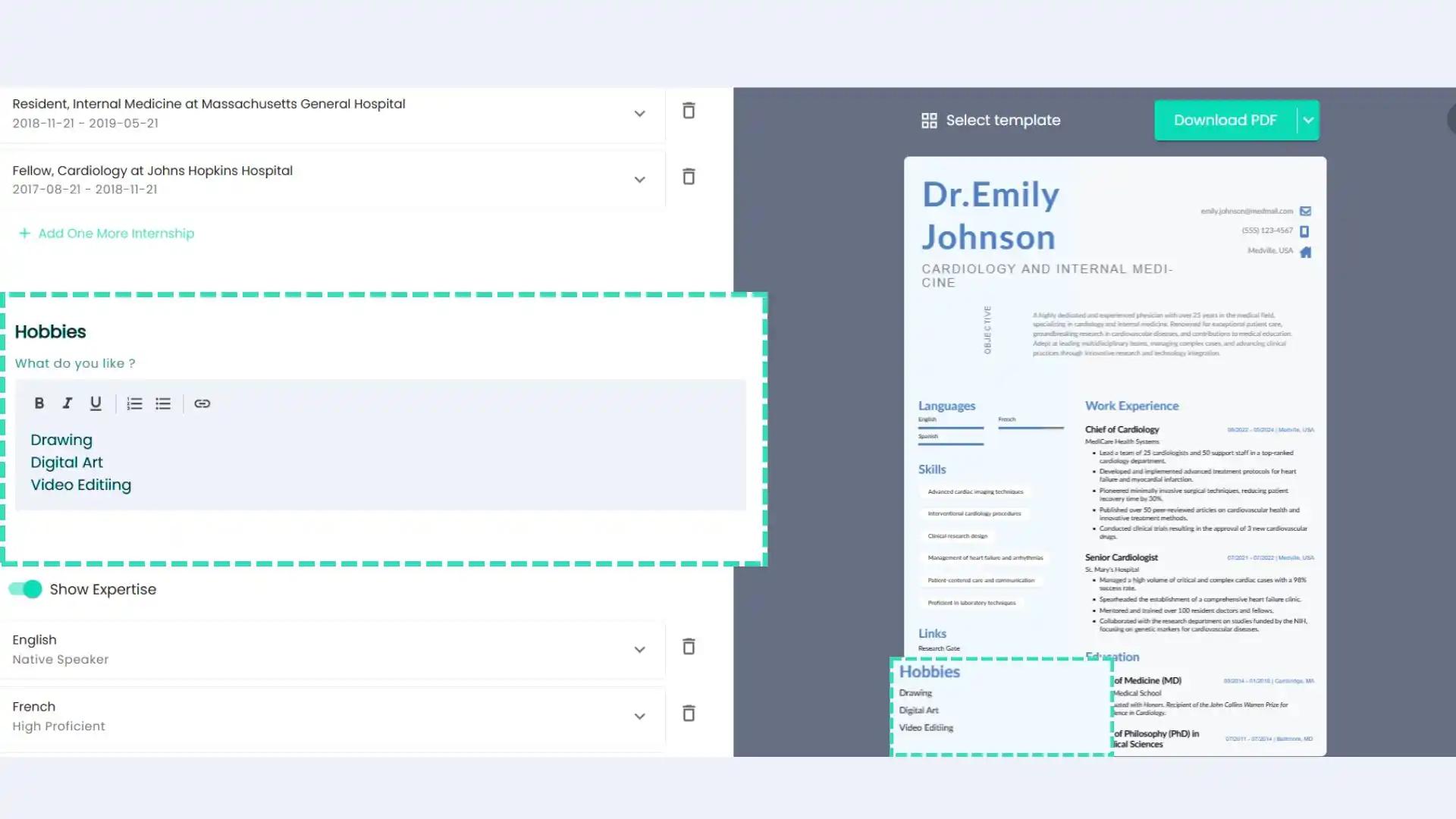
Below is a structured, recruiter-approved approach to listing hobbies effectively on your resume.
Choose Hobbies That Align With the Role
Your hobbies should complement the job you’re applying for. The goal is relevance, not completeness.
For example:
- A content or marketing role benefits from blogging, podcasting, or social media creation.
- A technical role pairs well with coding projects, automation scripting, or open-source contributions.
- A leadership or management role is strengthened by mentoring, event organization, or community leadership.
When hobbies align with job requirements, they reinforce your suitability rather than distract from it.
Focus on Skills, Not Personal Preferences
Avoid listing hobbies that don’t demonstrate transferable skills (such as “watching movies” or “scrolling social media”). Instead, frame hobbies around what they develop:
- “Photography” → visual creativity and attention to detail
- “Chess” → strategic thinking and problem-solving
- “Volunteering” → teamwork, empathy, and responsibility
Recruiters read hobbies as signals of behavior, not leisure activities.
Keep the Section Short and Strategic
A hobbies section should be concise usually 3 to 6 relevant hobbies is enough. Overloading this section can dilute its impact and make it feel unfocused. Think of it as a highlight reel, not a full list of interests.
Place it toward the bottom of your resume unless:
- You’re a fresher or student with limited experience
- Your hobbies are highly relevant to the role
In those cases, the section can carry more weight.
Use Professional, Skill-Oriented Language
How you phrase hobbies matters. Compare:
- “Writing posts on Instagram”
- “Social media content creation and audience engagement”
The second version sounds intentional, professional, and skill-driven exactly what recruiters expect.
Avoid Redundancy With Your Experience Section
Your hobbies should support, not repeat, what’s already in your experience. If your job history shows leadership, hobbies can reinforce it in a different context (e.g., mentoring, community leadership). This consistency strengthens your overall narrative.
Be Honest and Interview-Ready
Only list hobbies you genuinely pursue. Recruiters sometimes ask about them to break the ice or assess personality. Authentic hobbies make you sound confident and credible, while exaggerated ones can backfire.
Tailor Hobbies for Each Application
Just like skills and summaries, hobbies should be adjusted based on the role and company culture. A startup may value adaptability and side projects, while a corporate role may appreciate structure, teamwork, and consistency.
Align your hobbies with the job description
Your hobbies should never exist in isolation on your resume they should directly support the role you’re applying for. Start by reviewing the job description and identifying the key skills, traits, and responsibilities the employer emphasizes. Then, choose hobbies that naturally reflect those same qualities.
For example, if a role highlights communication and content creation, hobbies like blogging, public speaking, or podcasting reinforce your fit. If the job values problem-solving or analytical thinking, hobbies such as coding projects, chess, data analysis, or case study research add credibility. Leadership-focused roles benefit from hobbies like mentoring, event organization, or community management.
If tailoring your resume for each job feels time-consuming, you can use our website’s “Tailor Your Resume” feature, which automatically aligns your resume including the hobbies section with the job description. It ensures your hobbies match relevant skills and keywords while maintaining proper formatting, so your resume stays recruiter- and ATS-friendly with minimal effort.
This approach keeps your resume cohesive, intentional, and clearly aligned with what employers are looking for without the guesswork.
How to Place and Prioritize Hobbies on a Resume (With examples)
There are three effective ways to place hobbies on a resume, and the right approach depends on relevance, experience level, and how many hobbies you include. Placement and quantity work together where you list hobbies should reflect how strongly they support the role.
How many hobbies should you list?
There’s no fixed number, but in most cases, 3 to 6 well-chosen hobbies is ideal. The focus should always be quality and relevance, not quantity.
Recruiters scan resumes quickly. A short, focused hobbies section is easier to read, easier to remember, and far more impactful than a long list of unrelated interests.
General Guidelines
- 3–4 hobbies
Best for experienced professionals. This keeps the section concise while still reinforcing key soft skills and personality traits. - 4–6 hobbies
Ideal for freshers, students, or career switchers who want to highlight transferable skills beyond formal work experience. - 0–2 hobbies
Acceptable if your resume is already strong with experience and skills, or if you’re applying for a highly technical role where personal context adds little value.
Why fewer hobbies work better
Listing too many hobbies can:
- Dilute the relevance of each item
- Make the resume feel unfocused
- Suggest a lack of prioritization
A smaller, well-curated list allows recruiters to quickly connect your hobbies to the job role and remember them during shortlisting or interviews.
When you can list more hobbies
You may include more than six hobbies if:
- You’re a student or fresher with limited experience
- The role values culture fit and personality (startups, creative teams)
- Your hobbies directly support core job skills
Even then, group similar hobbies together to maintain clarity and avoid clutter.
Placement matters: Where to List Hobbies (With examples)
There are three effective placements for hobbies, depending on relevance and strength.
Dedicated “Hobbies & Interests” section
Best for students, freshers, and culture-focused companies
This approach gives hobbies clear visibility and works well when your experience is limited but your hobbies demonstrate strong transferable skills.
Recommended hobby count: 4–6
Example
Hobbies & Interests
- Content writing and blogging on career development topics
- Volunteering for local education initiatives
- Participating in debate clubs and public speaking forums
- Learning productivity tools and digital workflows
Why this works
The hobbies clearly communicate communication skills, initiative, and learning mindset—qualities recruiters expect from early-career candidates.
Additional information section
Best for experienced professionals who want hobbies to remain secondary
This placement keeps the resume professional and experience-focused while still revealing personality and soft skills.
Recommended hobby count: 2–4
Example
Additional Information
- Mentoring junior professionals through online communities
- Marathon training, reflecting discipline and long-term goal setting
- Continuous learning through industry podcasts and whitepapers
Why this works
The hobbies reinforce leadership, consistency, and self-improvement without distracting from achievements.
Integrated within Experience or Projects
Strongest option when hobbies have measurable outcomes
If a hobby produces tangible results—blogs, apps, videos, competitions, or revenue—it should be treated as a project or experience, not just an interest.
Recommended hobby count: 1–3 (integrated)
Example
Projects
- Built and managed a personal blog with 30+ articles, reaching 5,000+ monthly readers
- Developed a budgeting app as a side project using React and Firebase
- Created educational short-form videos with 10k+ organic views
Why this works
Recruiters see these as real-world applications of skills, making your profile appear more intentional and job-ready.
Recruiter insight
Resumes that integrate hobbies into skills, projects, or experience sections are perceived as more focused and credible than those listing generic interests at the end. When hobbies prove skills instead of merely describing preferences, they significantly strengthen your resume.
Examples of well-written hobbies on a resume
Well-written hobbies focus on skills, outcomes, and relevance rather than casual interests. Below are examples that show how to present hobbies in a professional, resume-ready way across different roles and experience levels. Reviewing resume examples can help you model this level of clarity and intent.
General resume examples
Edit and download this example of a High school student resume created using the Instaresume's Ice · Classic resume template (Free)
- Content writing and blogging focused on career and productivity topics, which pairs well with strong resume summary examples
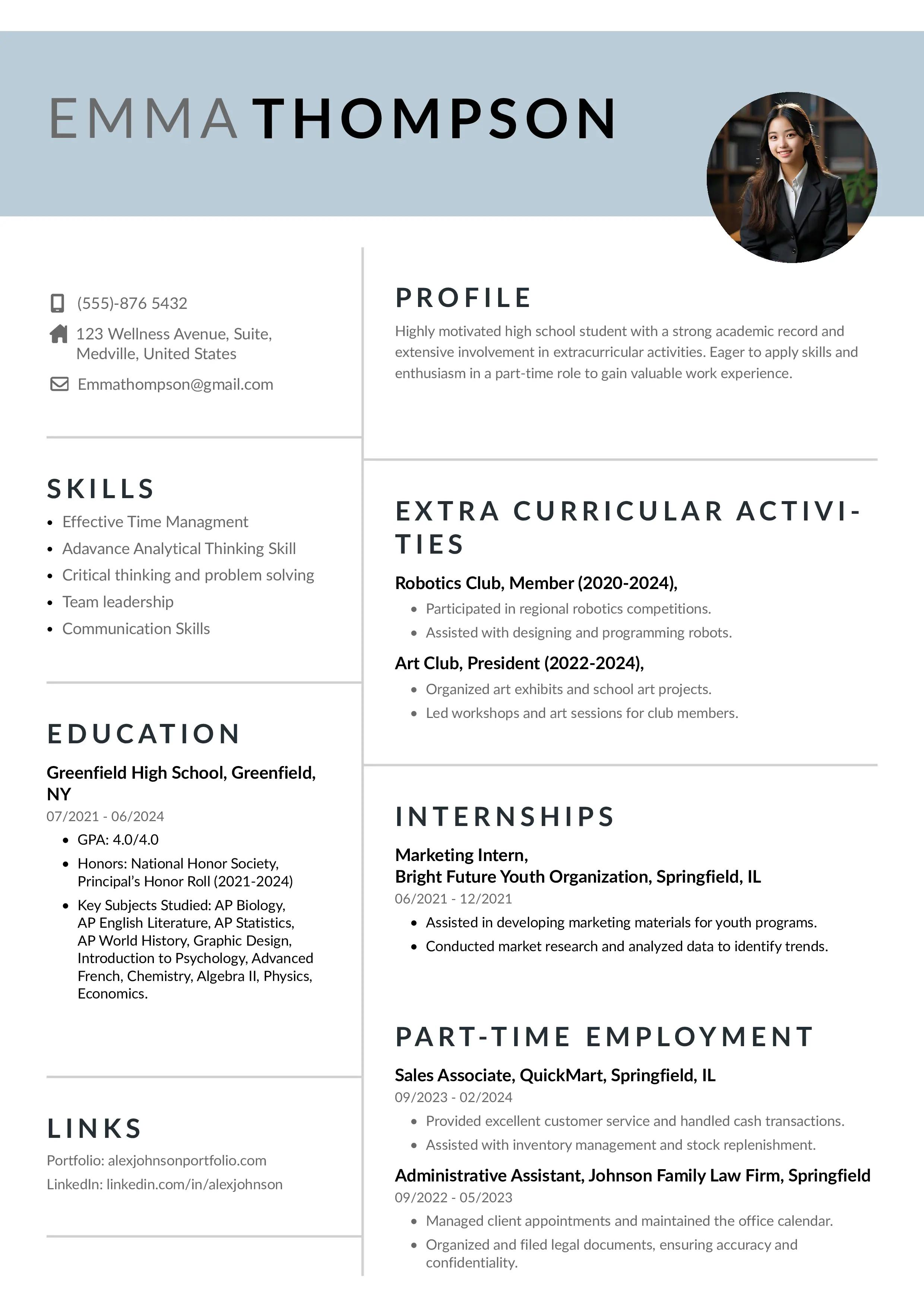
- Public speaking through community meetups and professional forums, highlighting communication strength
- Volunteer coordination for local education initiatives, demonstrating teamwork and responsibility
- Personal finance tracking and budgeting using spreadsheets and apps, reflecting analytical ability
For freshers and students
Edit and download this example of a bartender resume created using the Instaresume's Everest · Combined resume template.
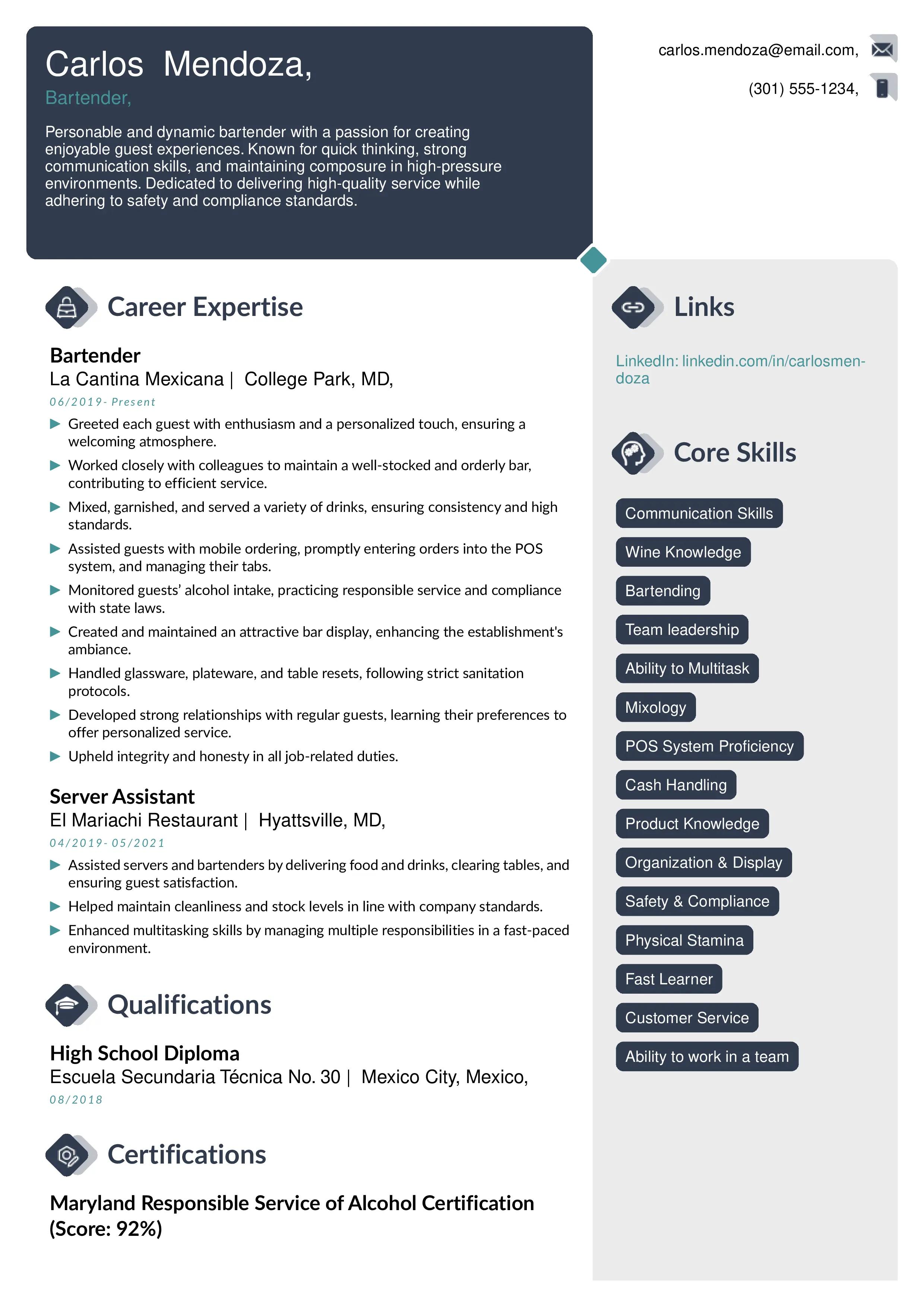
- Peer mentoring for academic subjects and exam preparation, strengthening a student resume
- Participation in debate clubs, improving structured communication
- Organizing college events and managing registrations, showing leadership potential
- Online course completion in skill-based learning platforms, often featured in strong resume education sections
For career switchers
Edit and download this example of switching career resume created using the Instaresume's Everest · Combined resume template.
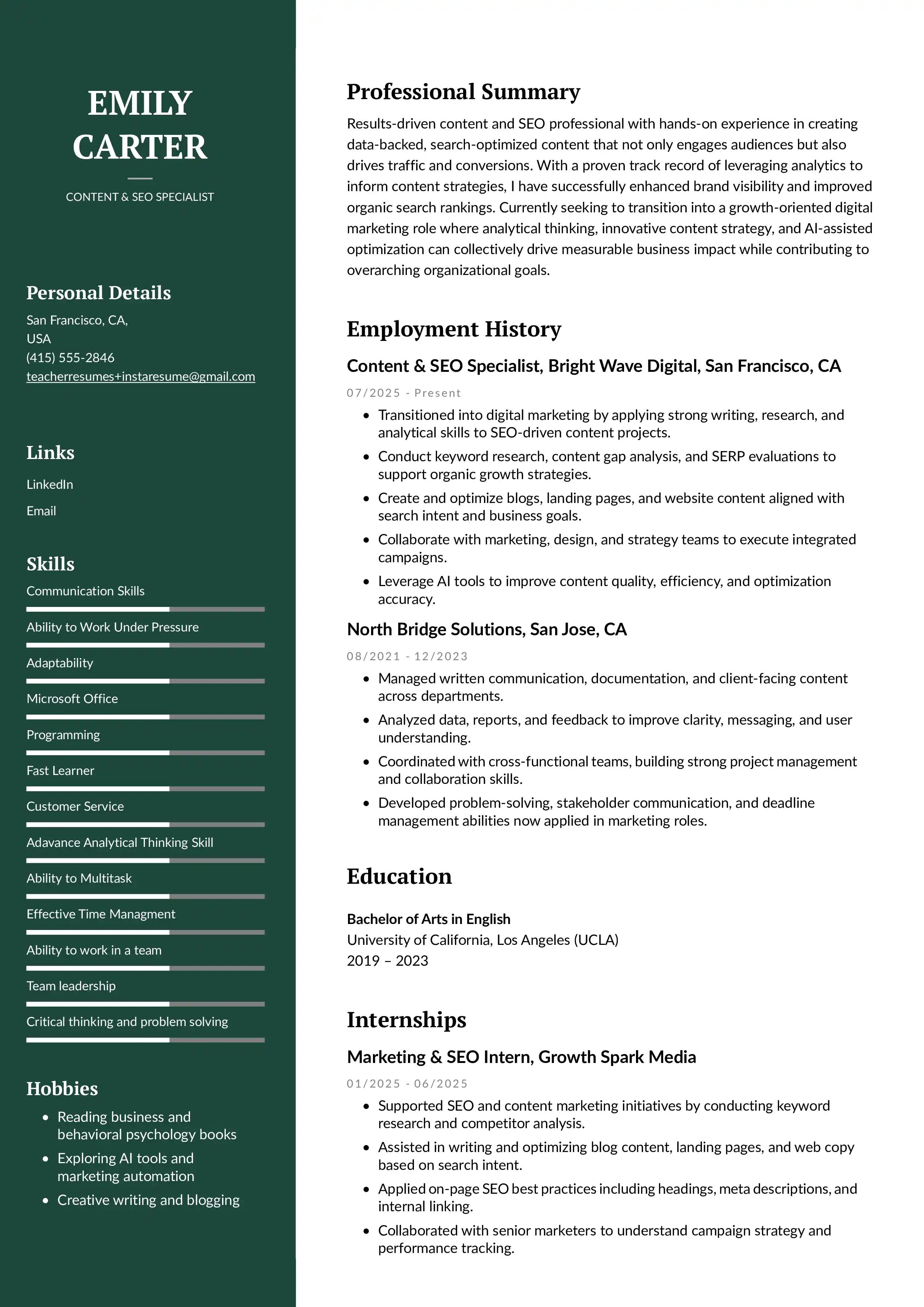
- Side projects in web development, applying self-taught skills relevant to a career change resume
- Freelance assignments, adapting to diverse client requirements
- Case study analysis of industry transitions and business models
- Certification preparation aligned with new career goals, commonly listed under resume certifications
For technical roles
Edit and download this example of a python data analyst resume created using the Instaresume's Sun · Simple resume template (Free)
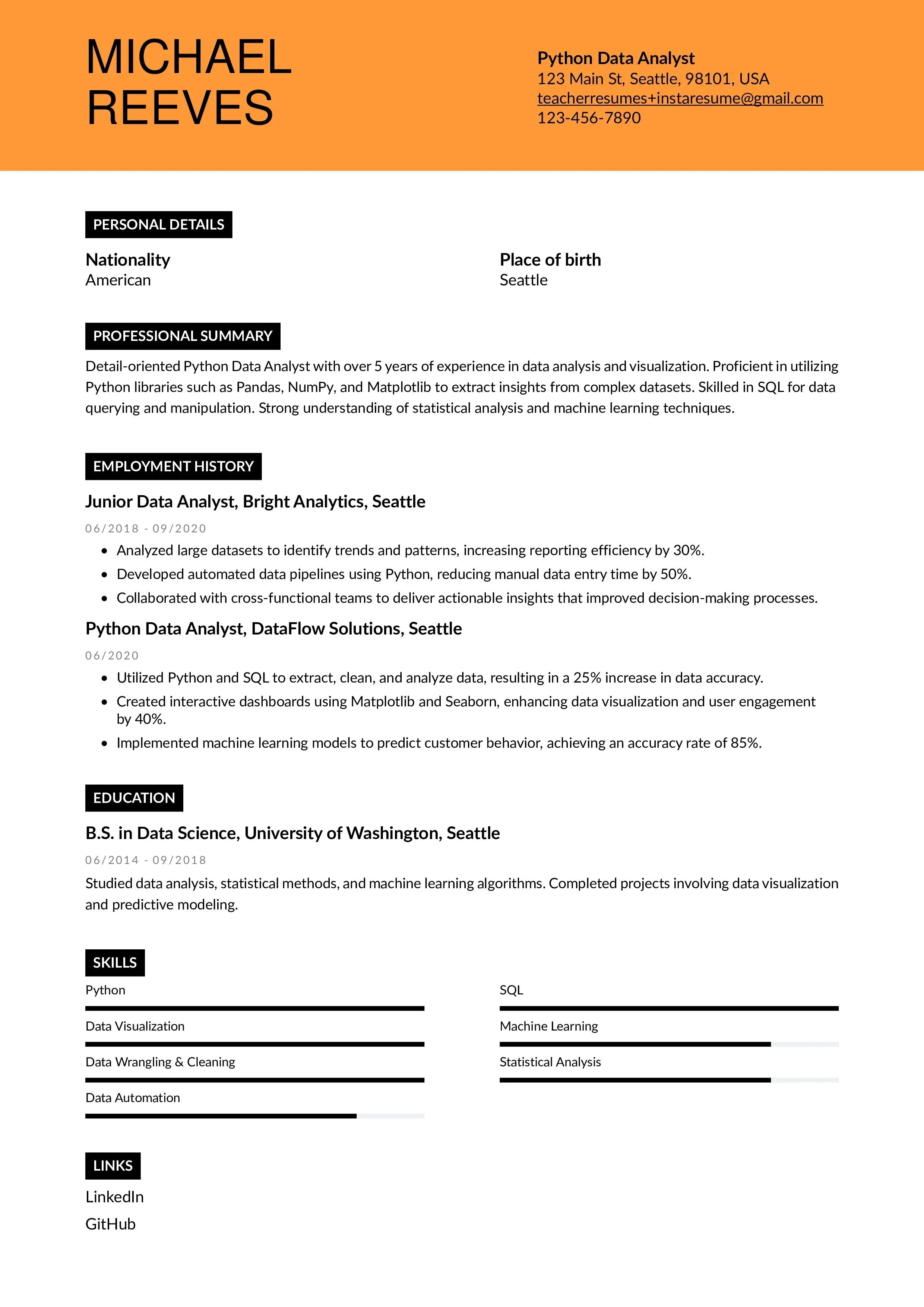
- Coding personal projects to build and test real-world applications, often showcased in technical resume projects
- Open-source contributions, collaborating with global teams
- Automation scripting to improve workflow efficiency
- AI tool experimentation for productivity and problem-solving, supporting modern tech resume skills
For creative roles
Edit and download this example of a Graphic design artist resume created using the Instaresume's Water- Modern resume template
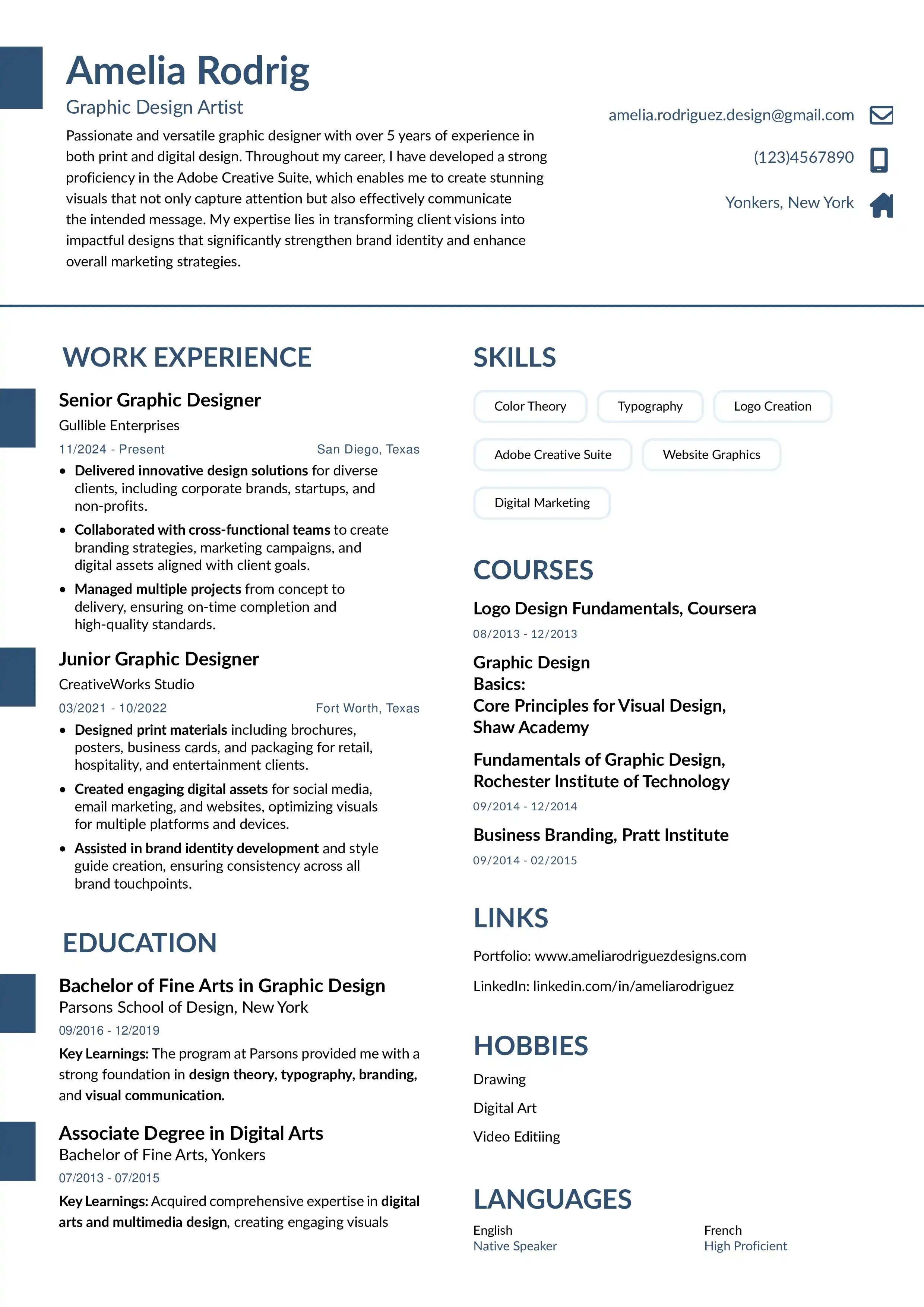
- Graphic design projects for digital and print platforms, ideal for a creative resume
- Photography and visual storytelling for online portfolios
- Video editing and short-form content creation
- Brand identity exploration through personal design work
For leadership and management roles
Edit and download this example of a Senior level project manager resume created using the Instaresume's Forest · Two column resume template with side bar left · InstaResume.io
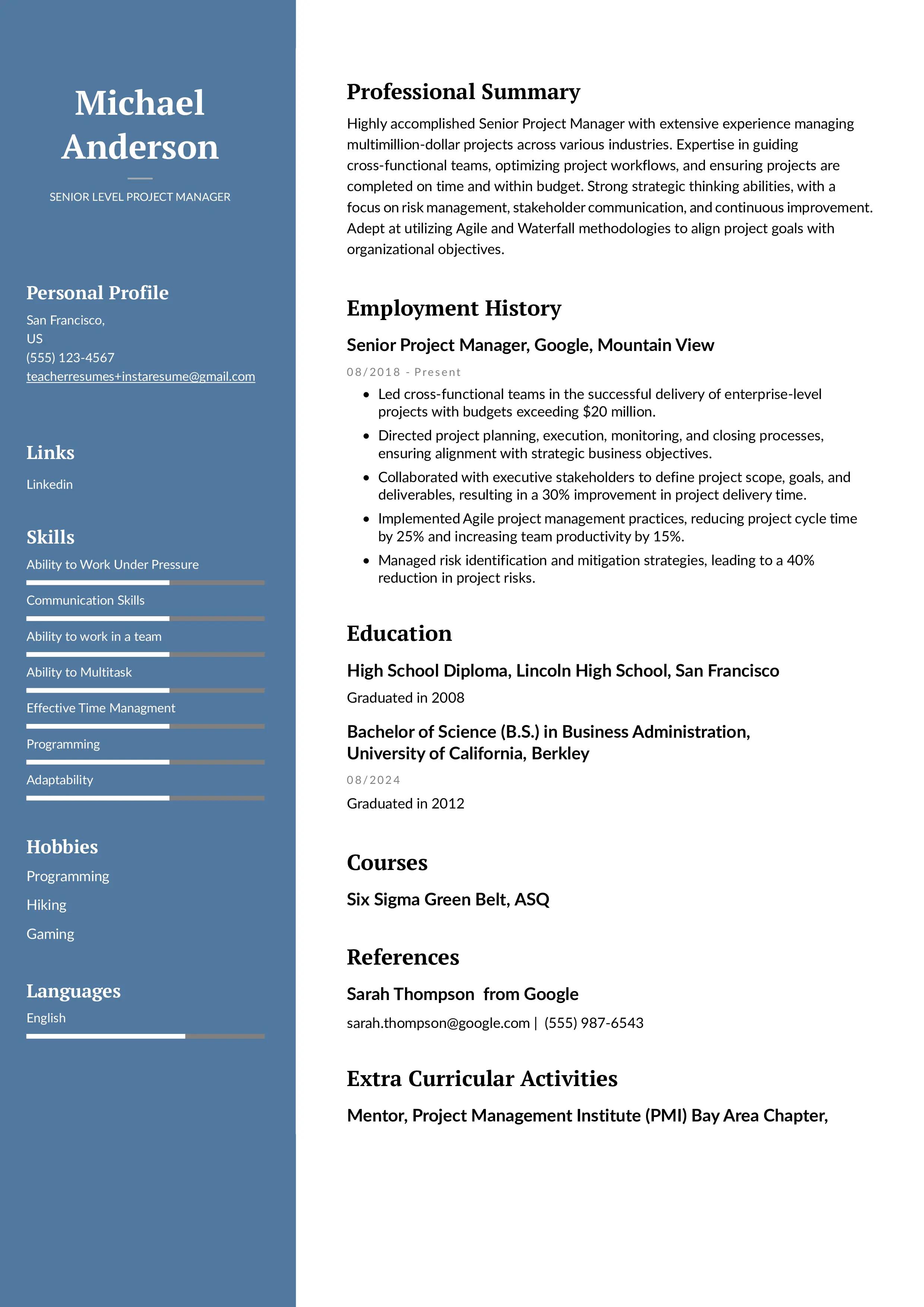
- Mentoring juniors and interns for skill development, reinforcing leadership skills on a resume
- Leading community initiatives and coordinating volunteers
- Event planning and execution for professional gatherings
- Training facilitation for small teams and workshops
For marketing and sales roles
Edit and download this example of a Sales executive resume created using the Instaresume's Everest · Combined resume template.
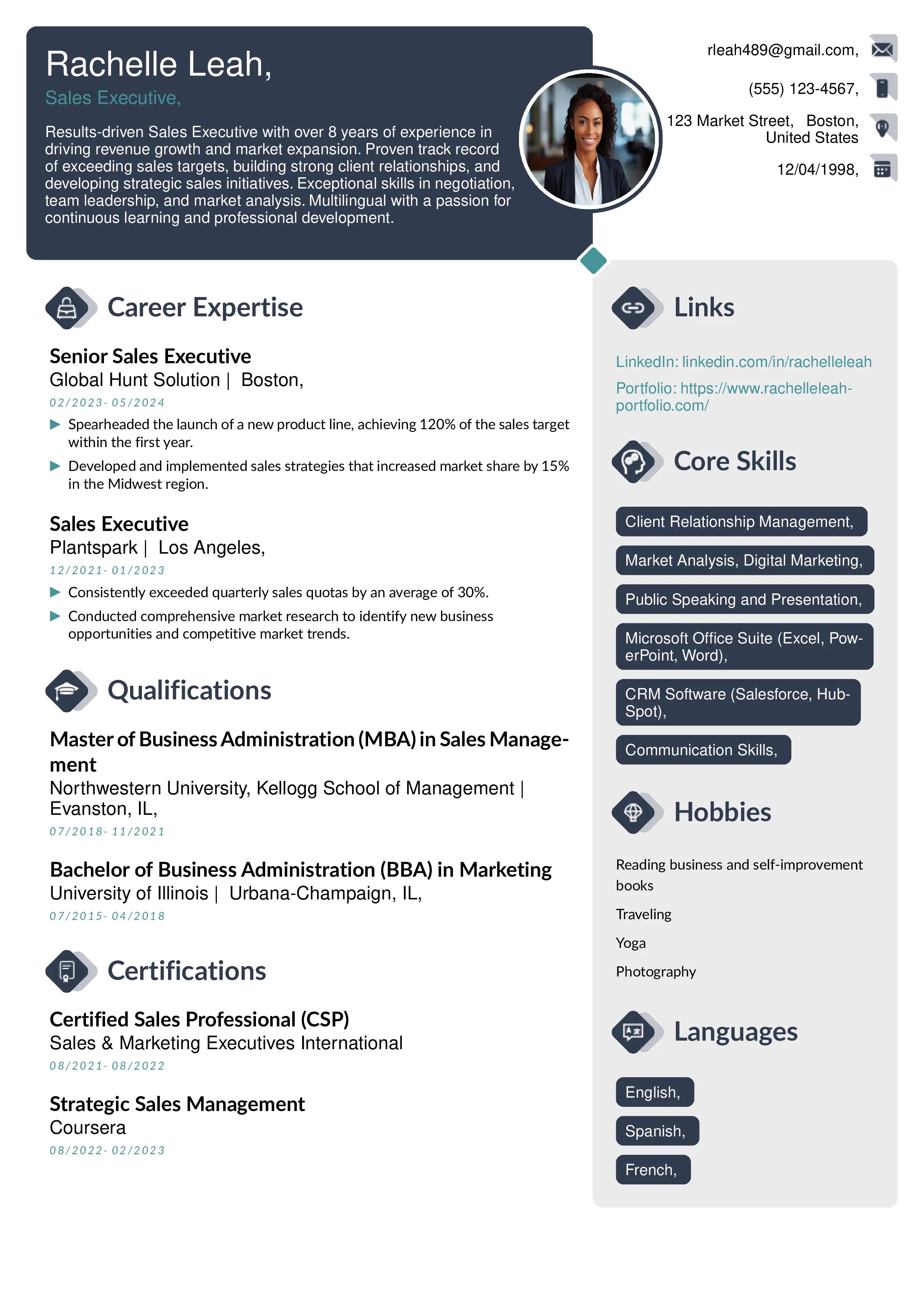
- Social media content creation and audience engagement, often highlighted in a marketing resume example
- Market research and trend analysis
- Copywriting practice for ads and landing pages
- Campaign performance analysis using basic metrics, supporting sales and marketing skills
Poor vs. well-written example
Poor -Watching YouTube
Good -Consuming educational video content on business and technology trends
Poor -Playing games
Good -Strategy gaming to enhance analytical and decision-making skills
Tips for listing hobbies on a resume
Keep It relevant
Only include hobbies that directly support the skills required for the role you’re applying to. Relevance always outweighs variety, and aligning hobbies with the role becomes easier when you tailor your resume using job-specific resume tips.
Focus on transferable skills
Choose hobbies that demonstrate communication, leadership, problem-solving, creativity, or teamwork. These qualities strengthen your profile when highlighted alongside core transferable skills.
Use professional wording
Frame hobbies in a skill-oriented, outcome-driven manner rather than casual language. This approach matches the tone expected in a polished professional resume.
Limit the number
Stick to 3–6 well-chosen hobbies to avoid clutter and maintain clarity. Keeping sections concise improves readability and aligns with best practices for resume length.
Be honest
List only genuine hobbies you can confidently discuss during an interview. Authenticity matters, especially when preparing for resume-based interview questions.
Tailor for each role
Adjust your hobbies based on job requirements and company culture. Customization signals effort and intent an approach emphasized in effective resume customization.
Avoid redundancy
Ensure hobbies complement your experience section instead of repeating it. Each section should add new value, reinforcing a clear and logical resume flow.
Hobbies that should not be included on a resume
Passive activities with no skill value (e.g., watching TV, browsing social media). These add little value to your profile and are best excluded when following proven resume dos and don’ts.
Highly personal hobbies that don’t relate to professional skills or workplace behavior, which can dilute the focus of a targeted job-ready resume.
Controversial or sensitive interests, including political or religious activities, as they may create unintended bias during screening—something addressed in resume screening tips.
Risky or extreme hobbies that raise safety or liability concerns unless they are directly relevant to the role, particularly in conservative or regulated industries.
Overly generic hobbies that fail to differentiate you (e.g., “listening to music”), often flagged in weak resume hobby examples.
Outdated or irrelevant hobbies that no longer reflect your current skills or interests, which can weaken the impact of an otherwise modern updated resume.
Key takeaways
Hobbies are a supporting section, not filler. They work best when aligned with the role and integrated into a focused resume strategy.
Relevance and clarity matter more than quantity. A concise approach improves readability and matches modern ATS-friendly resume standards.
Well-framed hobbies can highlight soft skills and cultural fit. This is especially useful when recruiters evaluate candidates beyond technical criteria, as explained in soft skills on a resume.
Poorly chosen hobbies can weaken an otherwise strong resume. Avoiding unnecessary sections supports better outcomes in resume shortlisting.
Tailoring hobbies improves your chances of shortlisting. Customization shows intent and professionalism, a principle central to effective resume targeting.
FAQs about listing hobbies on a resume
Should I put hobbies or interests on my resume?
Yes, but only when they add value. Hobbies and interests should support your professional profile by highlighting soft skills, mindset, or cultural fit. If they don’t reinforce your suitability for the role, it’s better to leave them out.
Are hobbies really important to recruiters?
Hobbies are not mandatory, but they do matter especially when candidates have similar qualifications. Recruiters often use hobbies to assess soft skills, personality, and cultural alignment, which can influence shortlisting and interview decisions.
What are the best hobbies to include on a resume?
The best hobbies are those that demonstrate transferable skills, such as communication, leadership, problem-solving, creativity, teamwork, or continuous learning. Examples include content creation, volunteering, mentoring, coding projects, or strategic games.
How many hobbies should I list on a resume?
Ideally, list 3 to 6 relevant hobbies. Fewer hobbies keep the section focused and easy to scan, while too many can dilute impact and make your resume feel unfocused.
Where should hobbies be placed on a resume?
Hobbies are usually placed at the bottom of the resume. However, for freshers, students, or career switchers where hobbies strongly support skills they can be placed slightly higher.
Are hobbies important for freshers’ resumes?
Yes. For freshers and students, hobbies can play a crucial role by showcasing transferable skills, initiative, and learning ability when formal work experience is limited.
Can hobbies help with ATS (Applicant Tracking Systems)?
Hobbies don’t directly boost ATS scores, but skill-aligned hobbies can naturally include keywords that match the job description. This can indirectly support resume relevance without keyword stuffing.
What hobbies should be avoided on a resume?
Avoid hobbies that are passive, overly personal, controversial, or unrelated to professional skills. Examples include excessive gaming without context, political or religious activities, or vague interests like “watching TV.”
Do recruiters really read the hobbies section?
Yes, especially during shortlisting or interviews. Recruiters often use the hobbies section as a quick personality check or as an icebreaker to evaluate communication and authenticity.
Can hobbies replace skills or work experience on a resume?
No. Hobbies should support, not replace, skills and experience. They work best as supplementary evidence that reinforces your strengths and professional narrative.
Conclusion
Hobbies may seem like a small part of a resume, but when used thoughtfully, they can add meaningful depth to your professional profile. The right hobbies reinforce your skills, highlight your mindset, and offer recruiters a clearer picture of how you think, collaborate, and grow beyond formal job roles.
Rather than listing interests at random, focus on relevance, clarity, and alignment with the role you’re applying for. A concise, well-framed hobbies section can strengthen your resume, support your experience, and subtly differentiate you from candidates with similar qualifications. When chosen strategically, hobbies become not just an add-on but a quiet advantage in the hiring process.