
Common Bachelor of Science Degrees in Various Fields

Trust Score: 4.8
389 reviews

Table of Contents
A Bachelor of Science (B.Sc or BS) degree is one of the most versatile undergraduate qualifications available today. It provides students with a strong foundation in scientific principles while allowing specialization across technology, healthcare, engineering, criminal justice, environmental studies, business science, and more.
In this blog, we will explore what a Bachelor of Science degree is, followed by a detailed guide to 15 of the most common and in-demand B.Sc degree types across multiple fields. Whether you’re planning your education path, looking to switch majors, or exploring career options, this list will help you understand the unique value each Bachelor of Science specialization offers.
What Is a Bachelor of Science?
A Bachelor of Science (B.Sc., BS, or B.S.) is an undergraduate degree that focuses on scientific, analytical, and technical subjects. Unlike a Bachelor of Arts (B.A.), a B.Sc degree emphasizes quantitative learning, structured experiments, and practical problem-solving used in modern industries.
What it means
A Bachelor of Science degree helps students build strong skills in areas like data analysis, scientific reasoning, and technical applications. Many students later use this degree to build careers in engineering, research, healthcare, IT, or other science-related fields.
Common features of B.Sc programs
Strong academic foundation
Most B.Sc programs include core subjects such as mathematics, physics, chemistry, biology, statistics, and computer science. These subjects help students develop analytical and logical thinking, which later supports career growth or higher studies.
Practical and lab-based learning
B.Sc degrees usually include laboratory sessions, experiments, fieldwork, or hands-on technical projects. This practical training helps students understand real-world applications and prepares them for industry roles.
Research-focused approach
Many programs include research assignments, project reports, and case studies. These elements help students understand how scientific methods work and how data is used to solve problems.
Career opportunities
Graduates with a B.Sc degree can enter several growing industries such as engineering, healthcare, IT services, environmental science, biotechnology, finance, community services, and public administration. This diversity makes B.Sc one of the most flexible and in-demand undergraduate degrees.
This section also supports readers who may later explore science resume template options or B.Sc resume examples using a free AI resume builder like Instaresume.
15 Common Bachelor of Science Degrees
Below is a simple and detailed list of some of the most popular and widely chosen Bachelor of Science degrees. These degrees help students build strong technical and scientific skills that can be used across different industries.
Chemistry (B.S.Ch.)
A Bachelor of Science in Chemistry teaches students about chemical reactions, laboratory methods, and analytical techniques. Graduates can use this degree in many sectors because chemistry plays a key role in product development, testing, and innovation.
Common career areas for chemistry graduates
 Chemical laboratories
- Pharmaceutical companies
- Biochemical research institutes
- Food and beverage quality testing
- Environmental analysis and pollution control
- Forensic science laboratories
- Materials science and manufacturing companies
Physics (B.S.Phy.)
A Bachelor of Science in Physics focuses on understanding matter, energy, motion, and the laws of the universe. This degree builds strong analytical and problem-solving skills, making it valuable in both scientific and industrial fields.
Common career areas for physics graduates
- Aerospace and defense
- Research laboratories
- Electronics and semiconductor industries
- Renewable energy and sustainability projects
- Robotics and automation
- Data science and computational modeling
Agricultural Engineering (B.S.Ag.E.)
A Bachelor of Science in Agricultural Engineering combines engineering principles with agricultural sciences to improve farming systems, food production, and environmental sustainability. This degree focuses on modern agricultural technology and solving real-world challenges in food security.
Career pathways include
- Soil and water conservation
- Agricultural machinery design and testing
- Farm technology development
- Irrigation and drainage systems
- Food processing engineering
- Government agricultural departments and rural development agencies
Game Design (B.S.G.D.)
A Bachelor of Science in Game Design focuses on the technical and creative skills needed to build interactive digital experiences. Students learn game mechanics, programming, storytelling, level design, and visual development. This degree prepares graduates for a rapidly growing entertainment and media industry.
Graduates typically work in
- Game development studios
- Animation and VFX companies
- AR/VR design and immersive media
- Storyboarding and interactive media teams
- UX/UI design for games
- Mobile game production and indie game development
Computer Science (B.S.C.S.)
A Bachelor of Science in Computer Science is one of the most in-demand and versatile degrees today. This program focuses on computational theory, programming, data structures, algorithms, and problem-solving. With technology shaping every industry, a B.S.C.S offers a strong pathway to high-growth tech careers.
A top B.Sc major leading to high-demand careers in
- Software development
- Cybersecurity and information security
- Artificial intelligence and machine learning
- Data analysis and data engineering
- Web and mobile application development
- IT systems administration and network support
- Cloud computing and DevOps roles
Electrical Engineering (B.S.E.E.)
A Bachelor of Science in Electrical Engineering focuses on designing, developing, and maintaining electrical systems, circuits, power generation technologies, and electronic devices. This degree blends physics, mathematics, and engineering principles, preparing graduates for both core engineering and emerging tech roles.
Electrical engineering graduates commonly work in
- Power generation and renewable energy
- Electronics and semiconductor manufacturing
- Automation and robotics
- Telecommunications and network systems
- Control systems engineering
- Aerospace and defense technology
- Electric vehicle (EV) and battery engineering
Civil Engineering (B.C.E.)
A Bachelor of Civil Engineering prepares students to design, build, and maintain essential infrastructure. This field focuses on structural integrity, environmental sustainability, and efficient urban development. A B.C.E. degree is ideal for those interested in shaping cities and improving public systems.
Civil engineers find roles in
- Construction project management
- Urban planning and development
- Infrastructure design and maintenance
- Structural engineering and analysis
- Transportation engineering
- Environmental engineering and sustainability initiatives
Criminal Justice (B.S.C.J.)
A Bachelor of Science in Criminal Justice provides a strong foundation in law enforcement principles, criminology, public safety, and the justice system. This degree prepares graduates for roles that focus on community protection, investigation, and legal processes.
Career options include
- Law enforcement agencies
- Forensic science laboratories
- Correctional facilities and rehabilitation centers
- Homeland security departments
- Public safety and emergency management organizations
- Private investigation and security services
Accounting Science / Accountancy (B.S.Acc)
A Bachelor of Science in Accounting Science equips students with strong quantitative, analytical, and financial reporting skills. This degree focuses on auditing principles, taxation laws, financial systems, and corporate governance—making it one of the most stable and in-demand business-related B.Sc programs.
This B.Sc specialization opens careers in
- Auditing and assurance services
- Taxation and tax consulting
- Financial analysis and reporting
- Corporate accounting and budgeting
- Banking, investment, and financial services
- Compliance, regulatory, and risk management roles
Geographic Information Science (B.S.GIC)
A Bachelor of Science in Geographic Information Science focuses on spatial analysis, mapping technologies, remote sensing, and geospatial data interpretation. This degree is ideal for students who want to work with digital maps, satellite data, and location-based technologies used across industries.
Graduates typically find opportunities in
- GIS mapping and spatial data analysis
- Urban and regional planning
- Environmental management and conservator
- Remote sensing and satellite imaging
- Disaster management and emergency response
- Transportation planning and logistics
Geology (B.S.Geo.)
A Bachelor of Science in Geology focuses on the study of Earth’s materials, structure, and natural processes. Students learn about minerals, rocks, tectonic activity, and environmental systems, enabling them to work in both industrial and research-oriented fields.
Career pathways include
- Oil and gas exploration and drilling analysis
- Earth sciences and geological research
- Mining and mineral extraction operations
- Environmental conservation and sustainability projects
- Hydrology and water resource management
- Geological surveying and mapping services
Architecture (B.S.Arch.)
A Bachelor of Science in Architecture blends creativity with technical design skills. Students learn architectural theory, building design, structural systems, drafting, and sustainable planning. This degree prepares graduates to shape functional and visually appealing spaces across residential, commercial, and public environments.
Architecture majors work in
- Architectural design firms
- Urban and spatial planning departments
- Interior design studios
- Construction and infrastructure companies
- Real estate development and project planning
- Landscape and environmental design
Aerospace Engineering (B.S.A.E.)
A Bachelor of Science in Aerospace Engineering focuses on the design, testing, and development of aircraft, spacecraft, drones, and advanced propulsion systems. Students gain strong skills in aerodynamics, materials science, fluid mechanics, and flight technology—making this degree essential in aviation and space industries.
Aerospace engineering graduates typically work in
- Aviation and aircraft manufacturing companies
- Space agencies and satellite technology firms
- Defense and aerospace research organizations
- Drone design and unmanned aerial systems development
- Aerodynamics testing and simulation labs
- Airline technical operations and maintenance
Nursing (B.S.N.)
A Bachelor of Science in Nursing is one of the most respected and in-demand healthcare degrees. The B.S.N. program combines clinical training, patient care techniques, healthcare ethics, and medical science. This degree prepares graduates for both hospital-based roles and advanced nursing pathways.
B.S.N. graduates typically work in
- Hospitals and clinical care units
- Community and public health services
- Critical care, pediatrics, and emergency departments
- Home healthcare and patient support services
- Nursing education and healthcare training centers
- Health administration and care coordination roles
Biological Systems (B.S.B.S.)
A Bachelor of Science in Biological Systems focuses on the study of living organisms, biotechnology, bioengineering, and environmental systems. Students learn how biological processes can be applied to agriculture, healthcare, sustainability, and technological innovation.
Graduates with a B.S.B.S. often work in
- Biotechnology and genetic research
- Agricultural technology and crop improvement
- Environmental sustainability and conservation projects
- Food production and quality control
- Biomedical engineering support roles
- Laboratory research and scientific analysis
Most In-Demand B.Sc. Specializations in USA
The United States offers a wide range of Bachelor of Science degrees, but some specializations consistently remain in high demand due to job growth, evolving technologies, and rising healthcare needs. Below are three of the most sought-after B.Sc. programs in the USA today.
Bachelor of Science in Nursing (B.S.N.)
The Bachelor of Science in Nursing is one of the fastest-growing healthcare degrees in the U.S. With increasing demand for registered nurses, specialized care, and public health professionals, B.S.N. graduates enjoy strong job security and competitive salaries.
Why it’s in high demand
- Growing need for qualified RNs
- Expansion of hospitals and healthcare facilities
- Strong career stability and nationwide job opportunities
Computer Science Degree (B.S.C.S.)
A Computer Science degree remains one of the most employable B.Sc. programs in the USA. The tech industry continues to grow rapidly, creating opportunities across software development, AI, cybersecurity, and cloud computing.
Why it’s in high demand
- Tech industry expansion
- Rise in AI, machine learning, and automation
- High-paying, flexible career paths
Engineering B.Sc. (Engineering Specializations)
Engineering degrees—including electrical engineering, civil engineering, mechanical engineering, agricultural engineering, and aerospace engineering—are consistently among the top B.Sc. choices due to their technical depth and broad career applications.
Why it’s in high demand
- Continuous need for engineering innovation
- Infrastructure development and modernization
- High-value roles across industries like energy, aerospace,
- manufacturing, and robotics
How a Nursing Degree Strengthens Your Career
Salary Growth and Global Demand
A Bachelor of Science in Nursing (B.S.N.) is one of the most financially rewarding healthcare degrees. In the USA, registered nurses with a B.S.N. earn an average salary of $75,000–$95,000 per year, depending on experience and specialization.
In Europe, B.S.N. nurses typically earn €32,000–€55,000 annually, with countries like Germany, Ireland, and the Netherlands offering even higher ranges due to nurse shortages and strong healthcare infrastructure.
How a 1-Year B.Sc. Nursing Upgrade Boosts Your Career
Many working nurses pursue a one-year B.Sc. Nursing upgrade (such as RN-to-BSN programs) because it doubles their career growth opportunities. Here's how it helps:
- Opens doors to senior nursing roles
- Leads to faster promotions within hospitals
- Increases earning potential and job security
- Helps nurses shift into administration, education, or specialized care
- Makes candidates eligible for international jobs
- Strengthens leadership and clinical decision-making skills
A B.S.N. does not just help you get a job—it helps you grow faster, earn more, and explore global opportunities.
How These Specializations Add Power to Your Resume
You complete your B.S.N. You gain new clinical skills, leadership abilities, and specialized training. Each of these achievements becomes a strong section on your resume—whether it’s your advanced patient-care experience, emergency department exposure, pediatric training, or hospital leadership certification.
As your specializations grow, your resume becomes more powerful, more competitive, and more appealing to international employers.
This is exactly why nurses with strong academic credentials and a polished resume get hired quicker—and earn higher salaries.
And if you want your resume to reflect the full strength of your B.S.N., clinical experience, and achievements, you need a professional, modern, ATS-friendly resume.
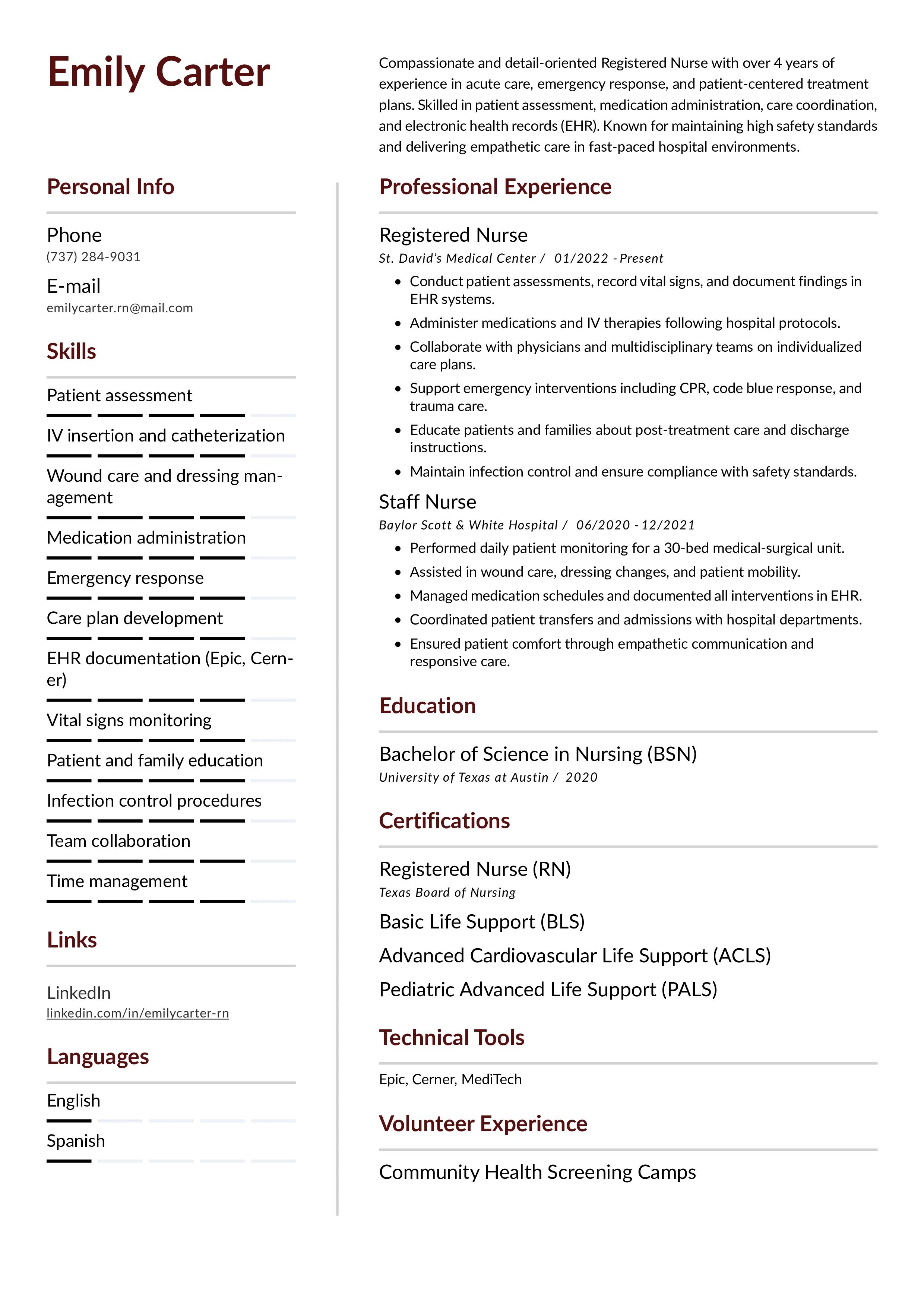
Here’s the Registered Nurse Resume Template
This resume template is designed for registered nurses who want to stand out.
The nurse featured in this template is earning more than €35,000, showcasing how a strong B.S.N. combined with a great resume can completely elevate your career.
How a Computer Science Degree Strengthens Your Career
Salary Growth and Global Demand
A Bachelor of Science in Computer Science (B.S.C.S.) is one of the most in-demand degrees in the USA and Europe. Tech professionals with a B.S.C.S. earn some of the highest entry-level and mid-career salaries:
- USA: Average salary ranges from $85,000–$120,000 per year, depending on specialization (AI, cybersecurity, software engineering, etc.)
- Europe: CS graduates earn between €40,000–€70,000 annually, with top tech hubs like Germany, Netherlands, Ireland, and Sweden offering even higher levels.
The demand for software engineers, cybersecurity analysts, AI specialists, and data professionals continues to surge across global markets.
How a 1-Year CS Upskilling or Certification Doubles Career Growth
Just like nursing has a 1-year B.Sc. upgrade, the tech world offers 1-year specializations and certifications that can almost double your opportunities:
- Cybersecurity certification
- Cloud computing specialization (AWS, Azure, GCP)
- Full-stack development training
- Data science / machine learning bootcamps
- DevOps engineering certification
These short-term programs help you:
- Move from entry-level to mid-level roles
- Earn higher salaries in a shorter time
- Qualify for remote international tech jobs
- Build real-world project portfolios
- Strengthen problem-solving, coding, and analytical skills
A B.S.C.S. combined with upgraded skills accelerates promotions and significantly increases earning potential.
How These Specializations Transform Your Resume
Picture this:
You complete your B.S.C.S. and master new skills—coding, algorithms, database management, cybersecurity basics, or ML projects. Every project you build becomes a resume highlight. Every certification becomes a career advantage. Every internship or freelance assignment adds credibility.
Slowly, your resume evolves from a simple academic document into a tech-industry portfolio showcasing:
- Software skills
- Real coding projects
- Problem-solving experience
- AI or data science exposure
- Technical achievements
Recruiters love B.S.C.S. graduates with a clean, modern, ATS-friendly resume because it helps them instantly evaluate your technical strengths.
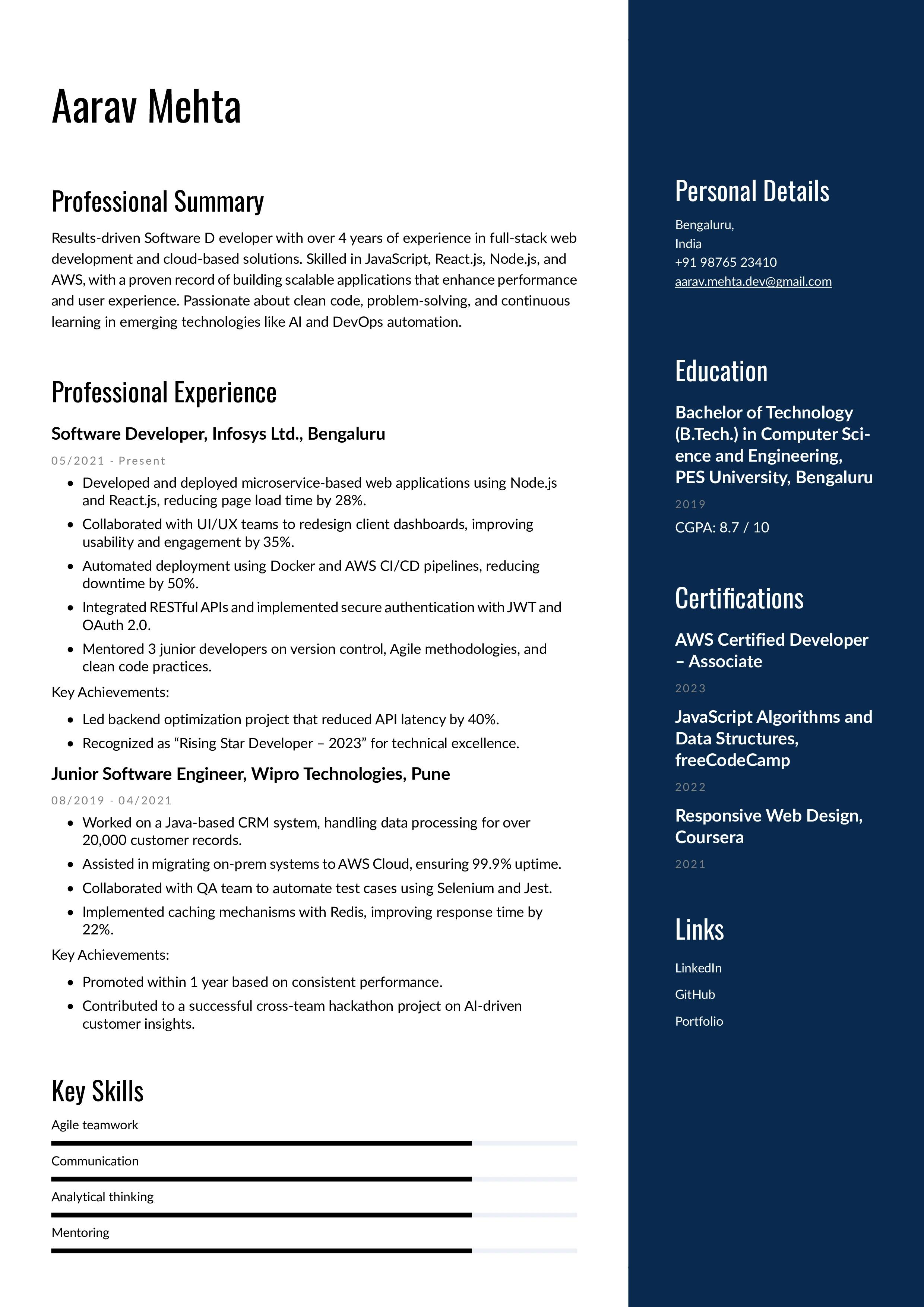
Here’s the Resume Template for a Computer Science Graduate
This professional template is built to help B.S.C.S. graduates stand out.
It highlights:
- Technical skills
- Software proficiency
- Internship experience
- Project achievements
- Certifications
This template reflects the journey of a CS graduate earning more than €40,000+, showing how strong technical skills + a polished resume result in better opportunities.
Software Developer Resume Example
How an Engineering B.Sc. Strengthens Your Career
Salary Growth and Global Demand
Engineering remains one of the highest-paid and most stable Bachelor of Science career paths worldwide. Whether you choose civil, mechanical, electrical, agricultural, or aerospace engineering, the demand for technically skilled engineers continues to grow each year.
Average salaries for engineering graduates:
- USA: Engineering B.Sc. graduates earn $80,000–$115,000 per year, depending on specialization and industry.
- Europe: Engineers typically earn €38,000–€65,000 annually, with Germany, Switzerland, Netherlands, and Denmark offering some of the highest salary ranges.
Engineering roles are needed in infrastructure, aviation, automotive, manufacturing, robotics, renewable energy, construction, and advanced technology sectors.
How a 1-Year Engineering Certification Accelerates Your Promotion
Just like nursing and CS fields have upgrade programs, engineers also benefit from short 6–12 month specializations that fast-track their career growth. These programs help engineers double their advancement speed by strengthening their technical profile.
Popular fast-track engineering certifications include:
- CAD and BIM design certification
- Project management (PMP)
- Robotics and automation training
- Renewable energy engineering
- Structural design certification
- Cloud and IoT engineering certifications
- Quality control and industrial safety courses
These specializations help you:
- Get promoted faster in engineering firms
- Move into higher-paying technical roles
- Lead construction or manufacturing projects
- Qualify for international engineering jobs
- Build a strong technical portfolio
Short-term technical upgrades make engineers more competitive and significantly raise their salary potential.
How Engineering Specializations Add Power to Your Resume
Imagine this journey:
You complete your Engineering B.Sc. You work on real projects—bridges, circuits, engines, drones, buildings, or automated systems. You learn simulation tools, design software, technical drawing, and problem-solving techniques.
Every skill becomes a strong resume point.
Every project becomes a portfolio highlight.
Every certification becomes a career advantage.
Soon, your resume shows:
- Real engineering projects
- Industry-standard tools (AutoCAD, SolidWorks, MATLAB, ANSYS, etc.)
- Practical fieldwork or lab experience
- Strong analytical and technical strengths
- Specializations that set you apart
Recruiters prefer engineering graduates with a clear, modern, ATS-friendly resume because it highlights their technical depth and project experience effectively.
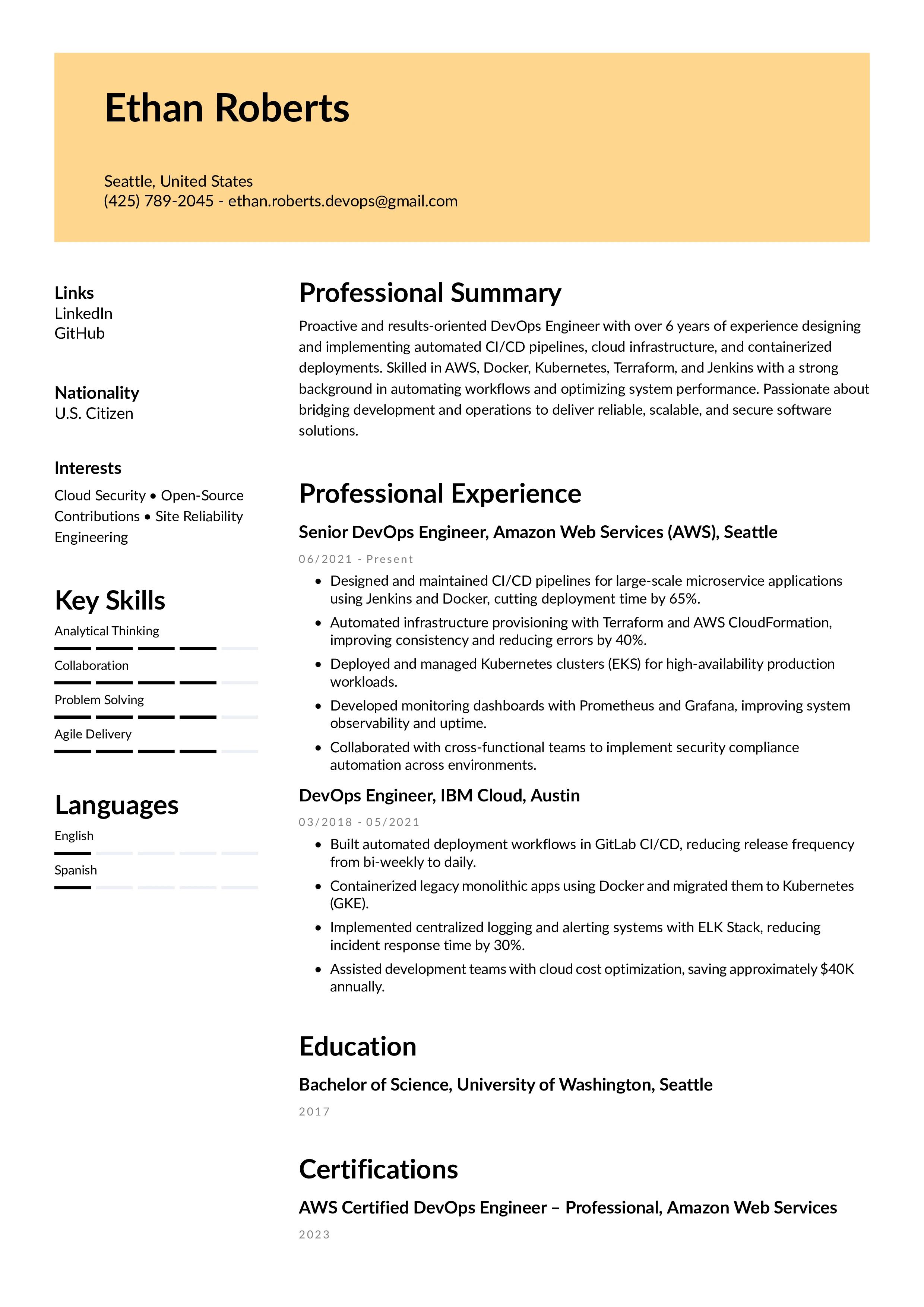
Here’s the Resume Template for Engineering Graduates
This template is tailored for engineering students and professionals who want to stand out in technical fields.
It showcases project-based experience, technical skills, certifications, and hands-on engineering work.
The engineer featured in this template is earning more than €40,000, proving how strong technical achievements combined with a well-built resume lead to better opportunities.
DevOps Engineer Resume Example
Applied Science Degrees and How They Add Career Value
Applied Science degrees focus on practical skill development, industry-ready training, and hands-on learning. Unlike traditional academic degrees, these programs emphasize real-world applications, making graduates highly employable in technical and specialized roles.
Whether you want to enter the workforce quickly or build a strong foundation for advanced technical careers, Applied Science degrees provide a direct route to well-paying, skill-oriented jobs across multiple sectors.
Types of Degrees Under Applied Science
Below is a clear list of major degrees that fall under the umbrella of Applied Science:
1. A.A.S. — Associate of Applied Science
A 2-year job-focused degree designed to prepare students for immediate employment.
Common specializations:
- Information Technology
- Cybersecurity
- Web Development
- Paramedical Services
- Radiologic Technology
- HVAC Technology
- Automotive Technology
- Business Administration
2. B.A.S. — Bachelor of Applied Science
A 3–4 year degree for students who want to advance beyond entry-level technical positions.
Popular concentrations:
- Applied Engineering
- Data Analytics
- Project Management
- Applied Information Systems
- Health Sciences
3. B.Sc.A.S. — Bachelor of Science in Applied Science
A more science-driven applied degree focusing on technical fields.
Specializations include:
- Applied Physics
- Applied Chemistry
- Applied Biology
- Industrial Technology
- Environmental Science
4. Applied Engineering Degrees
Technically falls under Applied Science, focused on real–world engineering tasks.
Examples:
- B.Sc. in Applied Mechanical Engineering
- B.Sc. in Applied Electrical Engineering
- B.Sc. in Applied Civil Engineering
- B.Sc. in Manufacturing Engineering
5. Applied Health Science Degrees
These programs combine theory with hands-on clinical training.
Examples:
- B.Sc. in Applied Health
- Applied Public Health
- Medical Laboratory Technology
- Occupational Therapy Assistant
- Physical Therapist Assistant
6. Applied Technology Degrees
Focused on cutting-edge technological applications.
Examples:
- Applied Artificial Intelligence
- Applied Robotics
- Applied Data Science
- Applied Software Technology
How Applied Science Degrees Add Career Value
1. Skill-Based Learning
Applied Science programs prioritize hands-on training through labs, workshops, simulations, and industry projects.
2. Faster Employment
Most programs are aligned with current industry demands, helping graduates enter the workforce quickly.
3. Higher Earning Potential in Technical Roles
Specialized technical fields—like IT, healthcare, engineering tech—often offer above-average salaries.
4. Flexible Pathways
Applied Science graduates can:
- Join the workforce immediately
- Upskill with certifications
- Pursue a B.A.S., M.A.S., MBA, or technical master's degree
5. Industry-Relevant Curriculum
Curriculums are designed in partnership with industry experts, ensuring students learn what employers are actually hiring for.