
Types of Common Figurative Language with Examples

Trust Score: 4.8
387 reviews
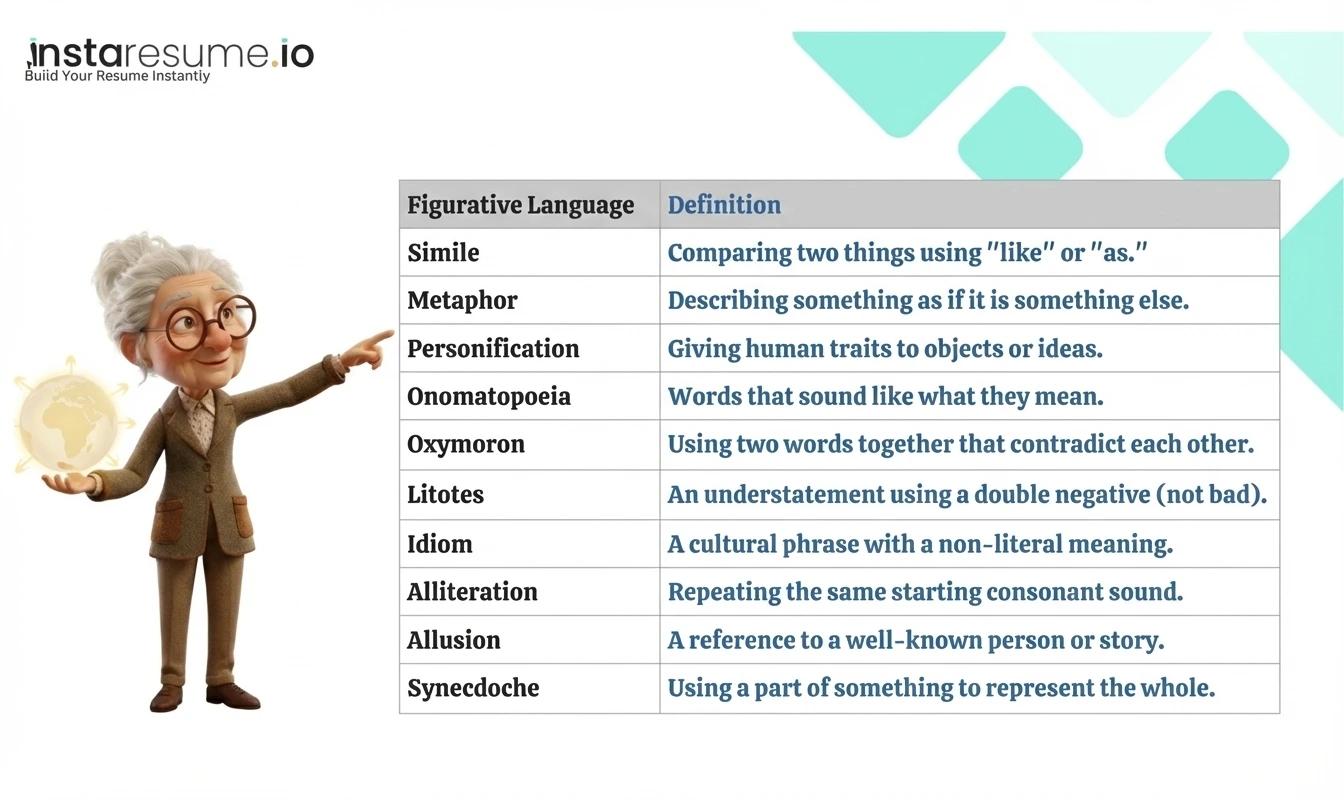
Table of Contents
Introduction
Have you ever said, “time is flying” or “my heart sank”?
You already know figurative language—even if you didn’t realize it.
Figurative language is what makes our words colorful, emotional, and alive. Instead of saying things plainly, we use comparisons, imagery, and expressions to help the reader feel what we mean. This is why figurative language is so common in stories, poems, songs, and even everyday conversations.
In simple terms, figurative language means using words in a non-literal way to express ideas more creatively. It helps us explain complex emotions, create strong images in the reader’s mind, and communicate more effectively. From similes and metaphors to idioms and personification, these language tools add depth and meaning to our writing.
Whether you are a student trying to understand figurative language examples, a teacher looking for clear explanations, or someone who wants to improve communication and writing skills, learning figurative language can make a big difference. It not only improves reading and writing but also helps you express thoughts more clearly and confidently.
In this blog, we will explore what figurative language is, its definition, different types of figurative language, and easy examples you can relate to. By the end, you’ll see how figurative language turns ordinary sentences into powerful expressions.
What Is Figurative Language?
Figurative language is a way of using words that goes beyond their literal meaning. Instead of saying something directly, it uses comparisons, expressions, or images to help the reader understand an idea more clearly and emotionally.
In simple words, figurative language helps us show what we mean rather than just tell it.
For example:
 Literal language: He is very busy.
- Figurative language: He is buried in work.
Both sentences talk about the same thing, but the second one creates a stronger image in the reader’s mind.
The definition of figurative language is that it uses imaginative expressions such as similes, metaphors, and idioms to make language more interesting and meaningful. That is why figurative language is commonly used in poetry, stories, songs, and even everyday speech.
Many people often ask, “What is figurative language?”
The answer is simple: it is language that adds emotion, creativity, and depth to communication. It helps writers explain feelings and ideas that may be difficult to express in plain words.
Understanding the meaning of figurative language also helps in identifying the difference between literal and figurative language. Literal language means exactly what the words say, while figurative language means something more than the words themselves.
Because of this, figurative language plays an important role in effective communication, creative writing, and reading comprehension.
Types of Figurative Language
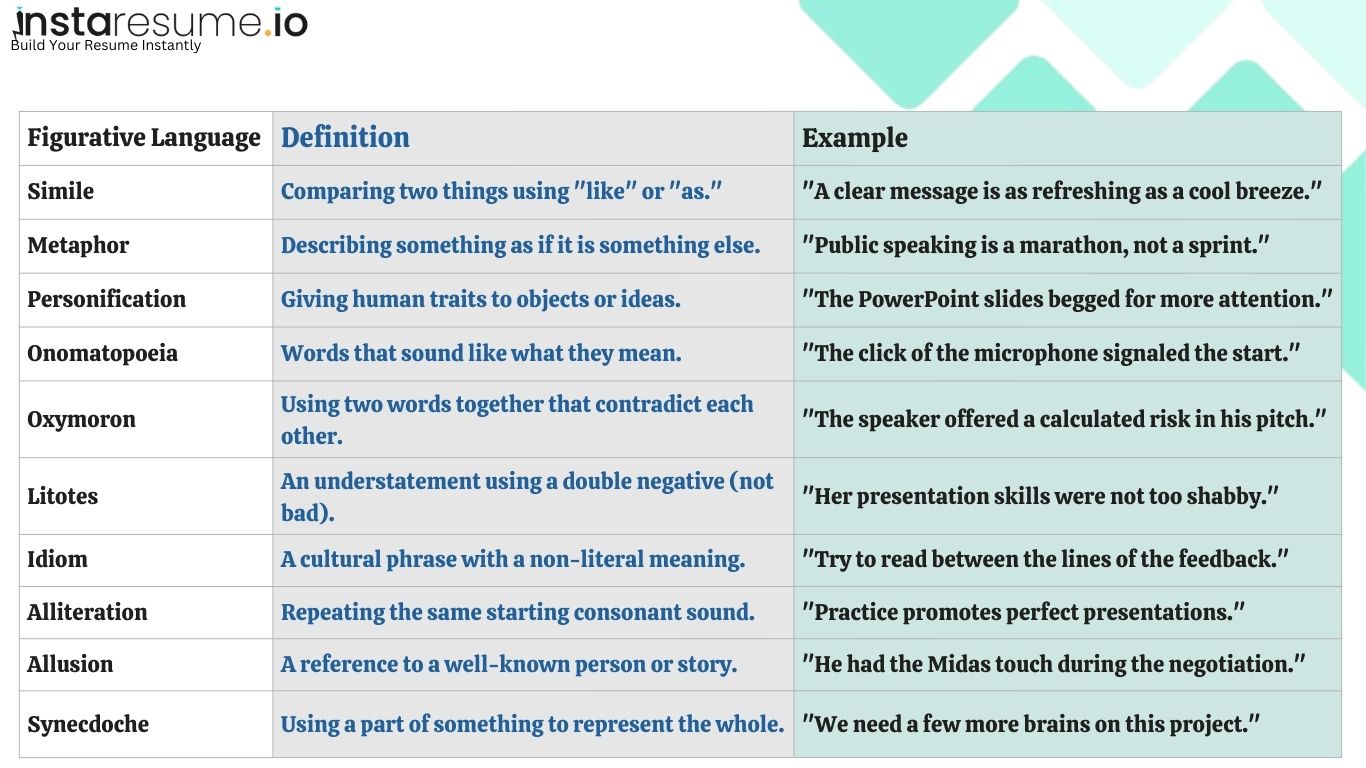
There are many types of figurative language, and each one helps express ideas in a different way. Some types compare things, some create strong images, while others add emotion or emphasis to a sentence. Together, these figurative language devices make writing more engaging and easier to understand.
Instead of memorizing long definitions, it is better to understand how each type works through examples. Once you recognize them, you will start noticing figurative language everywhere—in poems, songs, stories, advertisements, and even daily conversations.
Below are the most common figurative language types you should know:
- Simile – compares two different things using like or as
- Metaphor – compares two things directly without using like or as
- Personification – gives human qualities to non-living things
- Onomatopoeia – uses words that imitate sounds
- Oxymoron – combines two opposite ideas
- Litotes – expresses meaning through understatement
- Idiom – phrases with meanings different from the literal words
- Alliteration – repetition of starting sounds in words
- Allusion – indirect reference to a person, place, or event
- Synecdoche – a part represents the whole (or the whole represents a part)
In the following sections, we will explore each type of figurative language one by one with clear definitions and easy examples. This will help you understand how figurative language works and how you can use it confidently in writing and communication.
Simile
A simile is one of the most common and easiest types of figurative language to understand. It is used to compare two different things by using the words “like” or “as.” This comparison helps the reader imagine something more clearly.
In simple words, a simile says that one thing is like another thing to make the meaning stronger.
A simile is a figure of speech that compares two unlike things using like or as.
Simile Examples
- She is as brave as a lion.
- The classroom was as quiet as a grave.
- He runs like the wind.
Each of these sentences uses figurative language to create a clear picture in the reader’s mind. Instead of just saying “she is brave,” the simile helps us feel how brave she is.
Why Similes Are Important
Similes make writing more interesting and expressive. They are commonly used in:
- Poetry
- Stories
- Songs
- Everyday conversation
You will often find figurative language examples like similes in poems and song lyrics because they add emotion and imagery. Similes also help students and readers understand complex ideas in a simple way.
Once you start noticing similes, you’ll realize how often we use figurative language without even thinking about it.
Metaphor
A metaphor is a powerful type of figurative language that compares two different things without using “like” or “as.” Instead of saying something is like something else, a metaphor says it is that thing.
In simple words, a metaphor directly connects one idea to another to make the meaning stronger and clearer.
A metaphor is a figure of speech in which one thing is described as another to show a similarity between them.
Metaphor Examples
- Time is a thief.
- The classroom was a zoo.
- Her voice is music to my ears.
These sentences are not meant to be taken literally. Time is not actually a thief, and a classroom is not really a zoo. This is the difference between literal and figurative language. Metaphors help us understand emotions, situations, and ideas in a more creative way.
Why Metaphors Matter
Metaphors are widely used in:
- Literature
- Poetry
- Songs
- Speeches and communication
They make writing more expressive and help readers connect emotionally with the message. This is why metaphors are considered one of the most important figurative language devices.
Understanding metaphors also improves reading comprehension and writing skills. Once you learn how to identify metaphors, recognizing other types of figurative language becomes much easier.
Personification
Personification is a type of figurative language where human qualities are given to non-living things, animals, or abstract ideas. It helps readers relate to objects or ideas by making them feel more alive and emotional.
In simple words, personification makes things act like humans.
Personification is a figure of speech in which human characteristics are given to things that are not human.
Personification Examples
- The wind whispered through the trees.
- The sun smiled down on us.
- The alarm clock screamed at me to wake up.
Here, the wind cannot whisper, the sun cannot smile, and the clock cannot scream. These are examples of figurative language, not literal language. Personification creates strong images and emotions in the reader’s mind.
Why Personification Is Used
Personification is commonly used in:
- Poetry
- Stories
- Songs
- Descriptive writing
It makes writing more engaging and helps readers connect emotionally with the scene. Writers often use personification to bring nature, objects, or ideas to life, which is why it is an important figurative language device.
Understanding personification also helps readers identify deeper meanings in literature and improves overall communication skills.
Onomatopoeia
Onomatopoeia is a type of figurative language where words imitate natural sounds. These words sound like the noise they describe, which makes the sentence livelier and more realistic.
In simple words, onomatopoeia helps us hear what is happening in the sentence.
Onomatopoeia is a figure of speech in which a word imitates the sound of an object, action, or movement.
Onomatopoeia Examples
- The bee went buzz.
- The door slammed with a bang.
- Raindrops pitter-pattered on the roof.
These sound-based words help create strong images and make writing more engaging. They are common figurative language examples found in poems, comics, stories, and songs.
Why Onomatopoeia Is Important
Onomatopoeia is often used in:
- Poetry
- Children’s stories
- Songs
- Comics and advertisements
It adds energy and movement to writing and helps readers feel closer to the action. Because of this, onomatopoeia plays a key role in expressive and creative communication.
Oxymoron
An oxymoron is a type of figurative language where two opposite or contradictory words are placed together to create a meaningful expression. Even though the words seem to cancel each other out, together they express a deeper idea.
In simple words, an oxymoron combines opposites to make a point.
Oxymoron Examples
- Deafening silence
- Bittersweet moment
- Clearly confused
- Living dead
At first glance, these phrases look confusing. How can silence be deafening? Or something be bittersweet? This is where figurative language meaning comes in. Oxymorons help express complex emotions or situations in a short and powerful way.
Why Oxymoron Is Used
Oxymorons are commonly used in:
- Literature
- Poetry
- Speeches
- Everyday communication
They grab the reader’s attention and make them pause and think. Writers often use oxymorons to show contrast, irony, or emotional conflict, making them an important figurative language device.
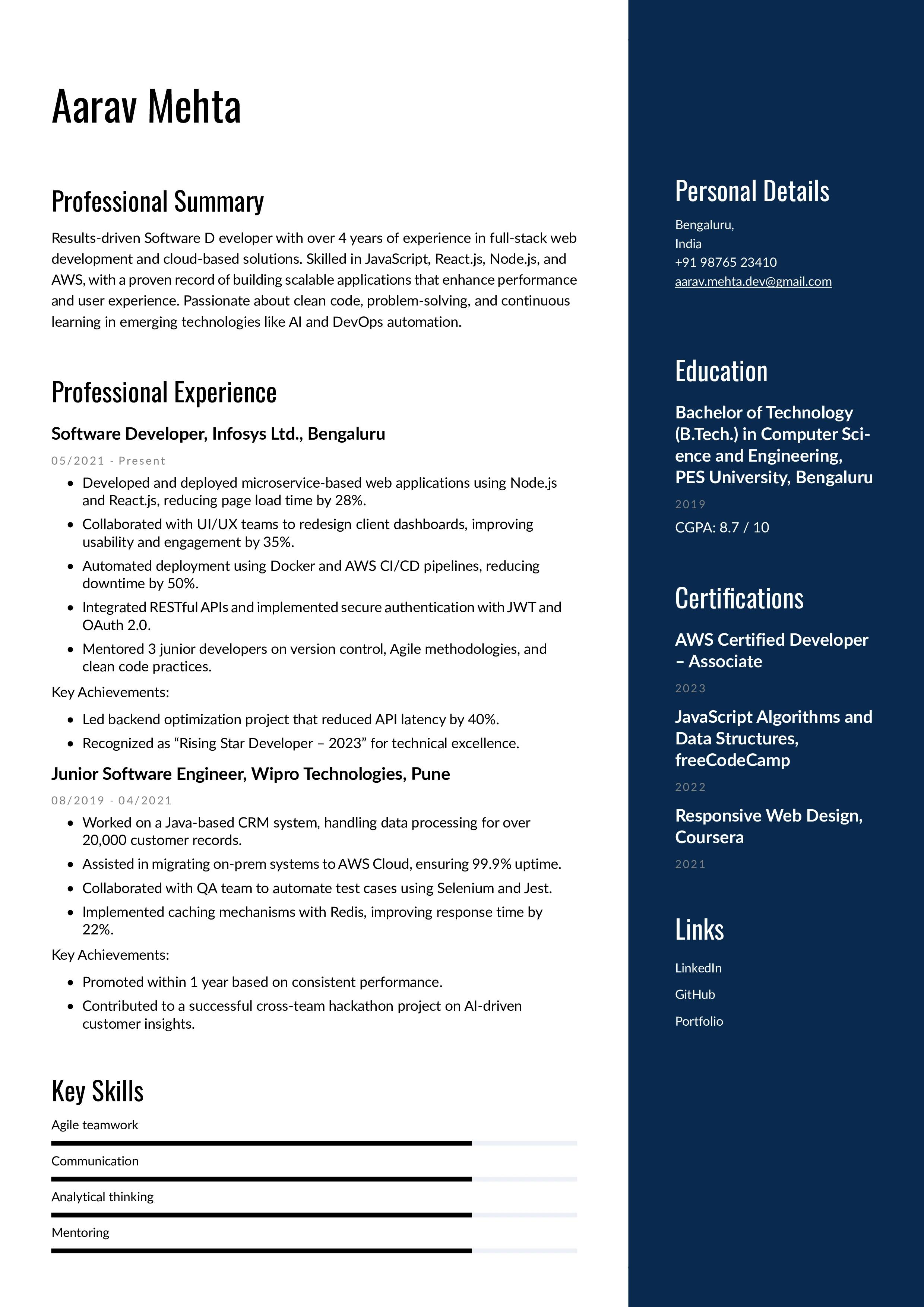
Software Developer Resume Example
Litotes
Litotes is a type of figurative language that expresses an idea by using understatement. Instead of saying something directly, it states the opposite in a negative form to create emphasis.
In simple words, litotes says something by saying what it is not.
Litotes is a figure of speech in which a positive meaning is expressed by negating its opposite.
Litotes Examples
- He is not bad at his job. (means he is good)
- That test was not easy. (means it was difficult)
- She is no fool. (means she is smart)
These sentences may look simple, but they carry deeper meaning. Litotes is often used to sound polite, modest, or less direct, which is why it appears frequently in both spoken and written language.
Why Litotes Is Used
Litotes is commonly found in:
- Formal writing
- Speeches
- Everyday conversations
- Literature
It helps soften statements and avoid sounding too strong or harsh. As a figurative language device, litotes adds subtlety and tone to communication.
Idiom
An idiom is a type of figurative language in which the meaning of a phrase is different from the literal meaning of the words used. If you try to understand an idiom word by word, it usually won’t make sense.
In simple words, idioms are expressions that have a hidden meaning.
Idiom Definition
An idiom is a phrase whose meaning cannot be understood from the literal meaning of its individual words.
Idiom Examples
- Break the ice (to start a conversation)
- Spill the beans (to reveal a secret)
- Once in a blue moon (something that happens very rarely)
These phrases are commonly used in everyday speech, but they do not mean exactly what the words say. This is why idioms are a popular figurative language example in daily communication.
Why Idioms Are Important
Idioms are widely used in:
- Daily conversations
- Books and stories
- Movies and TV shows
- Professional communication
Using idioms correctly can make your language sound more natural and fluent. However, they should be used carefully, especially in formal writing, so that the meaning stays clear.
Alliteration
Alliteration is a type of figurative language where the same starting sound is repeated in a group of words. This repetition creates a rhythm and makes sentences catchier and more memorable.
In simple words, alliteration is the repetition of initial sounds in nearby words.
Alliteration is a figure of speech in which the same consonant sound is repeated at the beginning of words placed close together.
Alliteration Examples
- She sells seashells by the seashore.
- Peter Piper picked a peck of pickled peppers.
- Big brown bear.
Alliteration is often used in poems, songs, tongue twisters, and even brand slogans because it sounds pleasing to the ear. These are classic figurative language examples that make language more fun and engaging.
Why Alliteration Is Used
Alliteration is commonly found in:
- Poetry
- Songs
- Speeches
- Advertising and branding
It helps emphasize certain words and makes writing easier to remember. As a figurative language device, alliteration improves the flow and musical quality of language.
Allusion
An allusion is a type of figurative language in which a writer makes a brief reference to a well-known person, place, event, book, or idea. The writer does not explain it in detail, assuming that the reader already understands the reference.
In simple words, an allusion is a hidden reference.
Allusion is a figure of speech that indirectly refers to a famous person, historical event, literary work, or cultural idea.
Allusion Examples
- He met his Waterloo. (reference to Napoleon’s defeat)
- She opened Pandora’s box. (reference to Greek mythology)
- This place feels like Eden. (reference to the Bible)
These examples do not explain the full story, but they add depth and meaning to the sentence. This is why allusion is an important figurative language device in literature and communication.
Why Allusion Is Used
Allusions are commonly used in:
- Literature
- Poetry
- Speeches
- Academic and creative writing
They help writers connect ideas quickly and make their writing richer and more meaningful. Understanding allusions also improves reading comprehension and cultural awareness.
Synecdoche
Synecdoche is a type of figurative language in which a part of something is used to represent the whole, or sometimes the whole is used to represent a part. This helps express ideas in a shorter and more impactful way.
In simple words, synecdoche means using a part to talk about the whole (or the whole to talk about a part).
Synecdoche is a figure of speech in which a part of an object, person, or idea represents the whole, or the whole represents a part.
Synecdoche Examples
- All hands on deck. (hands = sailors or workers)
- The crown decided the law. (crown = king or authority)
- She bought a new set of wheels. (wheels = car)
These examples show how synecdoche adds meaning without using extra words. It is commonly used in both spoken and written language as a figurative language device.
Why Synecdoche Is Used
Synecdoche is often found in:
- Literature
- Poetry
- News and speeches
- Everyday communication
It makes language more precise and expressive. Learning synecdoche also helps readers understand deeper meanings in texts and identify different types of figurative language more easily.
Other Figurative Language Devices
Apart from the common types of figurative language, there are a few more devices that writers often use to make their writing stronger and more expressive. These figurative language devices help exaggerate ideas, create mental pictures, show contrast, or replace long explanations with simple words.
Let’s understand them one by one.
Hyperbole (Exaggeration for Effect)
Hyperbole is a type of figurative language that uses exaggeration to emphasize a point. It is not meant to be taken literally.
Hyperbole Examples
- I have told you a million times.
- I’m so hungry I could eat a horse.
- This bag weighs a ton.
Hyperbole is often used in everyday speech, stories, and songs to show strong emotions like excitement, anger, or frustration.
Imagery (Creating Pictures with Words)
Imagery is a figurative language device that uses descriptive words to create pictures in the reader’s mind. It appeals to the five senses—sight, sound, smell, taste, and touch.
Imagery Examples
- The golden sun melted into the calm blue sea.
- The smell of fresh rain filled the air.
Imagery helps readers feel like they are inside the scene. This is why imagery is widely used in poetry and creative writing.
Irony (Meaning Opposite to Expectations)
Irony is a type of figurative language where the intended meaning is different from what is actually said or expected.
Irony Examples
- A fire station burns down.
- A traffic police officer gets a speeding ticket.
Irony adds humor, surprise, or criticism to writing and helps writers express ideas indirectly.
Metonymy (Related Term Substitution)
Metonymy is a figurative language device in which one word is replaced with another that is closely related to it.
Metonymy Examples
- The White House announced a new policy. (White House = government)
- The pen is mightier than the sword. (pen = ideas, sword = force)
Metonymy helps make language more concise and powerful, especially in journalism, speeches, and literature.
These additional types of figurative language further show how creative and flexible language can be. Understanding them will improve your reading skills, writing ability, and overall communication.
Conclusion
Figurative language is what turns simple sentences into meaningful expressions. It helps us describe feelings, ideas, and experiences in a way that connects with the reader. Instead of saying things plainly, figurative language allows us to communicate with creativity, emotion, and clarity.
From similes and metaphors to idioms, allusion, and imagery, each type of figurative language plays an important role in writing and communication. You will find figurative language everywhere in poems, songs, stories, speeches, and even in daily conversations. Once you learn to recognize it, reading becomes more interesting and writing becomes more powerful.
Understanding figurative language meaning and examples also improves comprehension and expression. Whether you are a student, teacher, or writer, using figurative language correctly can make your words more engaging and memorable.
The more you practice identifying and using figurative language, the more confident you will become in expressing your thoughts clearly and creatively.
Frequently Asked Questions (FAQs)
Can we use figurative language in a resume and cover letter?
Yes, figurative language can be used in a resume and cover letter, but it should be used carefully and in moderation.
In professional documents like resumes, clarity is more important than creativity. However, light figurative expressions can be useful in cover letters, where communication style and personality matter more.
Example in a cover letter (acceptable):
- I thrive in fast-paced environments and enjoy turning challenges into opportunities.
This sentence uses figurative language without sounding unprofessional.
Example to avoid in a resume:
- I am a wizard of spreadsheets.
Resumes should stay clear, factual, and direct, while cover letters allow a bit more flexibility in tone.
When figurative language works well
- In cover letters to show confidence and communication skills
- In personal statements or summaries
- When describing soft skills like leadership, adaptability, or problem-solving
When to avoid figurative language
- In technical or data-heavy resume sections
- When it makes achievements unclear or exaggerated
- When the meaning can be misunderstood
Used correctly, figurative language can improve communication and make your writing more engaging even in professional contexts as long as it remains simple, clear, and relevant.
What is figurative language?
Figurative language is a way of using words beyond their literal meaning to express ideas creatively. It helps create imagery, emotion, and deeper meaning in writing and speech.
What are the main types of figurative language?
The most common types of figurative language include simile, metaphor, personification, onomatopoeia, oxymoron, litotes, idiom, alliteration, allusion, synecdoche, hyperbole, imagery, irony, and metonymy.
What is the difference between literal and figurative language?
Literal language means exactly what the words say. Figurative language means something more than the literal meaning and is used to create effect, emotion, or comparison.
Why is figurative language important in writing?
Figurative language makes writing more interesting and expressive. It helps readers understand emotions and ideas more clearly and improves overall communication skills.
Where is figurative language commonly used?
Figurative language is commonly used in poetry, songs, stories, speeches, literature, and everyday conversation.
How can I identify figurative language in a sentence?
Look for comparisons, exaggerations, sound-based words, human qualities given to objects, or phrases that do not make sense literally. These are common signs of figurative language.